
Add members by distance or angle from an existing node
The Relative Member tool in SkyCiv Structural 3D creates a new member from an existing node, by entering how far the other end is in X, Y and Z, or by entering its length and angle in one of the global planes. You don’t need to know the coordinates of the new node: SkyCiv works them out from the reference node, adds the node and connects it with a member.
This is the quickest way to model members that are not aligned with the global axes, such as rafters, σιδερακια ΔΟΝΤΙΩΝ, cantilevers and inclined struts, or to extend several nodes of a model by the same distance in one step. A closely related tool, Προσθήκη σχετικού κόμβου, does the same thing without creating a member. You can also ask the AI Assistant to add these members for you in plain language (Δες παρακάτω).
Opening the Relative Member tool
Select one or more nodes, then either:
- Συμπληρώστε τα πεδία Ρ, ή
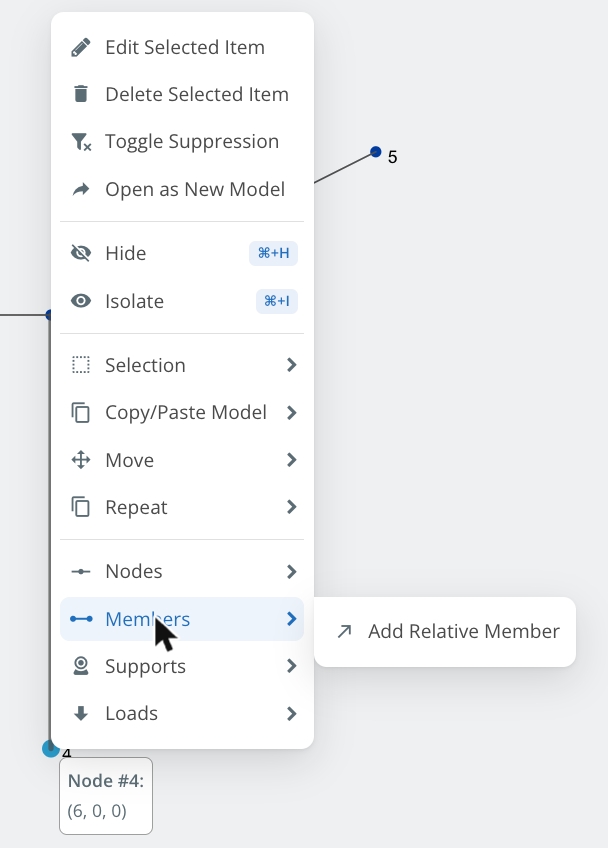
- right-click the selection and choose Μέλη > Προσθήκη σχετικού μέλους.
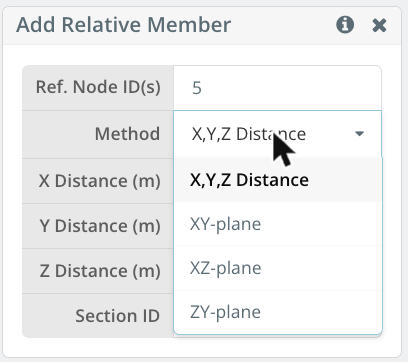
Το Προσθήκη σχετικού μέλους panel opens over the model. You can drag it by its title bar anywhere in the model space, so it doesn’t hide the part of the model you are working on. Close it with the × in its title bar, ή πατήστε Esc. Το Εγώ icon gives a quick reminder of how the tool works.
The panel has these fields:
- Ref. Αναγνωριστικό κόμβου(μικρό): the node, or nodes, the new members start from. It is filled with the nodes you selected, and you can type other node IDs, χωρίζονται με κόμματα.
- Μέθοδος: how the position of the new node is defined, by distances (Χ,ΚΑΙ,Z Απόσταση) or by a distance and an angle in a plane (XY-αεροπλάνο, XZ-αεροπλάνο, και ZY-plane ή YZ-plane depending on the vertical axis of the model).
- The inputs of that method, στις μονάδες μήκους του μοντέλου σας.
- Αναγνωριστικό ενότητας: the section assigned to the new members. Start typing to search the sections of the model. It remembers the last section you used.
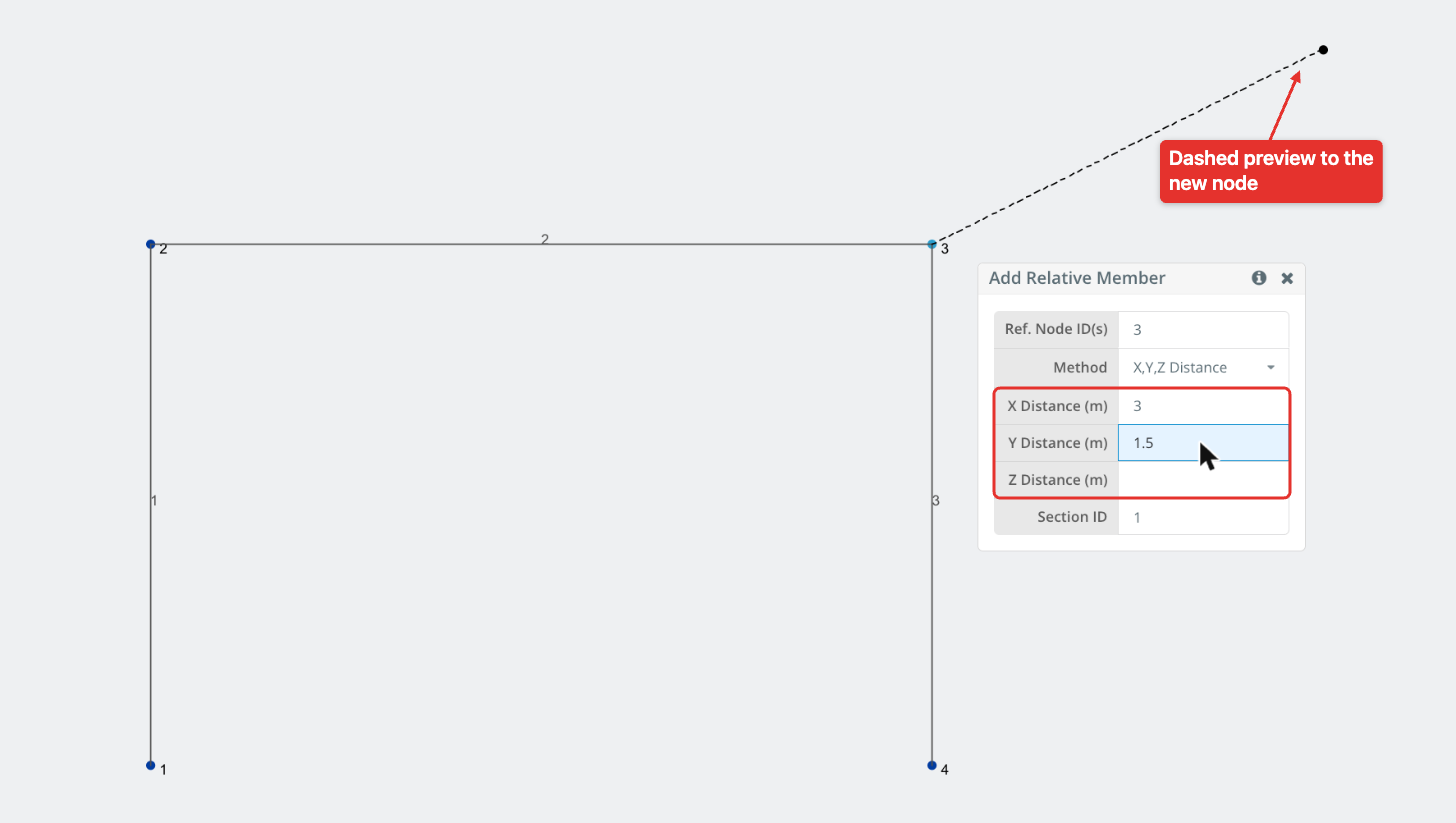
As you type, a dashed line previews the new member from each reference node to its new node. Τύπος Επίλεξε το in any field to create the member. If an input is not valid (for example a reference node that doesn’t exist, or all distances left at zero), a message tells you what to fix and nothing is created.
Adding a relative member with X, Y and Z distances
Χ,ΚΑΙ,Z Απόσταση is the default method. Enter the change in position from the reference node to the new node along each global axis:
- Χ Απόσταση, Y Distance και Z Απόσταση: the distances along X, Y and Z, positive or negative. A field you leave empty counts as zero.
Use it when you know how far the end of the member is from its start along each axis, which works in 2D and 3D models alike.
Παράδειγμα: a sloping member from the top of a column
A portal frame has its top right corner at Node 3, στο (6, 4, 0) Μ. To add a member that rises 1.5 m over 3 m to the right, select Node 3, Συμπληρώστε τα πεδία Ρ, και μπείτε 3 σε Χ Απόσταση και 1.5 σε Y Distance. The dashed line shows where the member will go:
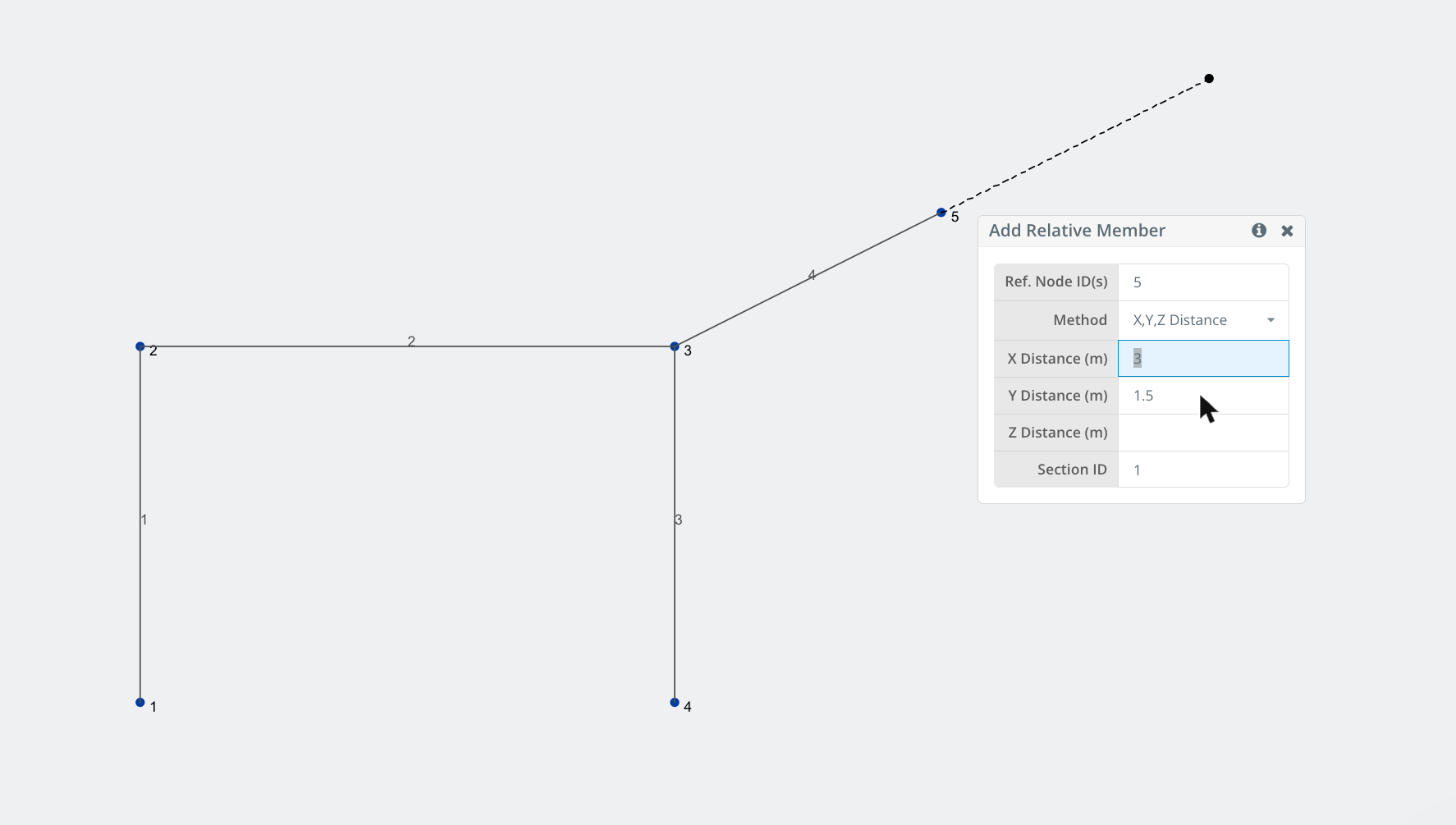
Τύπος Επίλεξε το για τη δημιουργία του μέλους. SkyCiv adds Node 5 στο (9, 5.5, 0) m and a member from Node 3 Η πίεση είναι 5.
Chaining members
The panel stays open after each member, και Ref. Αναγνωριστικό κόμβου(μικρό) changes to the node just created. The distances you entered are kept, so pressing Επίλεξε το again adds the next member from the new node with the same offset. Change the values between members to model a chain of members of different lengths and directions, without going back to the model.
Adding a relative member by angle and distance
The plane methods create a member of a given length at a given angle, in a plane parallel to one of the global planes through the reference node. Use them when you know the length and slope of a member rather than its X, συστατικά Υ και Ζ. Pick the plane in Μέθοδος, then enter:
- Απόσταση: the length of the new member.
- Γωνία (εσείς): the angle of the member in the plane, σε μοίρες, measured from the first axis of the plane towards the second. Negative angles go the other way.
| Μέθοδος | Angle measured from | Towards |
|---|---|---|
| XY-αεροπλάνο | +Χ | +ΚΑΙ |
| XZ-αεροπλάνο | +Χ | +ΜΕ |
| ZY-plane (Y is the vertical axis) | +ΜΕ | +ΚΑΙ |
| YZ-plane (Z is the vertical axis) | +ΚΑΙ | +ΜΕ |
The list shows ZY-plane when Y is the vertical axis of the model and YZ-plane when Z is, so that the angle in the vertical plane is always measured up from the horizontal axis.
Παράδειγμα: an inclined member in the XY plane
From Node 5 of the previous example, add a 3 m member sloping down at 60° from the horizontal. With Node 5 as the reference node, επιλέγω XY-αεροπλάνο σε Μέθοδος, εισαγω 3 σε Απόσταση και -60 σε Γωνία (εσείς):
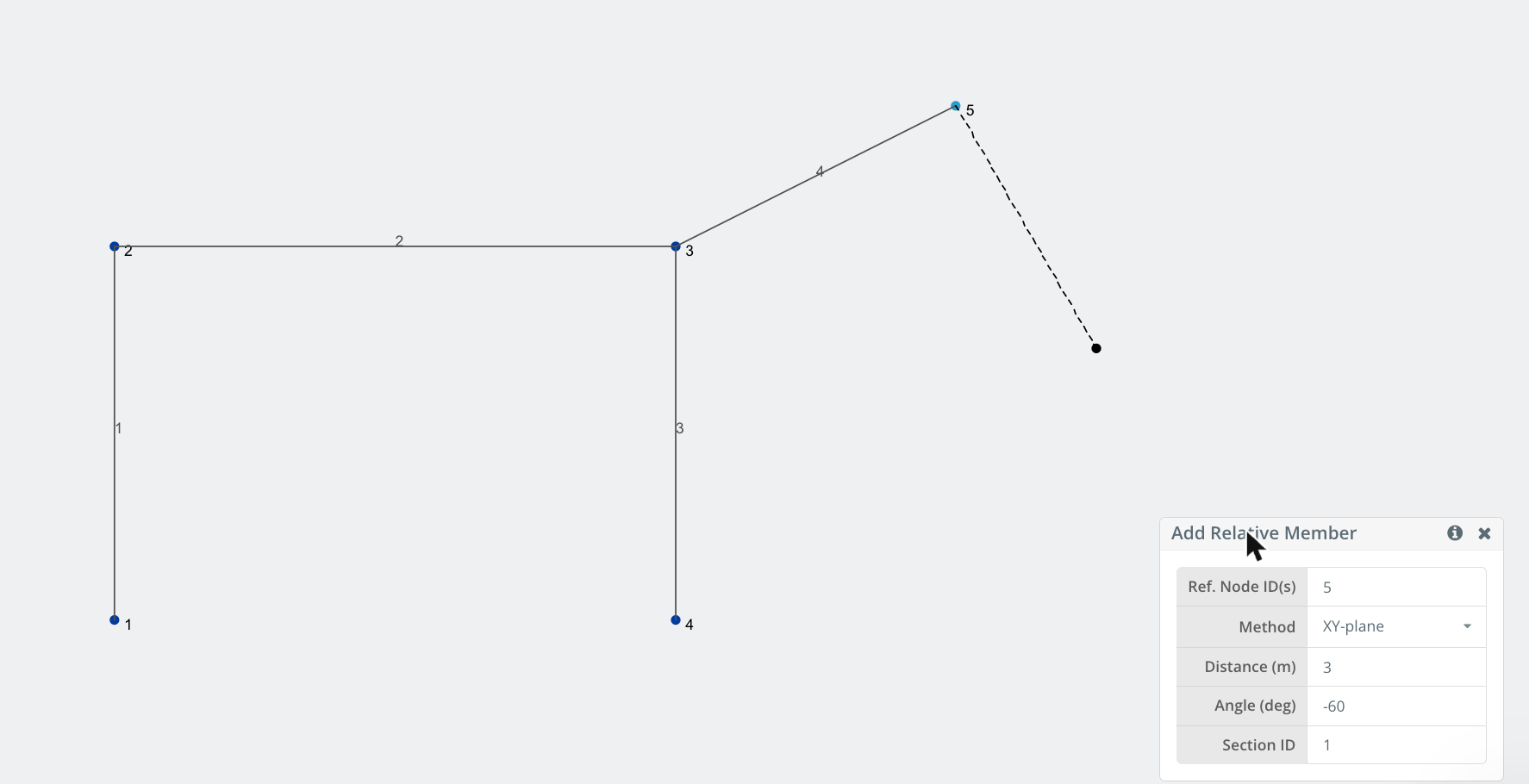
Τύπος Επίλεξε το to create it. As with distances, the new node becomes the reference node so you can keep going.
Adding relative members from multiple nodes
The tool works on several reference nodes at once: it creates one new node and one member from each of them, all with the same offset. The nodes don’t need to be in the same plane and can be anywhere in the model.
Select the nodes before pressing Ρ (the tool only uses nodes, not members, from the selection), or type their IDs in Ref. Αναγνωριστικό κόμβου(μικρό), χωρίζονται με κόμματα. Σε αυτό το παράδειγμα, μπαίνοντας 2,3 με α Y Distance του 2 m previews a 2 m extension of both columns:
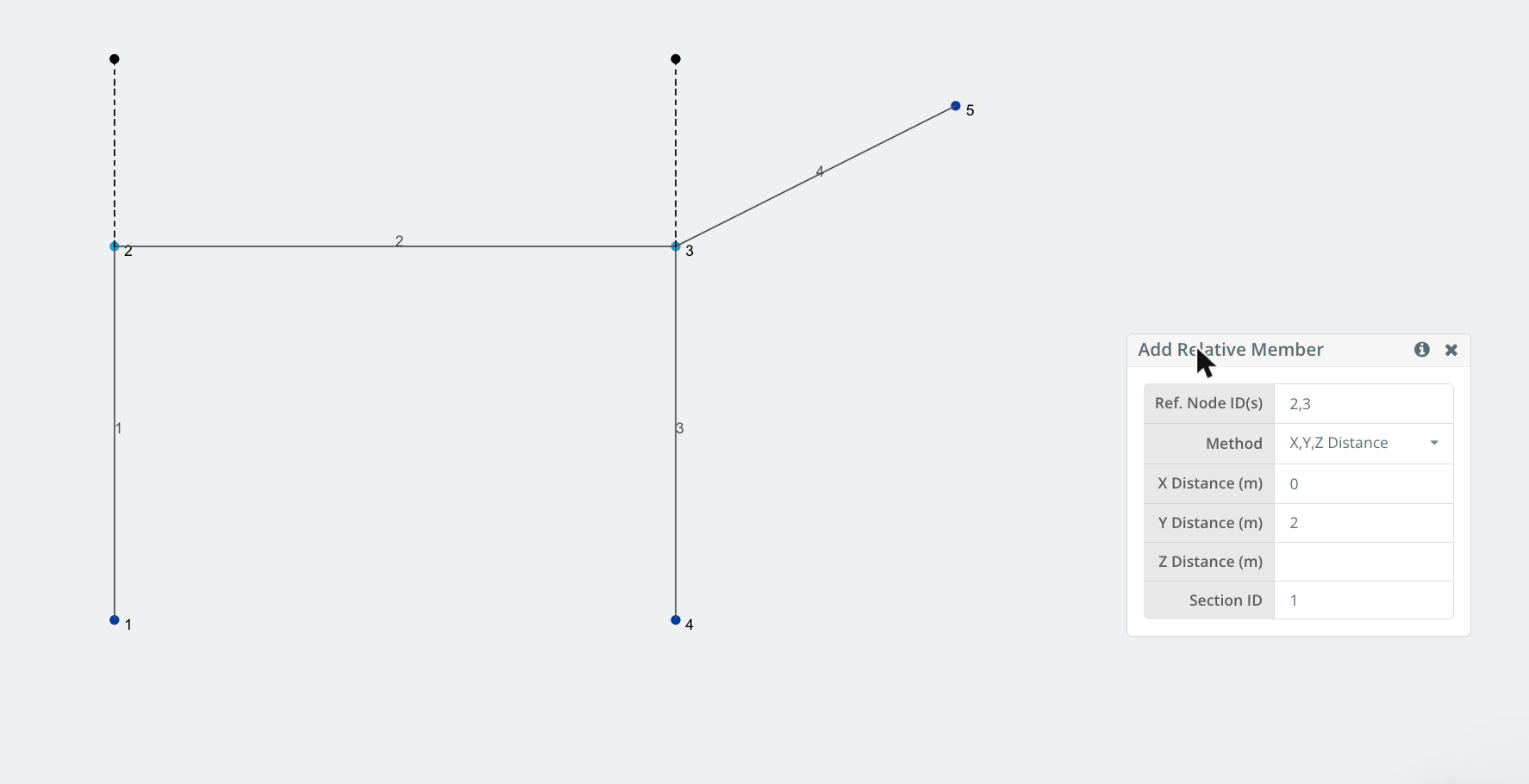
Τύπος Επίλεξε το to create the members. Ref. Αναγνωριστικό κόμβου(μικρό) then lists all the new nodes, so the next Επίλεξε το extends each of them again.
This is handy for repetitive geometry, for example to add the columns of a mezzanine above every node of a floor, or to extend the frames of a model generated with Πρότυπα συναρμολόγησης.
Adding relative nodes
To add nodes at a relative position without connecting them with members, right-click the selected nodes and choose Κόμβοι > Προσθήκη σχετικού κόμβου. Το Προσθήκη σχετικού κόμβου panel works exactly like Προσθήκη σχετικού μέλους, with the same methods and the same preview, but has no Αναγνωριστικό ενότητας: it only creates the nodes.
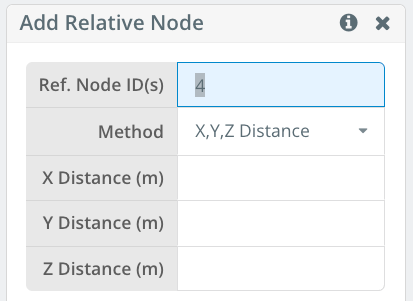
To move existing nodes by a distance rather than create new ones, χρήση με το μοντέλο γυρισμένο πανομοιότυπα γύρω από τον άξονα x = 0m in the operations of Structural 3D.
Adding relative members with the AI Assistant
For larger or repetitive edits, ο Βοηθός AI στο Structural 3D can do the same job from a single prompt. Click the sparkle icon in the bottom right corner to open the Βοηθός μοντέλου AI πίνακας, and describe the members you want with the node IDs, αποστάσεις και γωνίες, as you would enter them in the Relative Member tool. Για παράδειγμα:
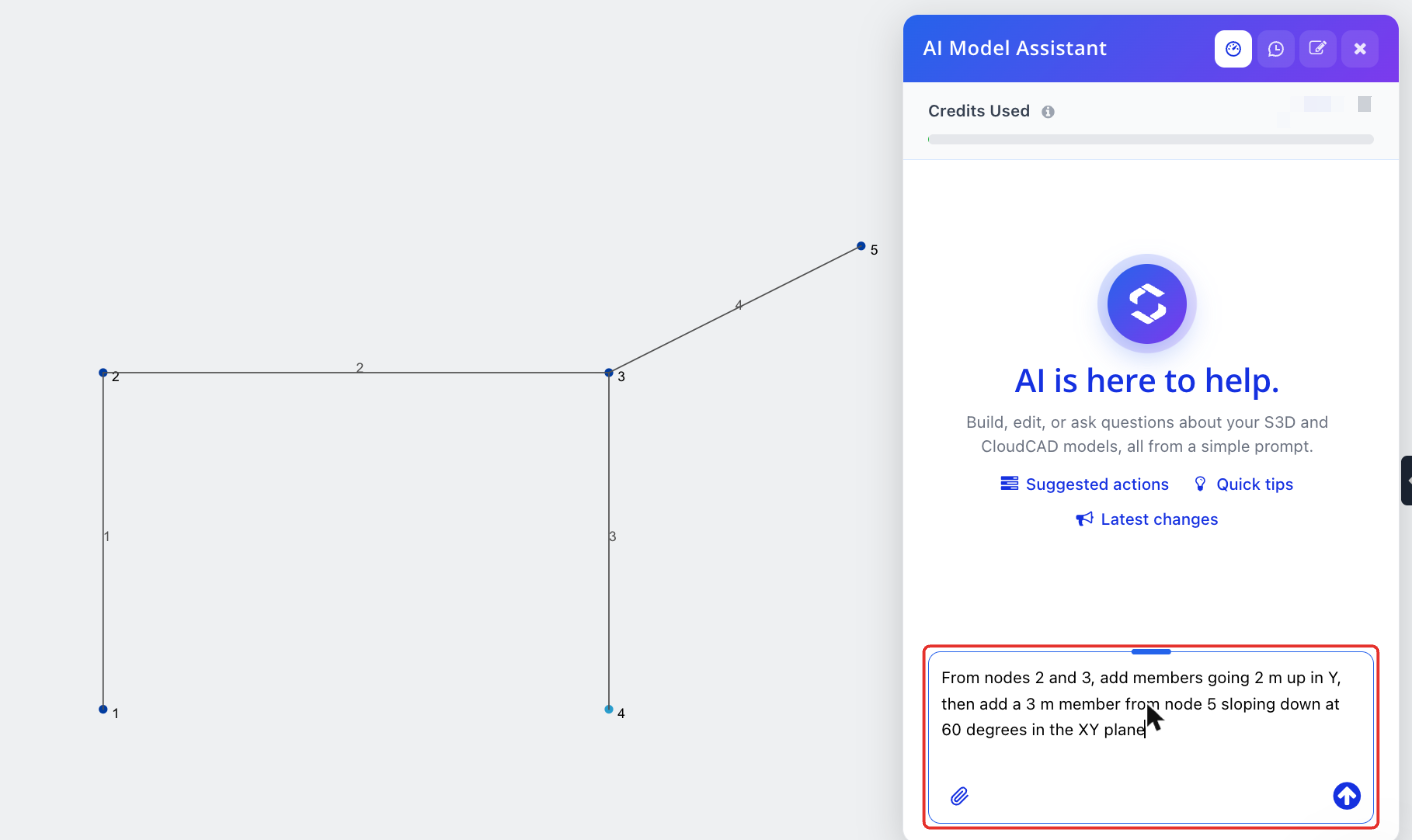
You can combine several steps in one request, such as extending a set of nodes by a distance and then adding an inclined member at a given angle, or ask for members in terms of the structure ("add a 2 m cantilever at the top of every column"). Όταν γίνει, το AI Assistant σας λέει τι άλλαξε, και διαλέγεις Διατήρηση ή Ξεκάνω. Check the new nodes and members in the model, όπως και με κάθε αλλαγή που δημιουργείται από την τεχνητή νοημοσύνη. Κάθε αίτημα χρησιμοποιεί πιστώσεις AI.
Συμβουλές
- Every member created with the tool can be undone with Ctrl+Z (Cmd+Z σε Mac), like any other change to the model.
- If the new end falls exactly on an existing node, the tool connects the member to that node instead of creating a duplicate, so you can close a frame by ending a relative member on a node that is already there.
- Set up the τμήματα of your model first, so you can pick the right one in Αναγνωριστικό ενότητας as you go.
