
デザインに最適化されたセクションを取得する, ワンクリックで.
SkyCiv Member Design Designer はユーザーの時間を節約します, 特定のデータベース内のすべての可能なセクションをチェックし、最小の断面積と最良の利用率を持つ形状を選択することによって. 現在, the Designer supports the SkyCiv steel, cold formed steel and timber member design codes (AISC, BS, ユーロコード, なので, NZS, CSA, IS, AISI, AS / NZS 4600, NDS and AS 1720). デザイナーが正しく動作するには、いくつかの基準があります:
- セクションはセクション ビルダーのライブラリからロードする必要があります
- メンバーのデザイン 小切手 関数は実行できる必要があります
デザイナーは私たちの鋼鉄のすべてに存在します, SkyCiv Structural 3D による木材および冷間成形部材設計ソフトウェア, SkyCiv Beam とスタンドアロン設計ソフトウェア. 完全なビデオチュートリアルが必要です? 私たちをご覧ください チュートリアルの例 この機能について.
デザイナーの起動
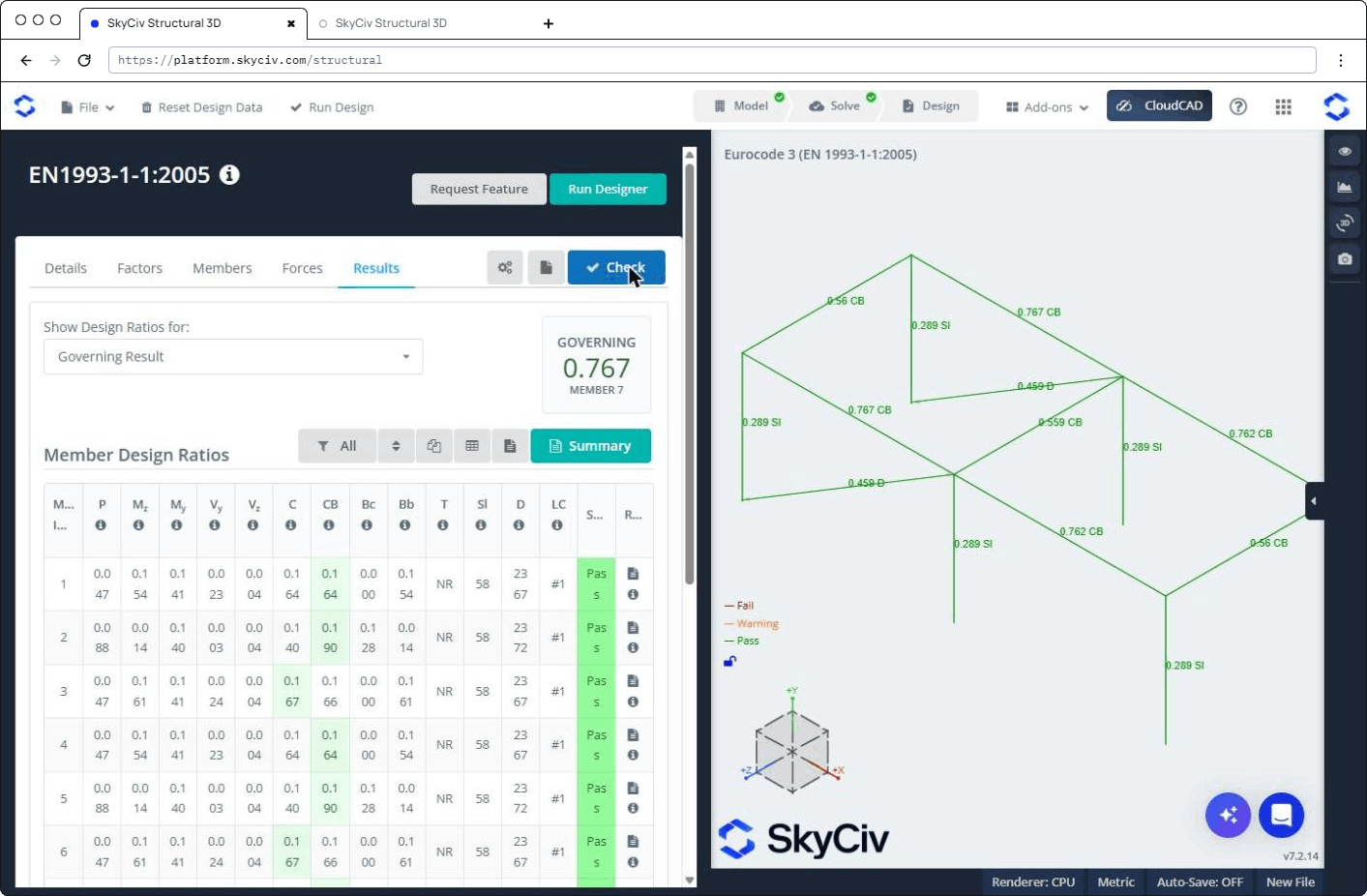
メンバーデザインを起動するには デザイナー, まず、構造を設計しているメンバー設計モジュールを開く必要があります。. In this example we are running a Eurocode 3 (に 1993-1-1:2005) steel check. モジュールが開いたら, をクリックするだけです デザイナーの実行 モジュールの右上隅にあるボタン. 以下のモデルでは, a steel frame with HE 200 B columns, IPE 360 beams and SHS100x100x5 bracing, all members pass the check with a governing utility ratio of 0.767, so there is room to use lighter sections:
Designer Settings
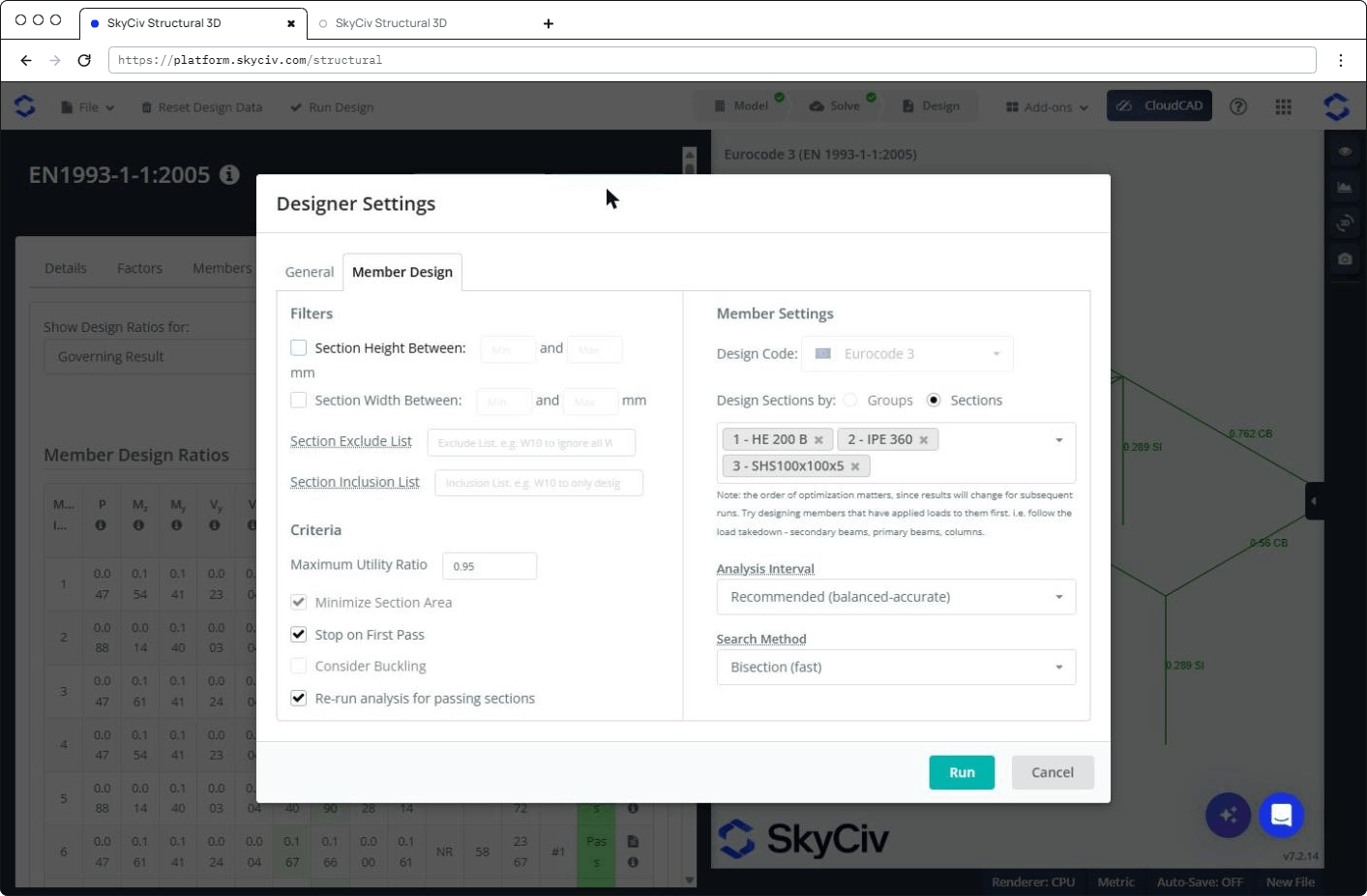
ユーザーは多数のコントロールと設定を利用できます, 目標とするユーティリティ比率を含む, セクションの高さ/幅の制限とデザインするセクション. をクリックすることで デザイナーの実行 ボタン, の Designer Settings 現れる. Its メンバーデザイン tab holds the following options:
の 一般的な tab has the Auto Commit Changes オプション: when ticked, the Designer automatically commits the optimized sections into the current model.
フィルター
デフォルトでは, the Designer looks at all the sections of the library the section was loaded from. These options will govern what sections the Designer looks at when selecting the most optimized section:
- Section Height Between そして Section Width Between: only test sections whose height or width is in the given range (in mm for metric models).
- Section Exclude List: skip any section whose name contains one of these entries. 例えば, W6x will exclude any section with W6x in its name. Comma separate multiple entries.
- Section Inclusion List: only test sections whose name contains one of these entries. This overrides the Section Exclude List. Comma separate multiple entries.
基準
- 最大利用率: any result with a higher UR than specified will not be considered a valid choice. デフォルトは 0.95.
- Minimize Section Area: the Designer always looks for the passing section with the smallest cross sectional area (this option is always on).
- Stop on First Pass: on by default. Skips the remaining sections once the lightest section that meets the criteria is found, saving unnecessary results and solving time.
- Consider Buckling: also uses the buckling factor along with the Maximum Utility Ratio to decide if the criteria is met. To enable it, re-solve your model with 線形静的 + 座屈.
- Re-run analysis for passing sections: on by default. Re-runs the analysis whenever a section meeting the criteria is found, whatever the 分析間隔. This may slow down the Designer, but gives a more accurate model once the changes are committed.
メンバー設定
In this area of the settings, の デザインコード of the Member Design module is shown. 下 Design Sections by, users can choose to design by セクション (デフォルト) or by グループ. The Designer will import whichever sections are designable in this module, ただし、ユーザーはデザインしたいセクションを追加/削除することができます。. デザイナーは一度に 1 つのセクションをデザインします。.
の 分析間隔 重要な設定です, FEA ソルバーを再実行する頻度をソフトウェアに指示します。. Its quickest option is Fast Run (an interval of 0) – meaning we will use the same internal forces when testing each section. 通常はこれで大丈夫です, 曲がった瞬間から, 断面を変更しても、せん断力と軸方向の結果はあまり変わりません. しかしながら, deflection results will change and can affect the results – as we use a lighter section, 自重が減るとたわみ結果を更新する必要があります.
So users can increase the frequency at which the solver is run between testing sections. ここでの唯一の注意点は、プロセスが遅くなるということです, FEA ソルバーはセクションの変更の間に実行する必要があるため. オプションは次のとおりです:
- Fast Run (low accuracy): does not re-run the analysis between sections. The sections are tested against the current force results.
- Recommended (balanced-quick): re-runs the analysis every 7 セクション.
- Recommended (balanced-accurate): re-runs the analysis every 3 セクション. This is the default.
- Slow Run (highest accuracy): re-runs the analysis between every single section test.
For large models, the default is lowered to keep the run time reasonable: balanced-quick for models with more than 500 会員, そして Fast Run for models with more than 2000 会員.
の Search Method sets how the Designer searches the section library for a section that meets your criteria:
- Bisection (接続): デフォルト. Jumps through the ranked list of sections, halving the range left to search after each test, and skips sections that are unlikely to meet the criteria. This can save up to 70% of the design checks. In rare cases, it might not find the absolute best section.
- Sequential (スロー): tests the sections one by one, from the lightest. It is slower, but goes through the whole list.
見る デザイナーのプロセス below for how each method works.
デザイナーのプロセス
Designer は次のように実行されます。:
- 初期解析/設計を実行して、モデルのセットアップが正しいことを確認し、現在の結果を確認します。
- 最初のセクションのテストを開始します:
- 指定されたライブラリ内のすべてのセクションを断面積の順にランク付けします. If the current section already passes, heavier sections are left out
- モデル内のセクションを変更し、解析を再実行します。 (に応じて 分析間隔 設定)
- 新しい分析結果により (曲げ, たわみなど。) we test the next section, picked by the Search Method (下記参照)
- 結果を保存して次の分析を実行する
- とともに Sequential search method, the sections are tested one by one, from the lightest. スピードとパフォーマンスのために, 不要なテストはスキップされます. これらは、もし (a) 最後の 5 テストにより悪い結果が出たり、 (b) 可能な限り最良の利用率をすでに見つけています (c) 私たちはかなりの数で失敗しています, 私たちはスキップします 5 セクション
- 次のセクションから始めてください, with the updated sections from previous iterations carried through
Bisection search
とともに Bisection search method, the sections are ranked by cross-sectional area, with a small weighting given to their elastic section moduli, so that sections of similar area are ordered by their bending capacity. The Designer then:
- Starts from the current section. If it passes, it searches the lighter sections; if it fails, it searches the heavier ones
- Tests the section halfway between the lightest section known to pass and the heaviest section known to fail, and keeps the half of the range that holds the answer
- When a tested section fails but its utility ratio is close to the limit, it moves in smaller steps, so that more of the lighter sections around the limit get tested
- Stops when the range can’t be narrowed any further, and keeps the lightest passing section it found
The jumps through the list are large at the start and get smaller as the search closes in. Since a large change of section changes the forces in the model the most, the Designer re-runs the analysis more often after large jumps: before the next test after a jump of more than 20 sections in the list, and at least every 2 または 3 tests for smaller jumps (or more often if your 分析間隔 is shorter). と Fast Run, the analysis is never re-run, whatever the size of the jumps.
Order of the sections
The order in which the sections are designed matters, 前のセクションの最適化で要素が軽くなった場合は、作業を進めながらモデルを更新するためです。, 後続のセクション最適化の結果に影響します。. それが役立つなら, ユーザーは、デザイナーがどのような作業を行ったかのログを確認できます。 ログの表示 結果が戻ってきたら.
場合を考えてみましょう ここで列が最初に最適化されます. 彼らは通過するかもしれない, しかし、上の梁の設計を始めると、 (おそらくそれらを厚く/重くするでしょう) その後、戻って列を再確認すると、, 彼らは失敗するかもしれない. しかしながら, 逆の順序で最適化する, この問題は起こらないはずです.
結果
The results will display in a popup. For each section, it shows the original and optimized section, the number of tests, a note, the utility ratio, the savings (the reduction in cross sectional area) and a checkbox to commit it. When the Designer made the model lighter, it also shows the total material savings (the weight of the model before the Designer run compared to the optimized model). 以下の例では, 全て 3 モデルのセクションが最適化されました, のために 26% material saving:
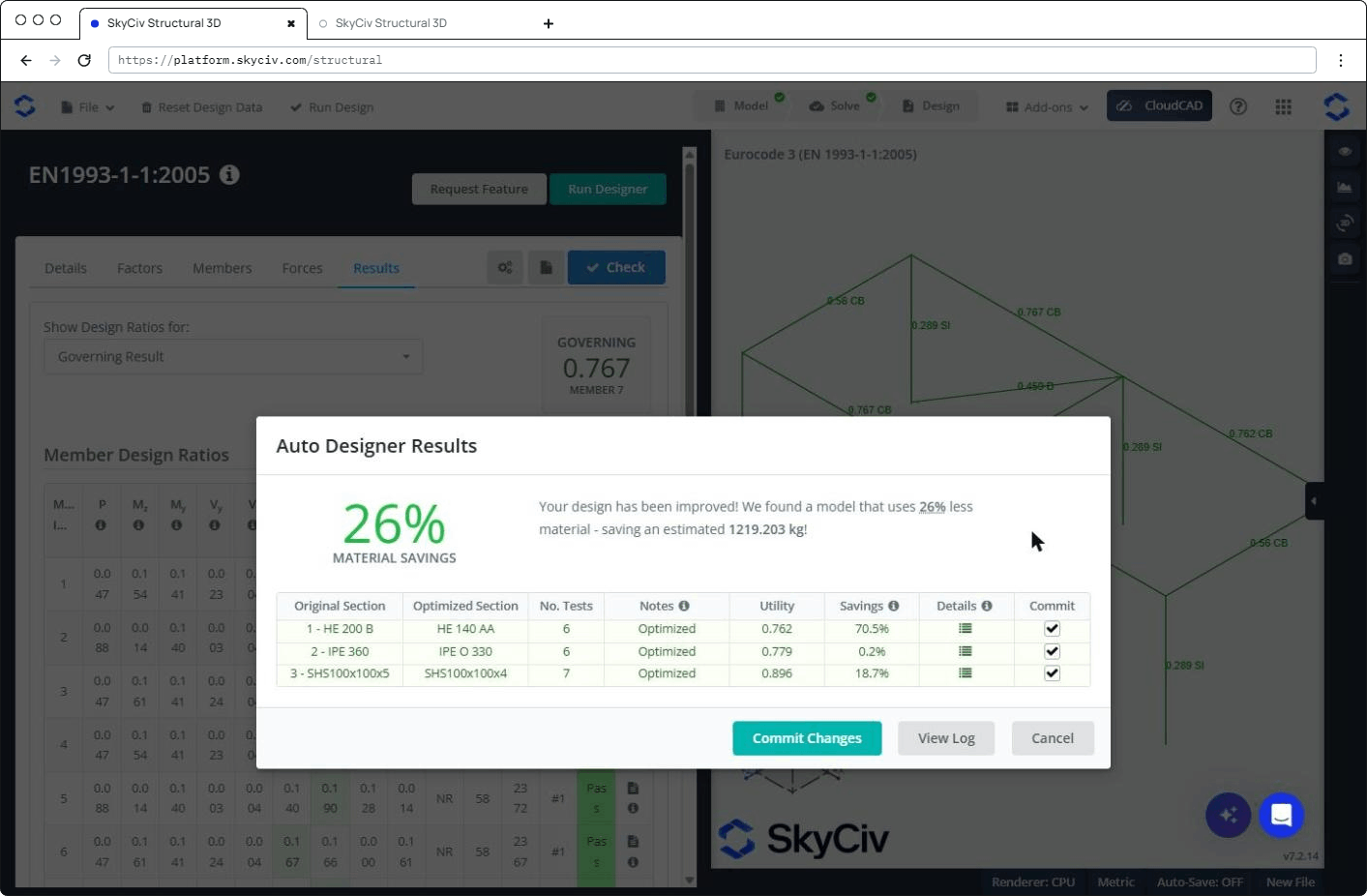
の ノート column tells you what happened to each section:
- No Change: no change was made to your section. Either it is the best option, or there is no passable section in the tested range.
- Optimized: this is the best option found in the tested range.
- Now Passing: the section was failing before, but now passes.
- Not Passable: no section in the range is passable.
- Best Option: this is the best option found in the tested range, but it may still be failing.
- Skipped: the section could not be optimized and was left unchanged. The reason is shown above the table.
下のアイコンをクリックすると、すべての実行とその結果を詳しく見ることができます。 詳細. これにより、次の実行の詳細なリストが表示されます。. 例えば, セクションの選択 3 (SHS100x100x5) 以下を示します:
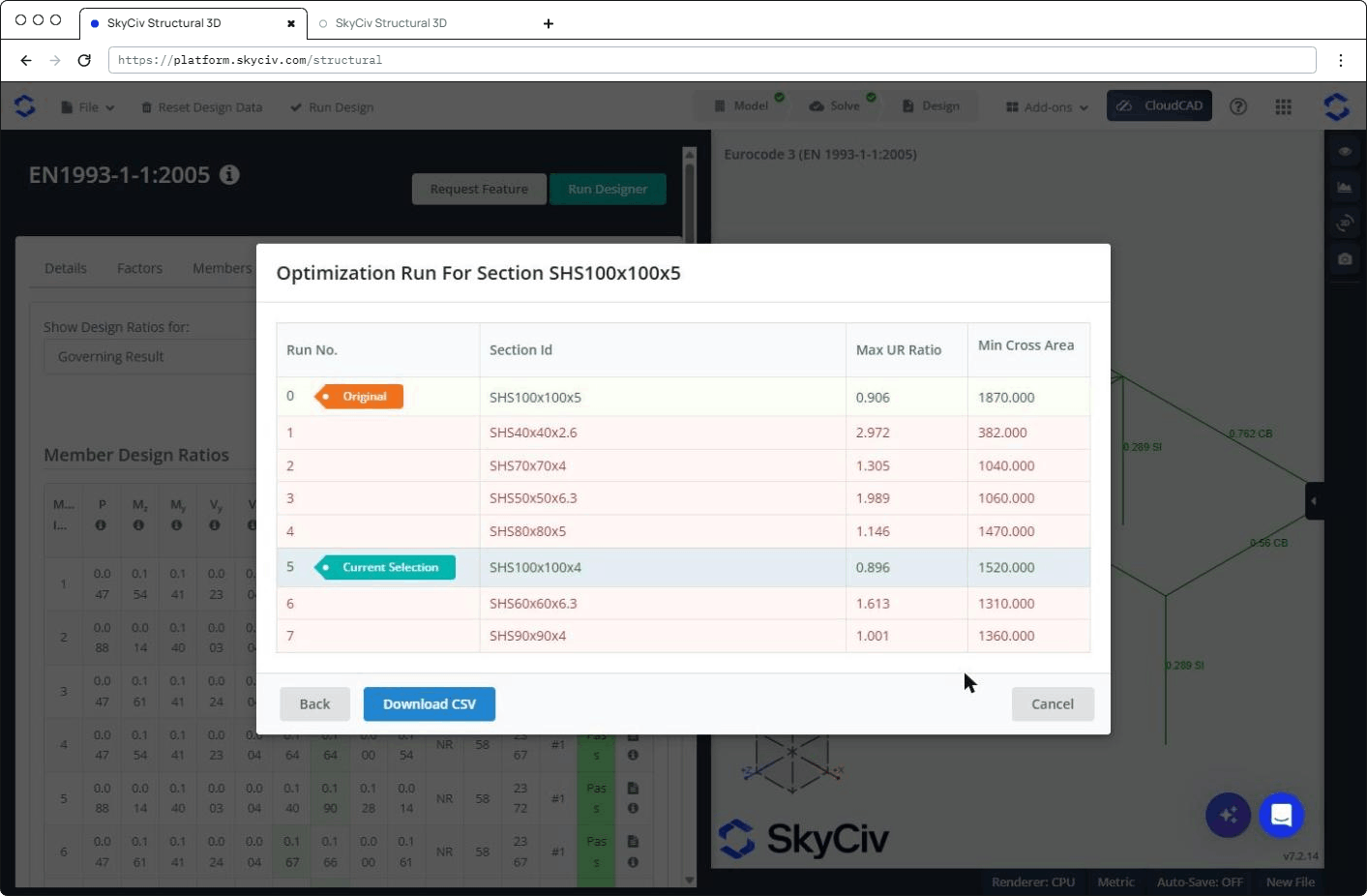
From here we can sort by Max UR Ratio or cross area by clicking the column headers, and download the list with Download CSV. The original section and the selected section are labeled. これにより、ユーザーは最適化の実行をレビューして、適切なセクションが選択されていることを確認できます。. 上記の例では, we kept the default maximum Utility Ratio of 0.95 and the Designer minimized the cross section area: it selected SHS100x100x4, the lightest section tested that still meets this design criteria.
結果をコミットする
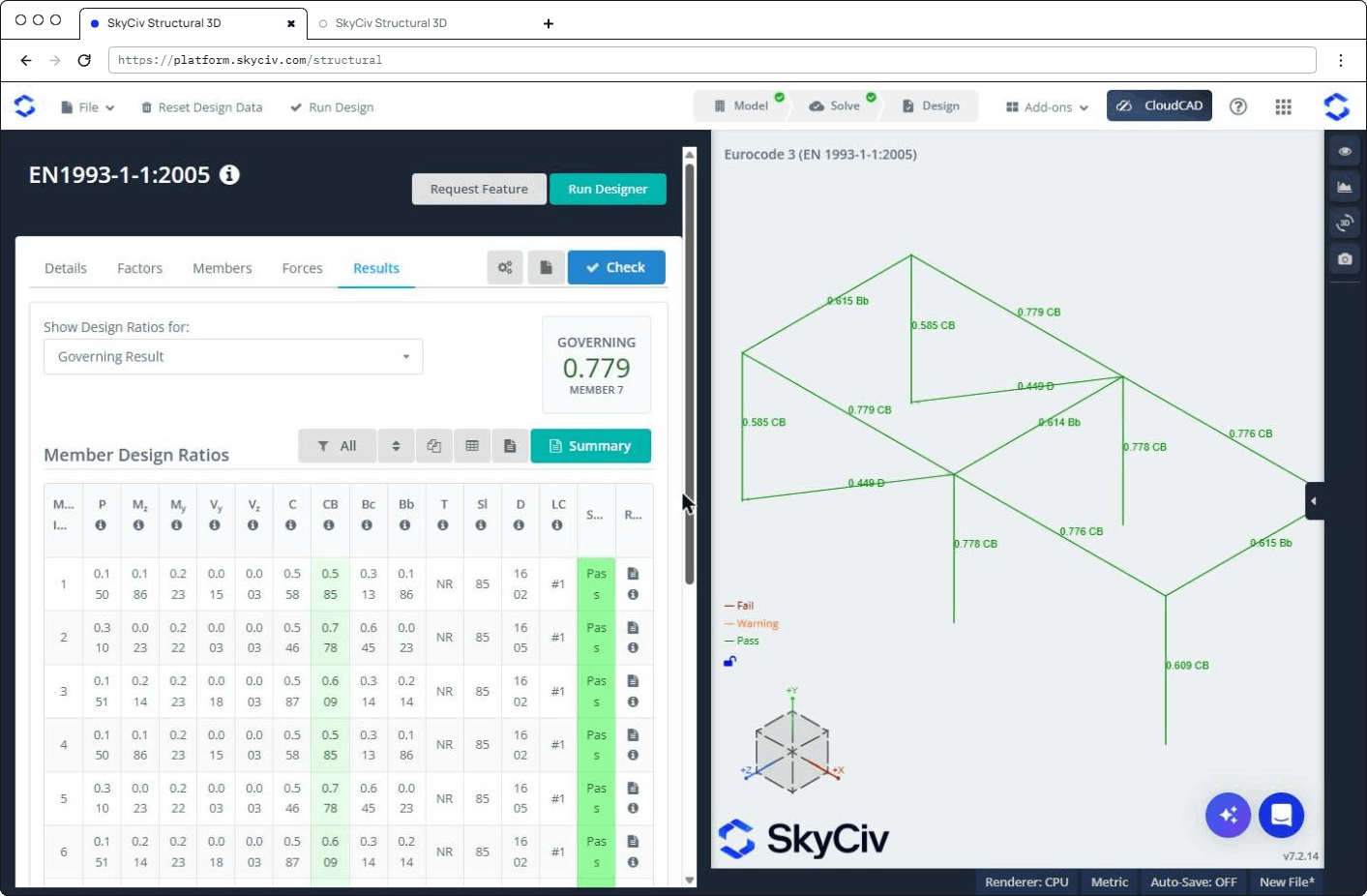
結果に満足したら, あなたは打つことができます 左側のメニューバー をクリックします 変更をコミットする to accept the sections that are ticked under 専念. ソフトウェアはこれらの形状を両方のデザイン モジュールにコミットします。, と構造モデル. The software will also re-solve the model and re-run your design check to give you the most up to date results. したがって、上記の例では, after committing we can see the sections are all still passing, with a governing utility ratio of 0.779:
デザインモードからセクションを変更する, 解析結果が現在のモデルと一致していないことを意味します. If you change sections in any other way, 解析結果と設計結果が同期していることを確認するために、モデルに戻って解決し、設計チェックを再実行することを強くお勧めします。.
Designing Failing Members
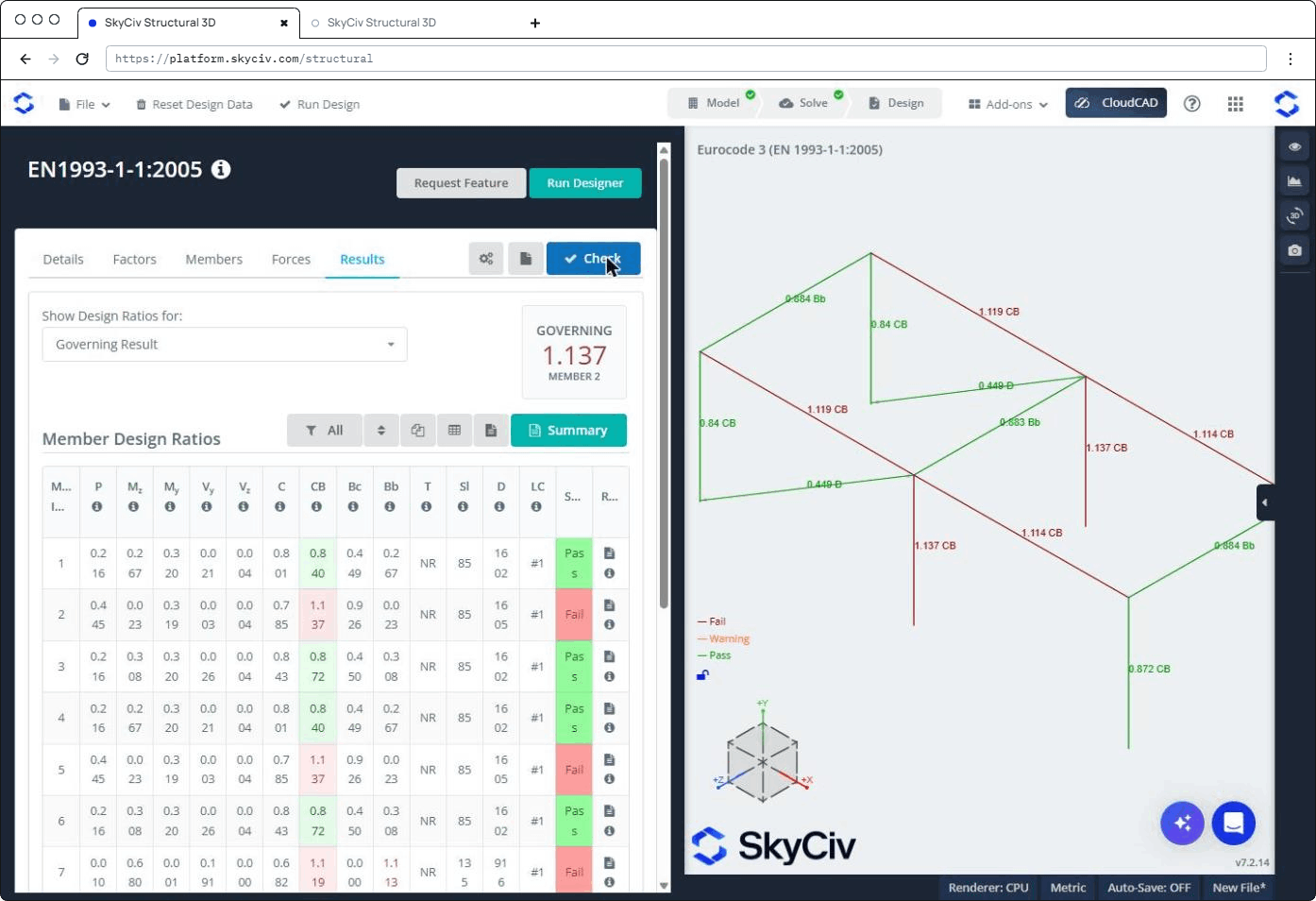
The Designer doesn’t only make passing members lighter: when a section fails, it searches the heavier sections for the lightest one that passes. To show this, we took the optimized model from above and increased the first load combination from 1.2D + 1.6L to 1.6D + 2.4L. After solving and re-running the check, the middle columns and the long beams fail, with a governing utility ratio of 1.137:
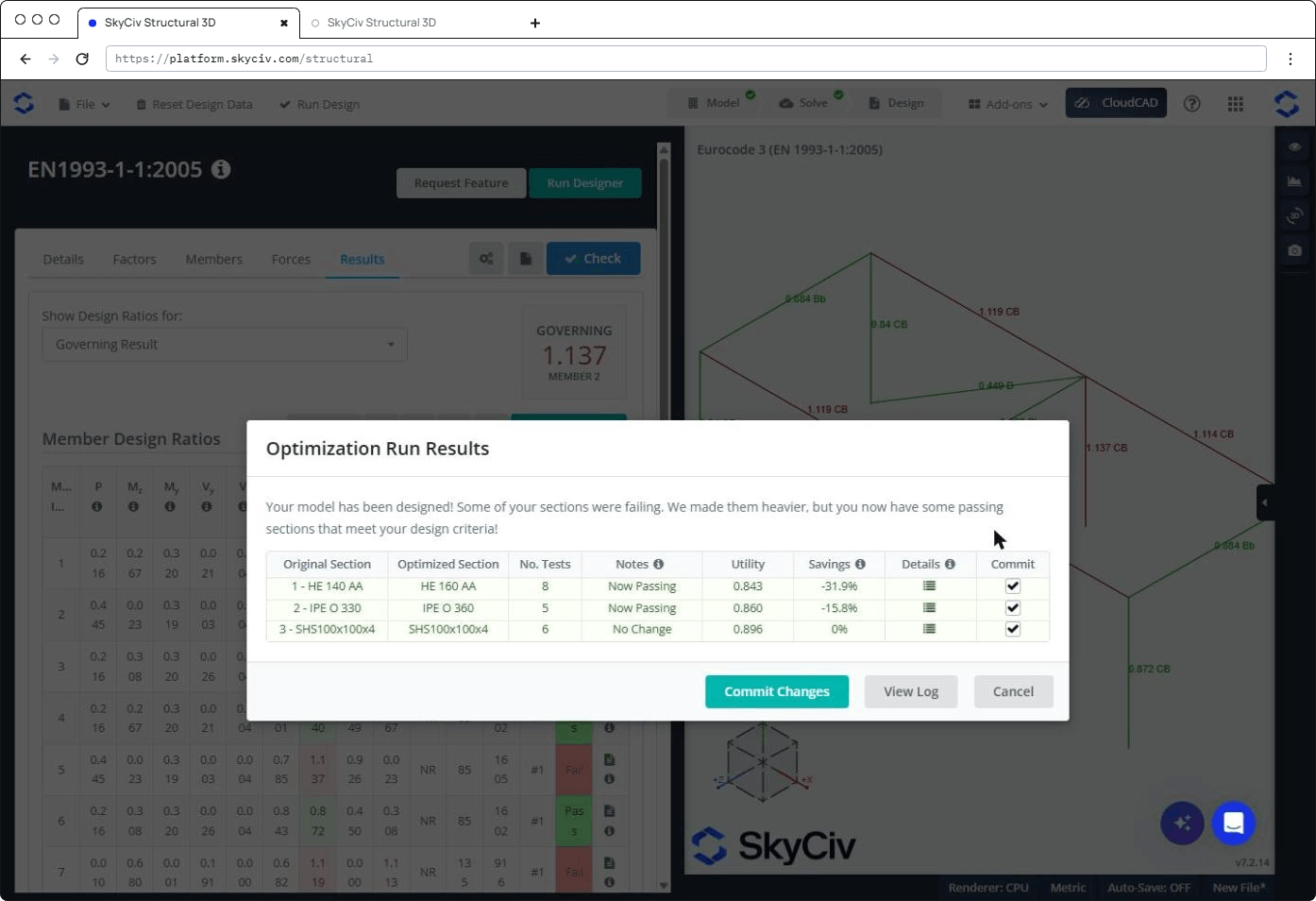
Running the Designer again with the same settings, the failing columns and beams are moved up to heavier sections (彼 140 AA to HE 160 AA, and IPE O 330 to IPE O 360) and marked Now Passing. Since the sections got heavier, their Savings are negative. The bracing still passes, so it is left as No Change:
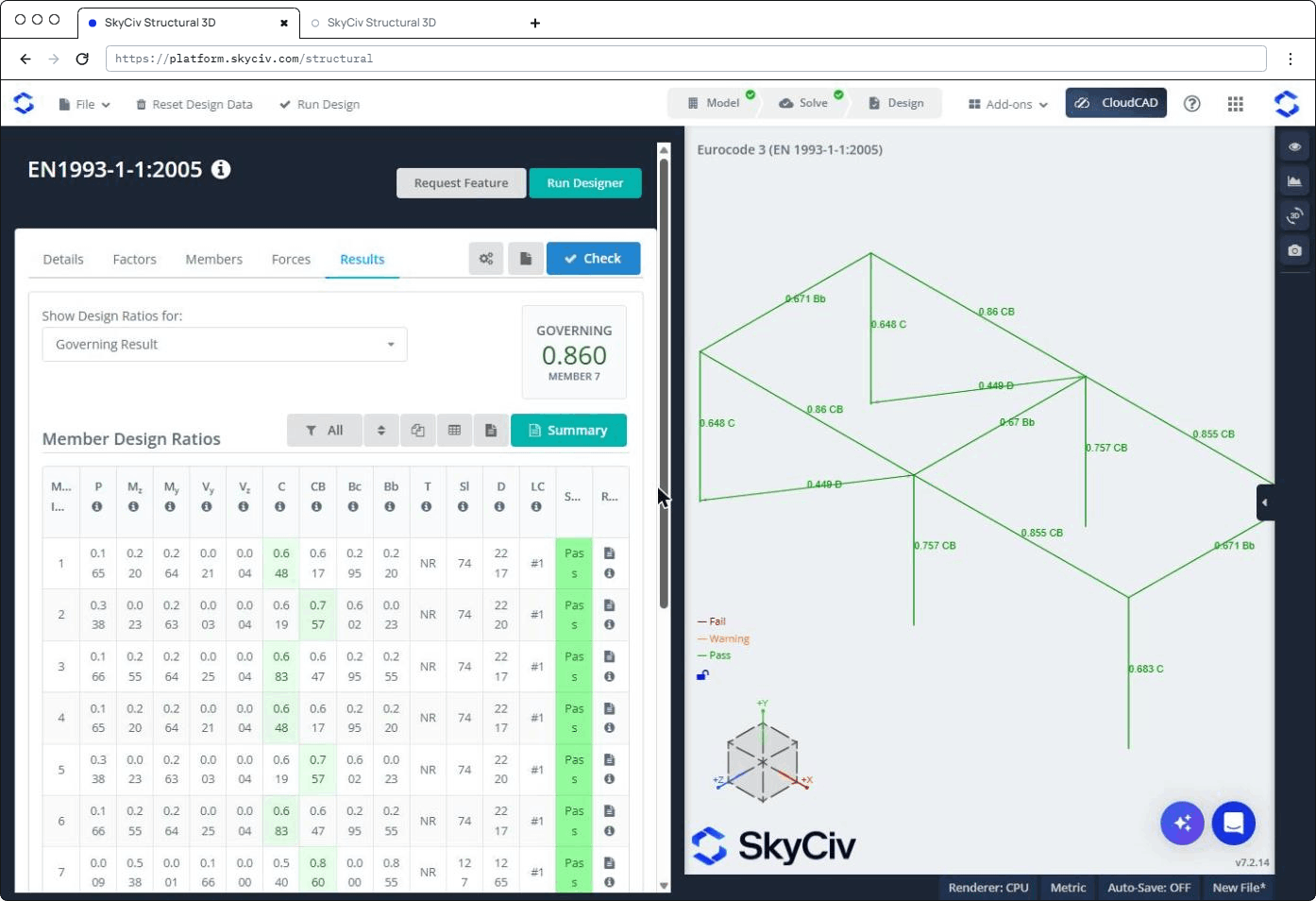
After committing, all the members pass again, with a governing utility ratio of 0.860:
トラブルシューティング
デザイナーを実行できない場合, 次のことを確認する必要があります:
- セクションは SkyCiv セクション データベースからロードされていますか?? セクションはセクション ビルダー データベースからロードする必要があります, このようにして、デザイナーはセクションのどのカタログをテストするかを知ることができます。. If a section was loaded from a library table that is no longer in the current section library (a legacy table), the Designer skips it and says so: re-select the section from the Section Builder library and run the Designer again
- Can you run a Member Design “Check”? これにより、セクションがすべて設計可能であり、モデルが正しく設定されていることを確認できます。. デザイナーはこれを繰り返すため、, 機能するにはベースモデルで実行する必要があります
- 何か特別な要素はありますか (先細り, 剛体メンバー)? UI はこれを防ぐ必要があります, しかし、場合によってはこれでもすり抜ける可能性があります. Please remove those special elements from the Designer Settings and try run the Designer again
- 材料がテスト中の設計コードと一致していることを確認してください. 再び, これは UI によってブロックされるはずですが、場合によってはこれが発生する可能性があります。. モデルに戻り、これらのセクションが実行しようとしている設計コードと一致していることを確認します。. 例えば, NDS には適切な NDS 材料が必要です。または AISC にはセクションに割り当てられた鋼材が必要です。.
- あなたのモデルは設計標準単位系とは逆の単位系ですか?? US 設計コードをインペリアルおよび AS で実行することをお勧めします。,に,BS,CSAなど. すべてメートル単位の規格
