
The double angle connection is one of the simple shear connections set out in Part 10 des AISC-Handbuchs, and a fabricator favourite at beam to column web connections.
It consists of two angles, one each side of the beam web, bolted or welded to the beam web and to the support. On a beam to column web connection the angles are usually welded to the beam and bolted to the support. That combination needs a shorter leg on the support side, which matters when the space inside the column web is tight and an all-bolted detail would need clearance for a wrench.
An all-bolted double angle is the usual choice at a beam to girder connection, particularly where a Einzelwinkel will not carry the shear: the second angle gives the support bolts two shear planes instead of one.
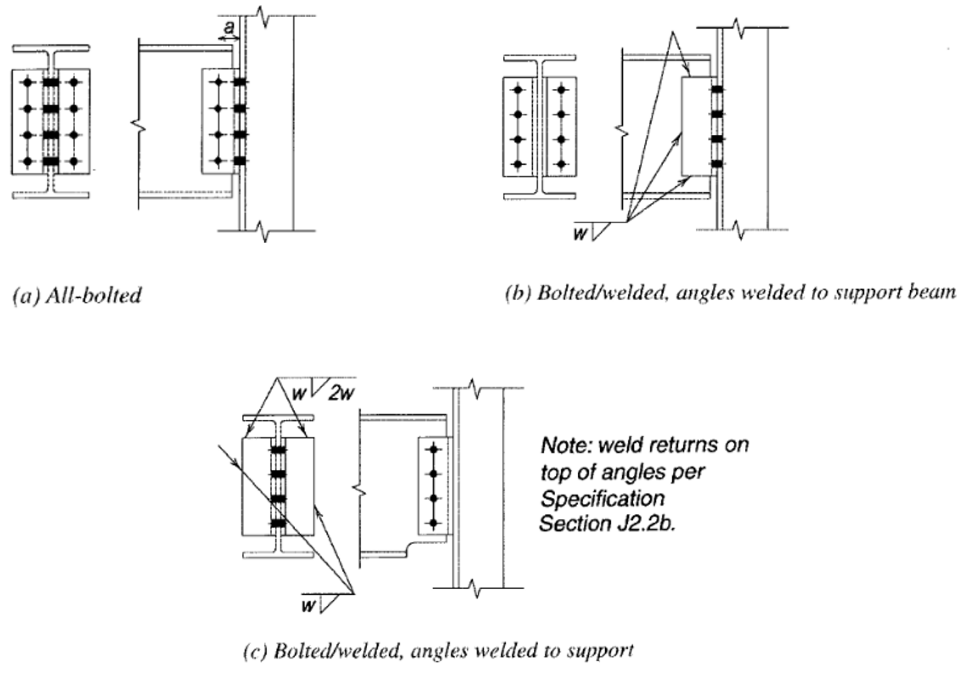
The three arrangements are all-bolted, bolted with the angles welded to the supporting beam, and bolted with the angles welded to the support. Where the angles are welded, weld returns are required across the top of the angles per Specification Section J2.2b.
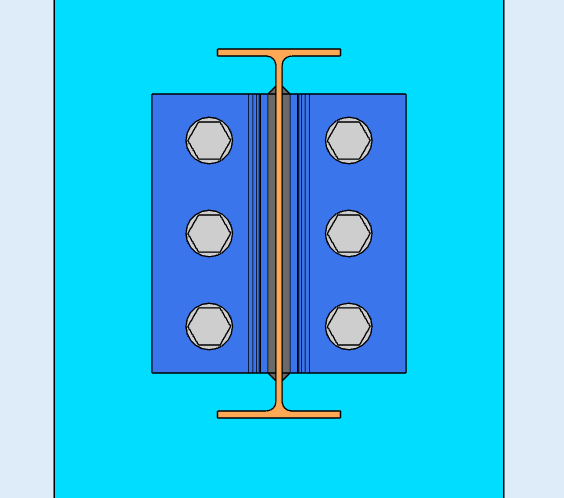
What Governs the Design
The double angle is popular because it goes together in the field with ordinary tools and needs no special fabrication. Designing it still comes down to a handful of things that interact.
Bolt spacing drives the bolt group. Too few bolts and the bolts and angles are overstressed; too many and you are paying for a connection that is harder to install than it needs to be. Edge distances matter for the same reason, both from the angle edge and between adjacent bolts, since a short edge distance fails in tear-out long before the bolt fails in shear.
The angles themselves deform. A simple shear connection has to rotate as the beam end rotates, and the angle legs bend to let it. That flexibility is the point, but taken too far it turns into lost capacity and overstressed bolts, which is why the angle thickness and leg length are as much a part of the design as the bolt group.
The design also depends on how the beam is supported. A simply supported beam and a continuous beam put different demands on the same detail.
Designing a Double Angle Connection in SkyCiv
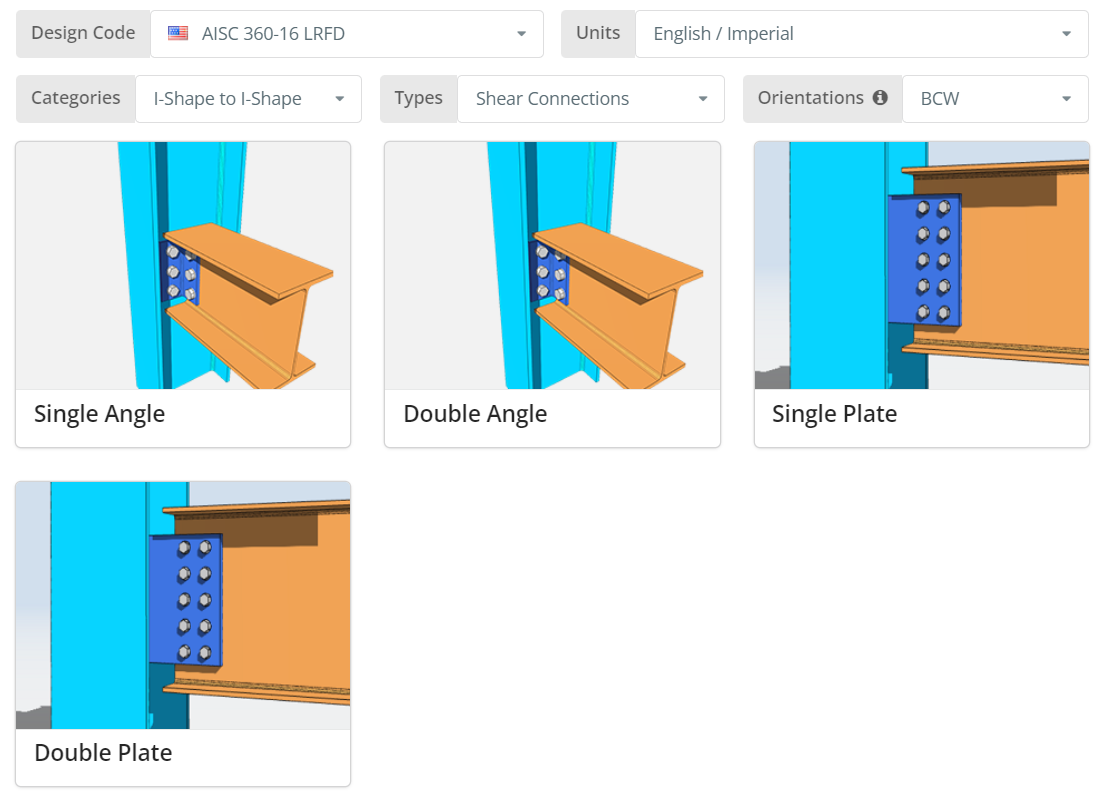
Der Designcode kann AISC sein 360-16 ASD oder LRFD, und Einheiten Englisch/Imperial oder SI/Metrisch. Die Ausrichtung ist BCF, BCW oder BBW; Bewegen Sie den Mauszeiger über den Tooltip, um zu erfahren, was die einzelnen Elemente bedeuten. Drücke den “Doppelwinkel” Fliese.
Registerkarte Details
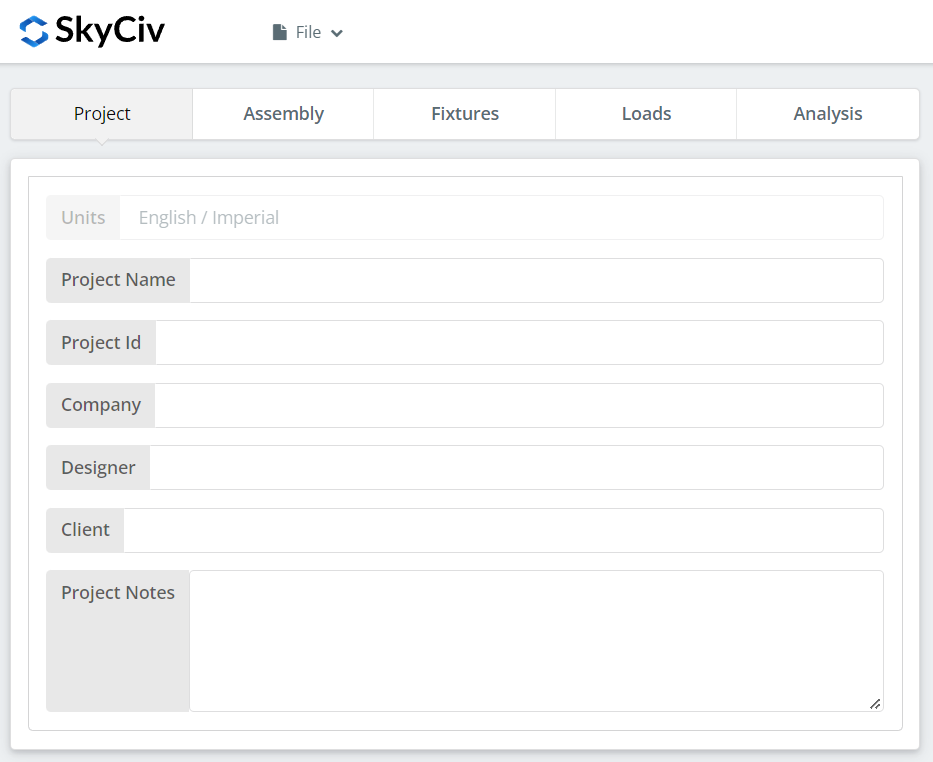
Tragen Sie hier die Projektdetails ein. Nichts davon ändert die Berechnungen, aber es geht in den Bericht über.
Registerkarte „Montage“.
Unter „Assembly“ befinden sich drei Registerkarten: the Column, der Balken, und die Verbindung, which holds the double angle.
Spaltenregisterkarte
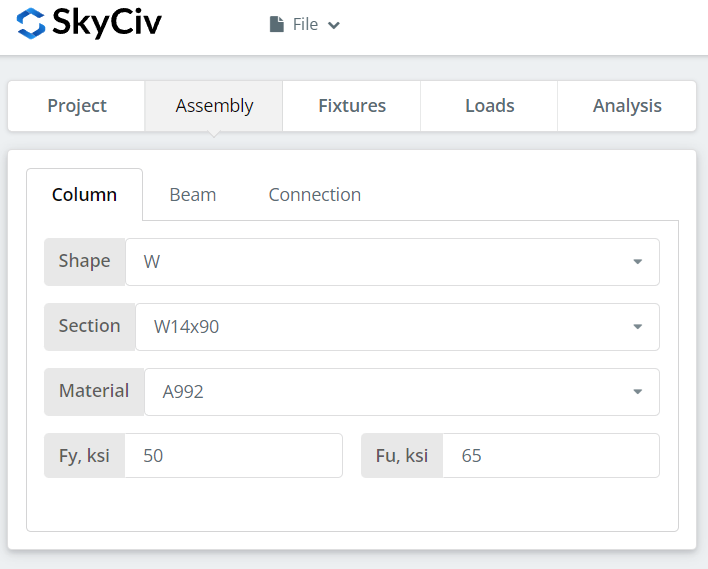
Specify the section and material grade of the column. A992 und A36 sind in der Liste; Für alles andere wählen Sie „Benutzerdefiniert“ und geben „Fy“ und „Fu“ ein.
Balken-Registerkarte
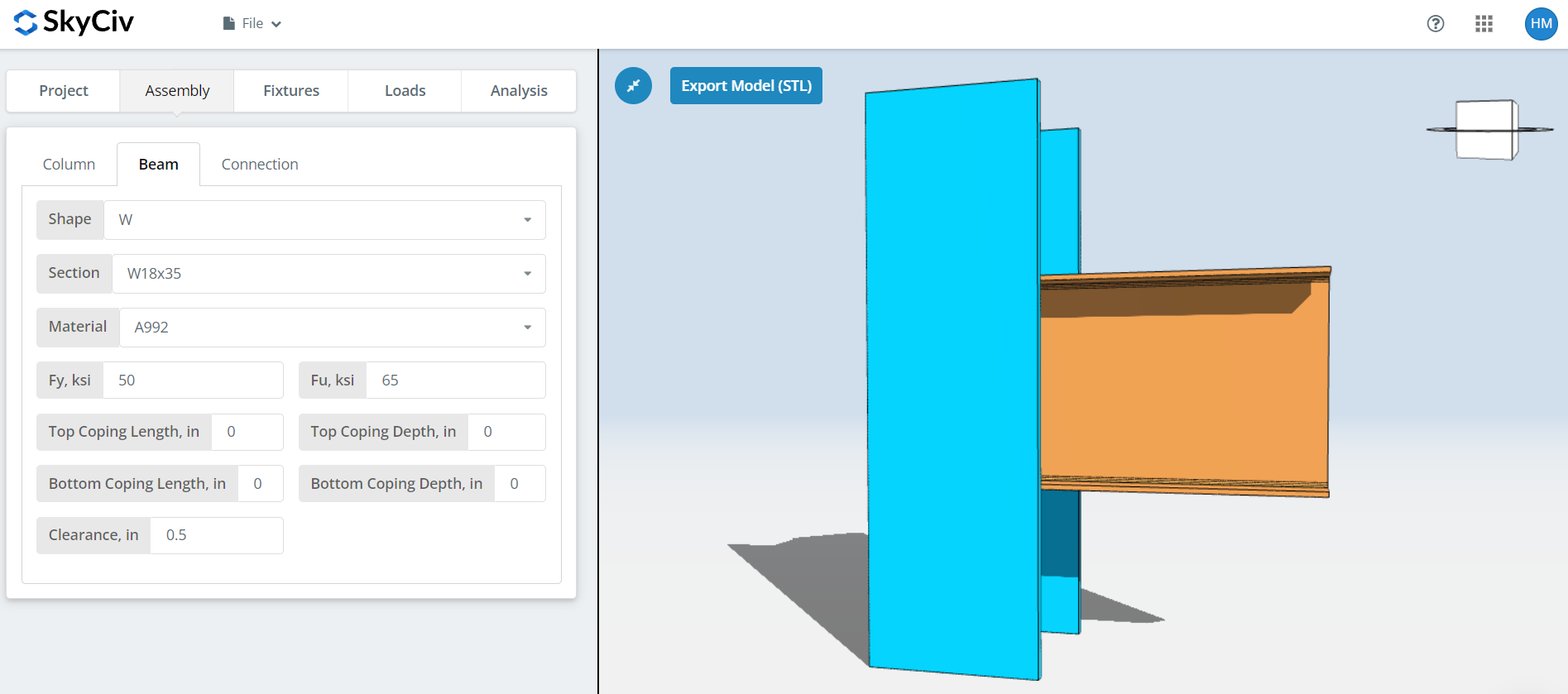
Die gleichen Eingaben für den Balken, plus cope dimensions and beam clearance. Add a cope where the beam frames into a supporting member of similar depth and the flange has to be cut back, since the coped section governs checks the uncoped one does not.
Registerkarte „Verbindung“.
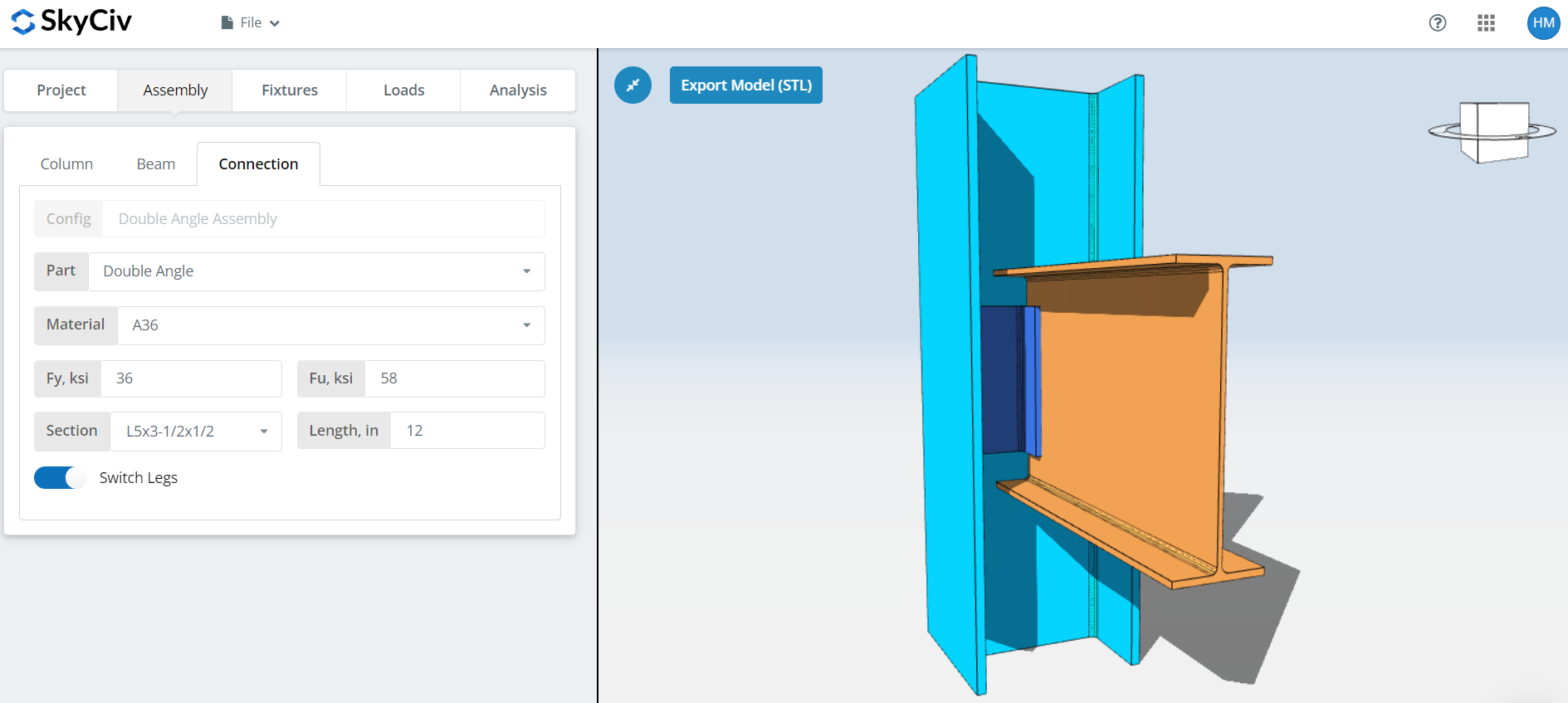
Set the angle properties: Note A36 oder A992, oder individuell mit Ihrem eigenen Fy und Fu, then the section size and length. Where the angle has unequal legs you can switch which leg goes where. Für BCW, put the shorter leg on the column side, because that is where the space runs out.
Beobachten Sie dabei den 3D-Renderer. The angle height should sit within the beam depth, and the total angle width should not exceed the column T-dimension or the clear web depth.
Befestigung 1 Tab
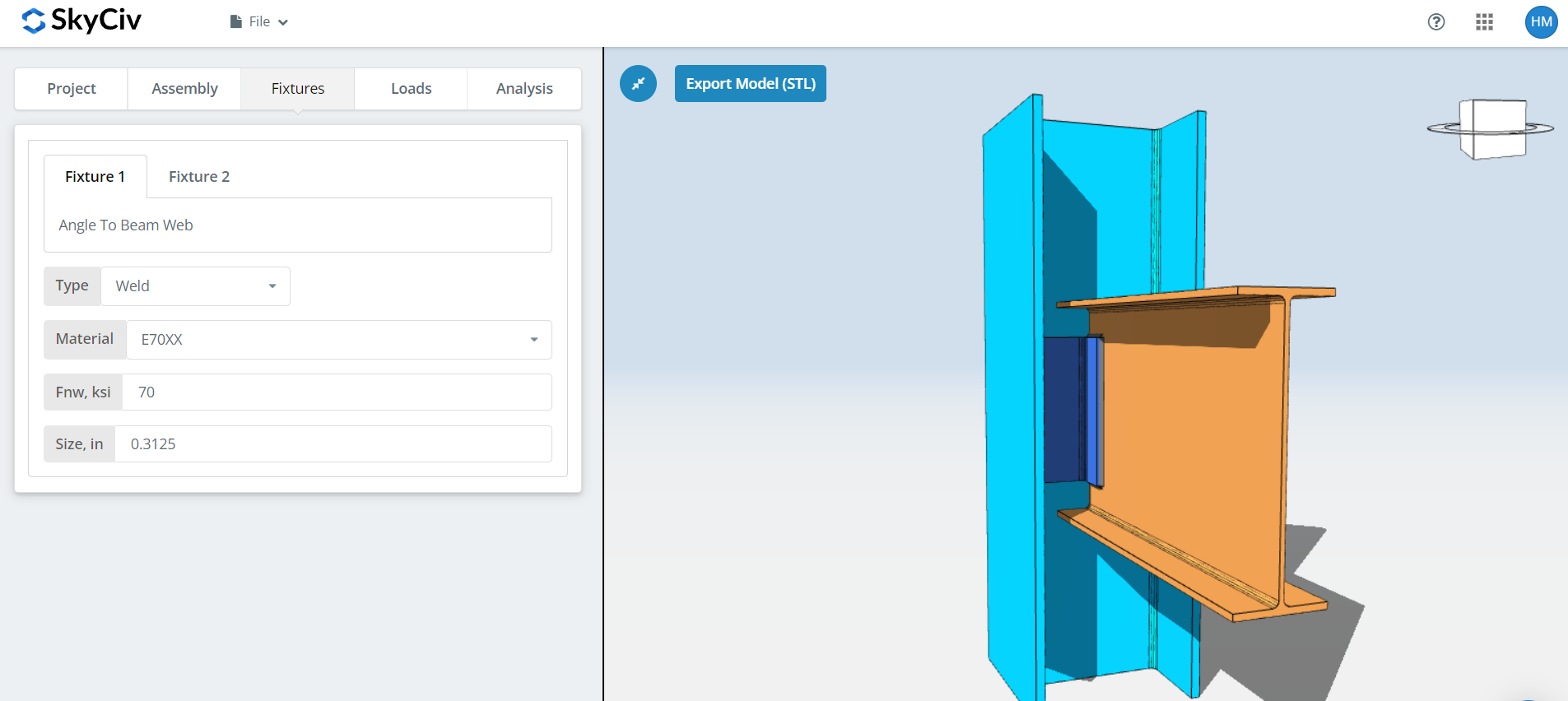
This is the angle to beam web connection. Es kann geschraubt oder geschweißt werden; this walkthrough uses welded, since for BCW a welded-to-beam, bolted-to-support double angle is the arrangement that fits the column web.
Geben Sie das Schweißmaterial an, or choose ‘Custom’ and enter Fnw if the electrode you want is not listed. Then the weld size. Keep the weld size no larger than the angle thickness, or there is no room to lay the weld.
Befestigung 2 Tab
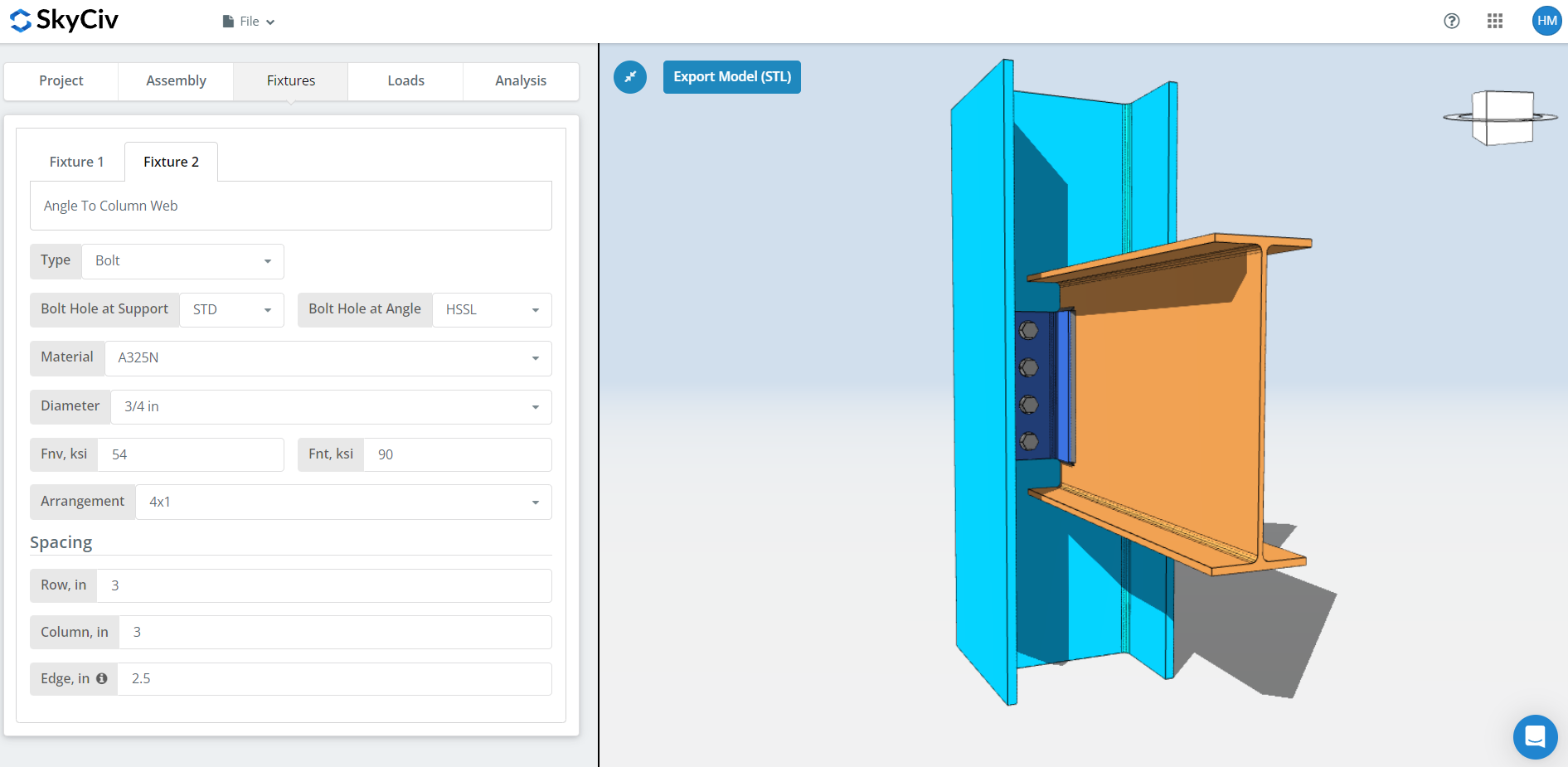
This is the angle to support connection, ob es sich bei dieser Stütze um einen Trägersteg handelt, ein Stützenflansch oder ein Stützensteg. Bolted or welded again; In dieser exemplarischen Vorgehensweise werden Schrauben verwendet.
Zuerst, the bolt hole types at the beam and at the angle. Hersteller verlangen in der Regel Standardlöcher (STD) in the member and horizontal short-slotted holes (HSSL) in the angle, was Passtoleranz vor Ort erkauft.
Als nächstes, das Schraubenmaterial oder die Schraubensorte: A307, A325, A490 oder Benutzerdefiniert. A325 und A490 sind Güten gemäß ASTM F3125, wodurch die älteren eigenständigen Spezifikationen konsolidiert wurden. Zwischen N und X, X gibt die größere Bolzenscherkapazität an, aber die Gewinde müssen aus der Scherebene ausgeschlossen werden, und das muss der Erbauer wissen.
Dann der Bolzendurchmesser, ab 5.8″ bis 1-1/2″ oder die metrischen Äquivalente, und die Anordnung, bis zu 12 Bolzenreihen und -spalten, mit dem Zeilen- und Spaltenabstand.
Wissenswertes: wenn Sie mehr Schraubengruppenkapazität benötigen, Durch Öffnen des Abstands kann dies erreicht werden, anstatt Schrauben hinzuzufügen, as long as the angle height still fits within the beam depth. Die Schraubengruppenstärke verwendet die Methode des momentanen Rotationszentrums (ICOR), so a wider spacing is credited with the capacity it actually provides rather than rounded down to a table value. Erkundigen Sie sich zunächst bei Ihrem Hersteller, obwohl. Viele bevorzugen 3″ spacing typical throughout and will price variable spacing accordingly.
Mit der “Kante” input here is the horizontal distance from the centre of the beam to the nearest bolt.
For more on the fastener side, siehe Dokumentation unter Schrauben und Schweißnähte.
Registerkarte Lasten
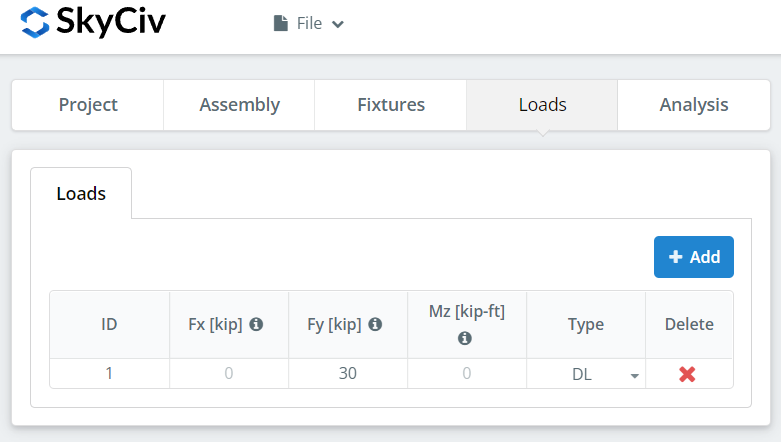
Geben Sie unter „Fy“ die vertikale Scherung ein..
Passen Sie die Last an die Entwurfsmethode an, die Sie zu Beginn ausgewählt haben. LRFD berücksichtigt faktorisierte Lasten anhand der Bemessungsfestigkeit; ASD nimmt Betriebslasten entgegen der zulässigen Stärke auf. Die Software kann nicht erkennen, was Sie eingegeben haben.
Registerkarte Ergebnisse
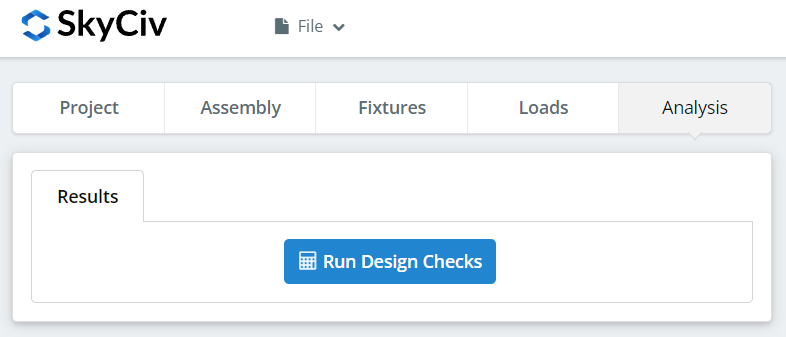
Klicken “Führen Sie Designprüfungen durch”. Alles, was in den früheren Registerkarten fehlt, wird hier markiert und nicht stillschweigend standardmäßig übernommen.
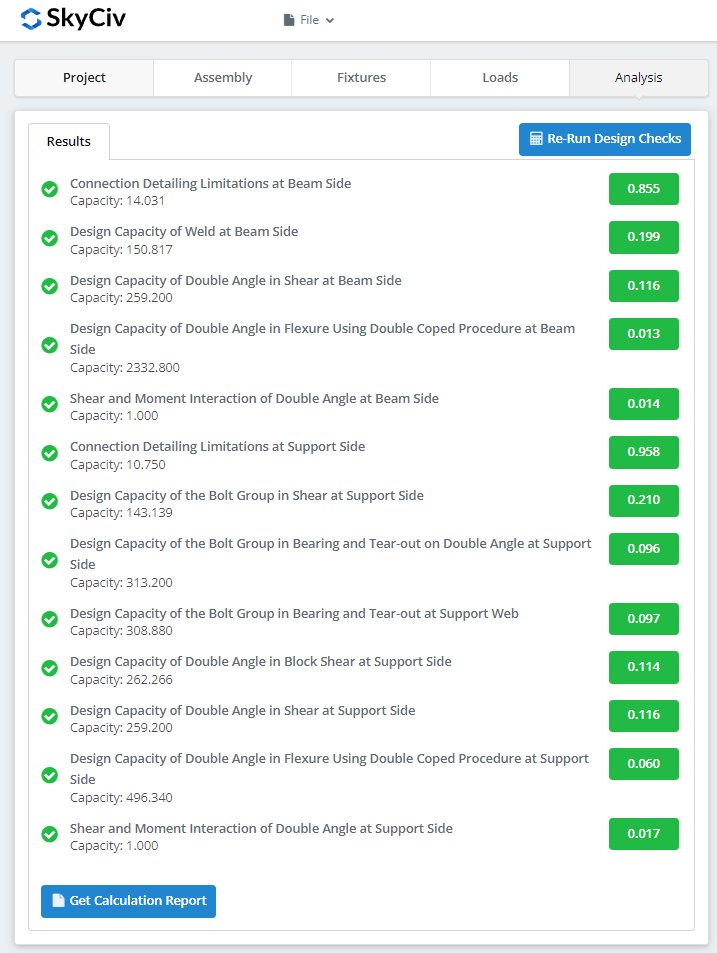
Die Zusammenfassung zeigt, ob die Verbindung erfolgreich war, mit einem Auslastungsgrad für jeden Scheck. Wenn es fehlgeschlagen ist, Ändern Sie die Eingaben auf den vorherigen Registerkarten und klicken Sie auf “Designprüfungen erneut ausführen”. Wenn es vorbei ist, “Berechnungsbericht anzeigen” öffnet den Detailbericht.
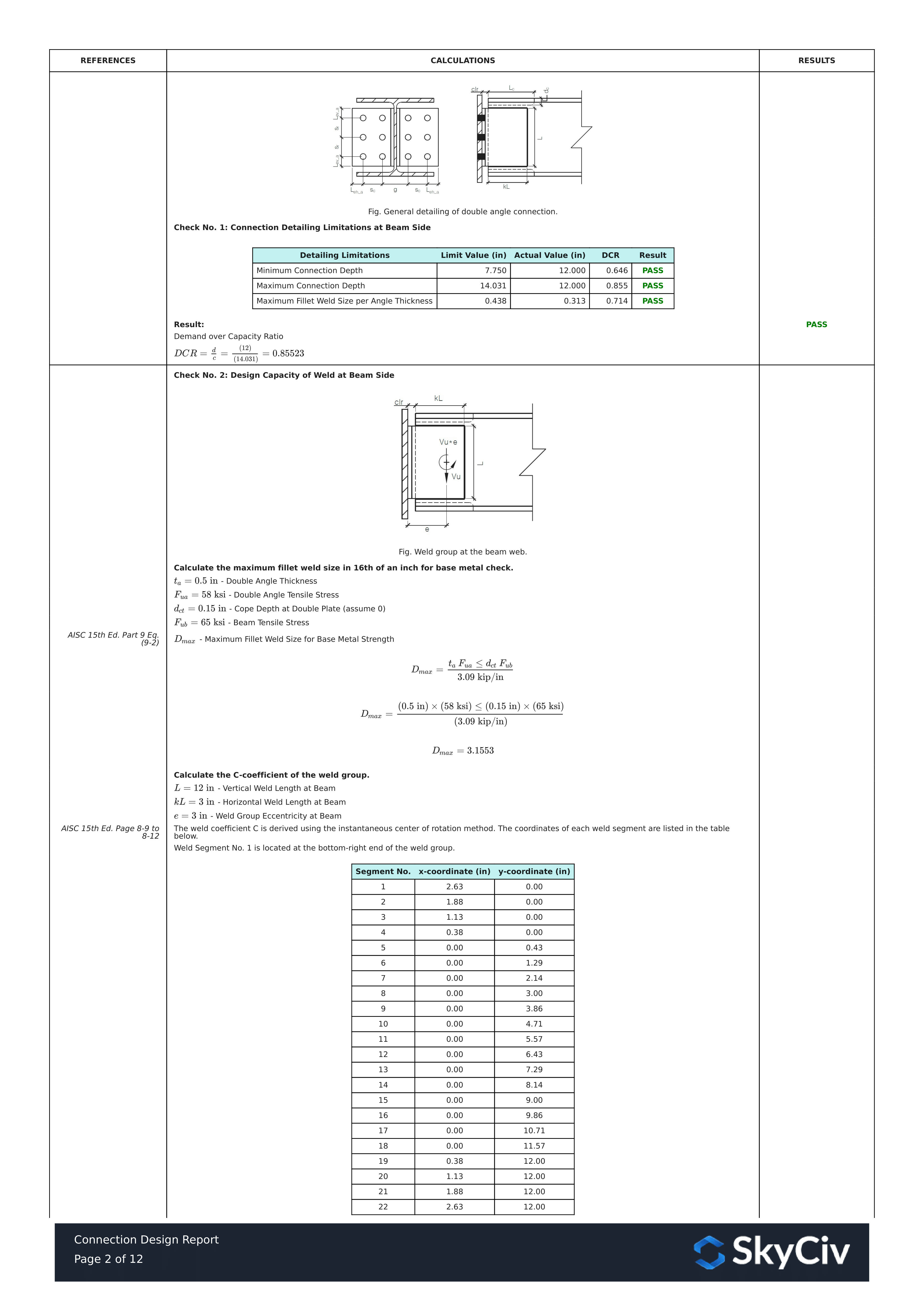
Das ist ein Auszug aus dem Bericht. Jede Prüfung enthält einen Verweis auf das AISC-Handbuch oder die AISC-Spezifikation, and the working follows the same order the specification uses, So kann ein prüfender Ingenieur es Zeile für Zeile lesen, anstatt eine Zahl rückzuentwickeln.
Hier ist eine PDF-Kopie des vollständigen detaillierten Berechnungsberichts: Verbindungsentwurfsbericht.
Probieren Sie es selbst aus
Pick the double angle, Geben Sie Ihre Abschnitte ein, angle size, bolts and shear, und sehen Sie sich jeden Scheck mit seiner Codereferenz an. Es läuft im Browser, ohne dass es etwas zu installieren gibt.
Siehe auch die double angle connection calculator und das Scherverbindungen Überblick.
