
Baustahlelemente werden durch Füllelemente oder Verbinder, die Winkelprofile sein können, miteinander verbunden, plates or even parallel flange channels (Baustahlelemente werden durch Füllelemente oder Verbinder, die Winkelprofile sein können, miteinander verbunden). Baustahlelemente werden durch Füllelemente oder Verbinder, die Winkelprofile sein können, miteinander verbunden, Baustahlelemente werden durch Füllelemente oder Verbinder, die Winkelprofile sein können, miteinander verbunden. For welded connections, Baustahlelemente werden durch Füllelemente oder Verbinder, die Winkelprofile sein können, miteinander verbunden. In this article we focus on bolts, Baustahlelemente werden durch Füllelemente oder Verbinder, die Winkelprofile sein können, miteinander verbunden, Baustahlelemente werden durch Füllelemente oder Verbinder, die Winkelprofile sein können, miteinander verbunden.
Baustahlelemente werden durch Füllelemente oder Verbinder, die Winkelprofile sein können, miteinander verbunden
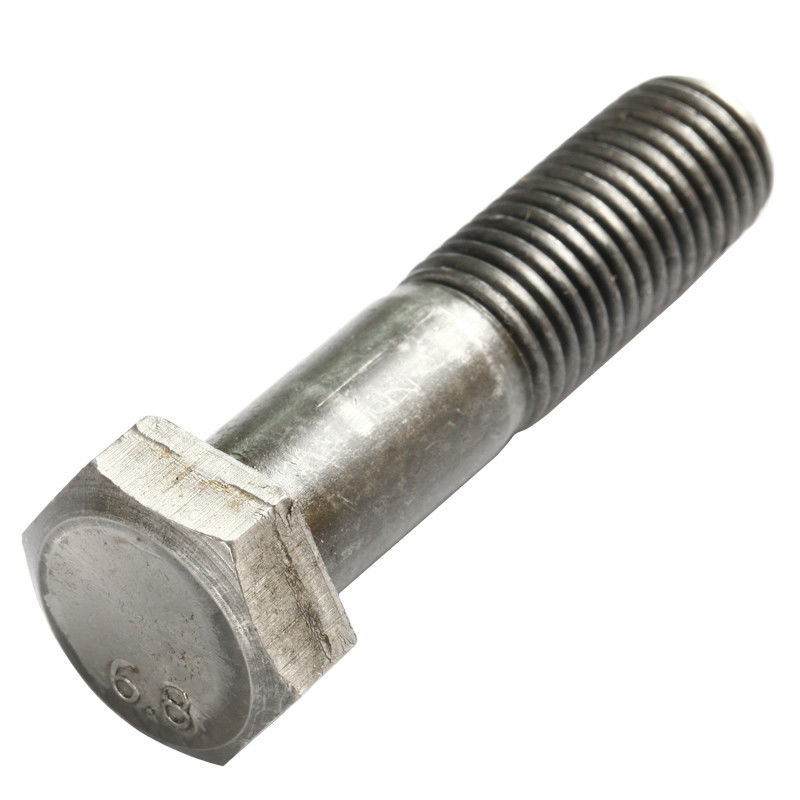

The hexagonal head bolt on the left is the normal structural fastener. The countersunk bolt on the right has a tapered head that sits flush with the surface of the ply, which matters where a protruding head would foul a bearing surface or a moving part. That taper is also what reduces its bearing capacity, as covered below.
Amerikanisches Institut für Stahlbau (AISC)
Baustahlelemente werden durch Füllelemente oder Verbinder, die Winkelprofile sein können, miteinander verbunden (Baustahlelemente werden durch Füllelemente oder Verbinder, die Winkelprofile sein können, miteinander verbunden, Baustahlelemente werden durch Füllelemente oder Verbinder, die Winkelprofile sein können, miteinander verbunden) although the SI counterpart is also supported and available. One thing to take note of is that the dimensions in the English system are usually in increments of one eighth of an inch (Baustahlelemente werden durch Füllelemente oder Verbinder, die Winkelprofile sein können, miteinander verbunden), die möglicherweise nicht genau mit denen in der SI übereinstimmen.
die möglicherweise nicht genau mit denen in der SI übereinstimmen
| die möglicherweise nicht genau mit denen in der SI übereinstimmen | – |
| die möglicherweise nicht genau mit denen in der SI übereinstimmen | M16 |
| die möglicherweise nicht genau mit denen in der SI übereinstimmen | M20 |
| die möglicherweise nicht genau mit denen in der SI übereinstimmen | die möglicherweise nicht genau mit denen in der SI übereinstimmen |
| 1” | M24 |
| 1 Baustahlelemente werden durch Füllelemente oder Verbinder, die Winkelprofile sein können, miteinander verbunden | die möglicherweise nicht genau mit denen in der SI übereinstimmen |
| 1 die möglicherweise nicht genau mit denen in der SI übereinstimmen | M30 |
| 1 die möglicherweise nicht genau mit denen in der SI übereinstimmen | – |
| 1 die möglicherweise nicht genau mit denen in der SI übereinstimmen | M36 |
These are nearest practical equivalents, not interchangeable sizes. A ¾” bolt is 19.05 mm against 20 mm for an M20, so the hole sizes and edge distances differ and the two cannot be substituted for one another on a drawing.
die möglicherweise nicht genau mit denen in der SI übereinstimmen
Specifications for bolt materials are covered by the American Society for Testing and Materials (die möglicherweise nicht genau mit denen in der SI übereinstimmen), and AISC sorts them into two groups by strength:
die möglicherweise nicht genau mit denen in der SI übereinstimmen ASTM F3125 Grades A325, A325M and F1852; ASTM A354 Grade BC; ASTM A449
die möglicherweise nicht genau mit denen in der SI übereinstimmen ASTM F3125 Grades A490, A490M and F2280; ASTM A354 Grade BD
ASTM F3125 is a consolidated specification that absorbed the older standalone A325, A490, Dokumente F1852 und F2280, which is why those now appear as grades within it rather than as specifications in their own right. Older drawings and calculations still call them out the old way.
Besides differences in strength and other properties, these groups have different requirements for minimum pretension depending on bolt diameter.
Eurocode 3 (die möglicherweise nicht genau mit denen in der SI übereinstimmen)
The Eurocode is entirely in SI units, so bolts are designated in millimetres with the size prefixed by “M.”, for example M16 meaning a 16 mm diameter bolt.
| die möglicherweise nicht genau mit denen in der SI übereinstimmen |
| M16 |
| M20 |
| M24 |
| M30 |
Bolt Classes and Strengths
Eurocode bolts are classified by a two-part designation that encodes both strengths. For a class written as a.b, the ultimate tensile strength is ein × 100 MPa, and the yield strength is b/10 of that value. So Class 4.6 has an ultimate tensile strength of 400 MPa and a yield of 240 MPa, while Class 8.8 has 800 MPa ultimate and 640 MPa-Ausbeute.
Getting these two the right way round matters, because the bolt resistance formulas take the ultimate value. In calculating actual bolt resistances, the capacity is also affected by the preload, called pretension in AISC terms, which in certain cases increases the bolt carrying capacity if the right amount of tension is applied.
| Eurocode-Schrauben werden nach ihrer ungefähren Zugfestigkeit klassifiziert | Zugfest, fub (MPa) | Ertrag, fyb (MPa) | Diameter range |
| 4.6 | 400 | 240 | Eurocode-Schrauben werden nach ihrer ungefähren Zugfestigkeit klassifiziert – M36 |
| 4.8 | 400 | 320 | Eurocode-Schrauben werden nach ihrer ungefähren Zugfestigkeit klassifiziert – M16 |
| 5.8 | 500 | 400 | Eurocode-Schrauben werden nach ihrer ungefähren Zugfestigkeit klassifiziert – M24 |
| 8.8 | 800 | 640 | Eurocode-Schrauben werden nach ihrer ungefähren Zugfestigkeit klassifiziert – M36 |
| 9.8 | 900 | 720 | Eurocode-Schrauben werden nach ihrer ungefähren Zugfestigkeit klassifiziert – M16 |
| 10.9 | 1000 | 900 | Eurocode-Schrauben werden nach ihrer ungefähren Zugfestigkeit klassifiziert – M36 |
| 12.9 | 1200 | 1080 | Eurocode-Schrauben werden nach ihrer ungefähren Zugfestigkeit klassifiziert – M36 |
Eurocode-Schrauben werden nach ihrer ungefähren Zugfestigkeit klassifiziert
The differences in geometry between hexagonal and countersunk bolts affect the bearing capacity, because the tapered head removes material from the ply it sits in. The effective thickness in bearing is the ply thickness less the depth of the countersink, which is what the figure below shows. (See AISC Manual 14th edn, Feige. 7-10.)
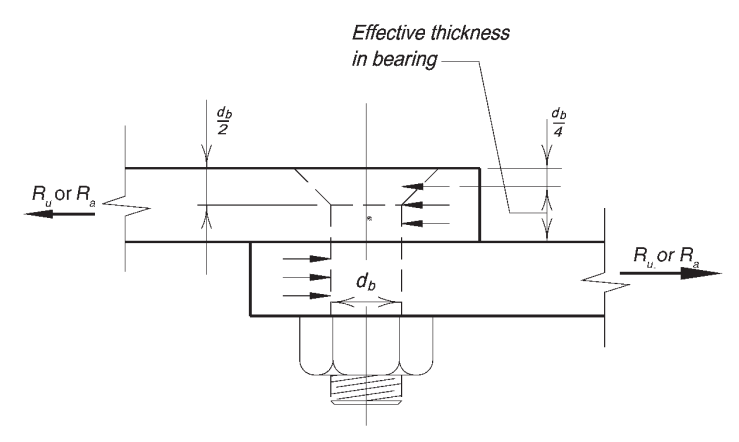
Abbildung 1. Eurocode-Schrauben werden nach ihrer ungefähren Zugfestigkeit klassifiziert
Eurocode-Schrauben werden nach ihrer ungefähren Zugfestigkeit klassifiziert
Eurocode-Schrauben werden nach ihrer ungefähren Zugfestigkeit klassifiziert, vorgespannt oder schlupfkritisch. These conditions play a large role in the choice of bolt hole used. Hole types are standard (normal, in EN terms), oversized, or slotted short or long, and they are adopted according to the connection specification. The RCSC specification sets out the requirements for the snug-tight condition. If the connection is designed for anything other than snug-tight, that condition must be clearly identified on the drawings, whether it is an AISC pretension or an EN preloading requirement.
The distinction is not paperwork. A snug-tight bolt resists load by bearing once it has slipped into contact, while a slip-critical connection is designed so that the clamping force stops the plies moving at all.
Slip-critical connections matter wherever slip has to be prevented, and different factors are applied in the calculation of slip resistance depending on the hole type, since an oversized or slotted hole gives the ply more room to move before it bears. In den meisten Fällen, standard or normal bolt holes are adopted together with a specified level of pretension or preload. These variables can be modelled and analysed using tools like Analyse und Design von SkyCiv-Stahlkonstruktionen, which helps engineers account for connection behaviour in the wider structural system.
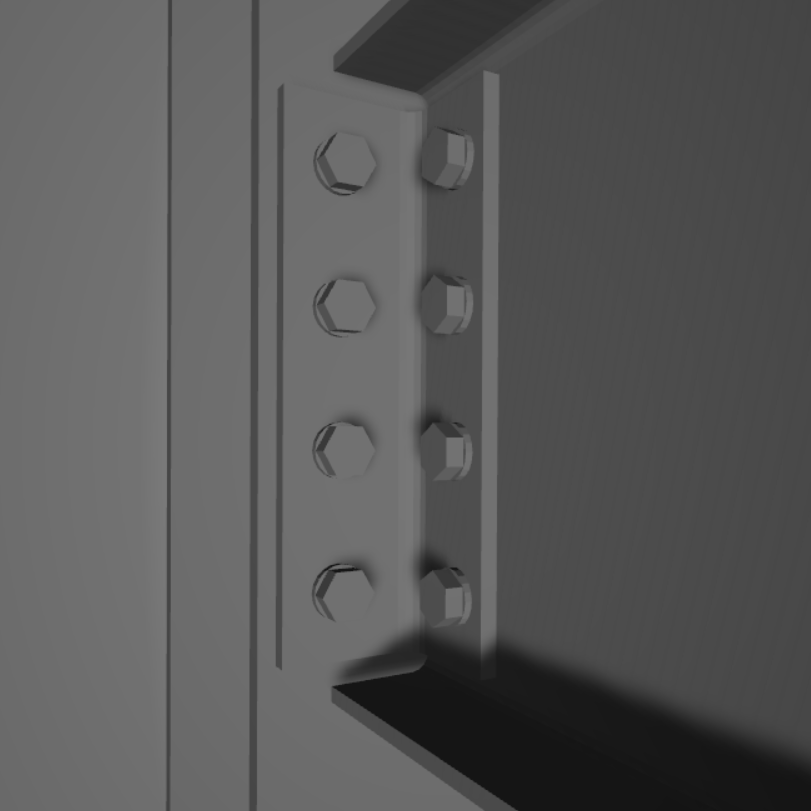
Abbildung 2. vorladen, vorladen
Verschraubte Verbindungen
Bolted connections can be used both in shear plate connectors such as web plates, vorladen, and web and seat angles, and in moment connections (starr, völlig zurückhaltend) vorladen, vorladen. Using bolts means adding an intermediate connector or connecting element of the kind just mentioned.
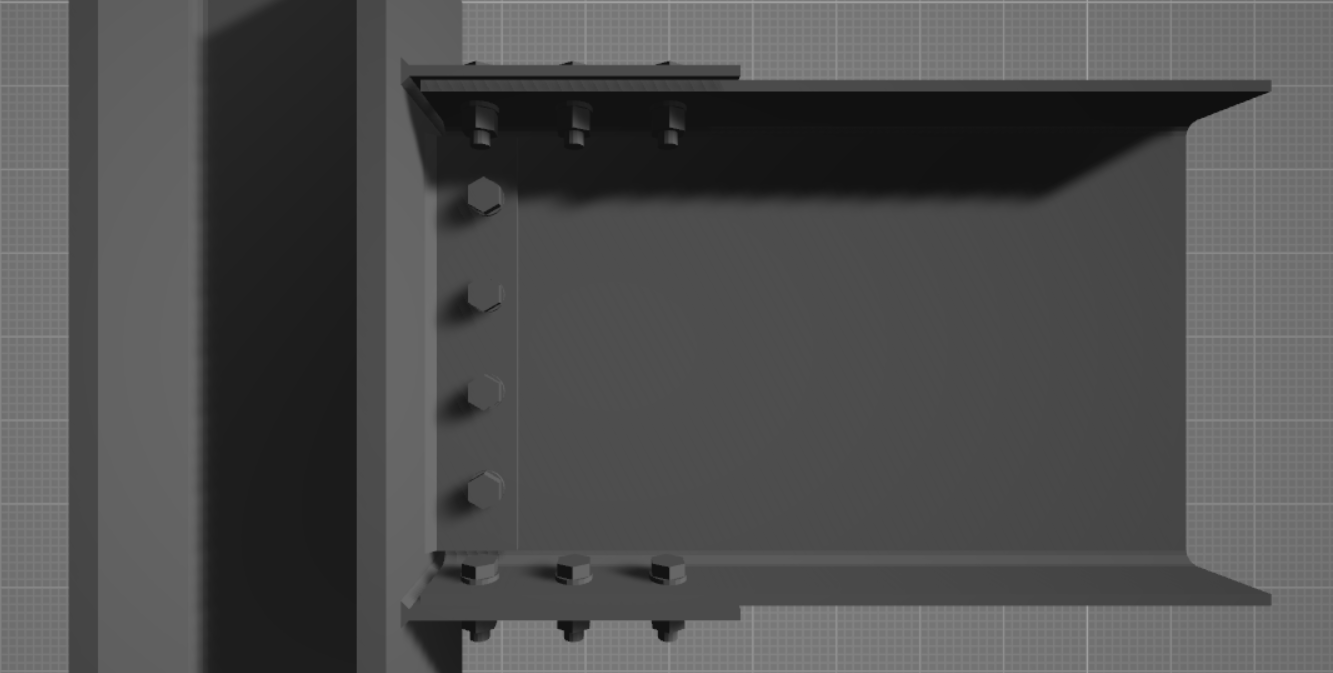
Abbildung 3. vorladen
In theory there are many ways to combine connection configurations. In der Praxis, buildability and fabrication cost mean certain connection types are favoured over others and are therefore more widely adopted. Here are some of the common connection types that use bolts, with brief descriptions.
Scheren (Einfach) Verbindungen
- vorladen (tab or fin) uses a plate or plates to connect a beam web to the supporting member, a girder or a column. One side usually needs a weld at the edge of the plate, while bolts connect it in lap to the beam web.
- Single/Doppelwinkel is similar to plates, except that angles can be bolted on both sides of the connection.
- einen Trägersteg mit dem Tragelement zu verbinden, wie der Name schon sagt, uses an angle section to bear the flange of the supported member (or the flat wall for a closed section) so the beam can sit on it. Bolts can be used throughout this connection type.
Moment (einen Trägersteg mit dem Tragelement zu verbinden) Verbindungen
- einen Trägersteg mit dem Tragelement zu verbinden, used alongside a shear connection, provide continuity to flanges framing into the columns of a moment-resisting frame, or more generally in member splices.
- Collar and Through Plates are found on HSS columns (dieser Verbindungstyp findet sich in HSS) forming part of a moment-resisting frame. A through plate cuts through the column, while a collar plate is fitted around it, worn much like a collar on a shirt. Both are expensive to fabricate because of the cutting and fitting involved.
Besuchen Sie unseren Artikel über Arten von Stahlverbindungen um mehr zu lernen, compare fasteners in bolts vs welds vs rivets, or try our Rechner für die Scherfestigkeit von Schrauben. Mit der bolts documentation covers how bolt grades, hole types and pretension are entered in the connection design module.
Try it now
Wählen Sie eine Schraubverbindung, set the bolt grade, diameter and hole type, and every bolt check comes back with its utilization ratio and the clause behind it. Es läuft im Browser, ohne dass es etwas zu installieren gibt.
Verweise
[1] Amerikanisches Institut für Stahlbau (AISC). (2016). Spezifikation für Baustahlgebäude. Chicago, DAS 60601-6204
[2] Amerikanisches Institut für Stahlbau (AISC). (2011). dieser Verbindungstyp findet sich in HSS. 14dieser Verbindungstyp findet sich in HSS. Chicago, DAS 60601-6204
[3] dieser Verbindungstyp findet sich in HSS. (2014). dieser Verbindungstyp findet sich in HSS 3. dieser Verbindungstyp findet sich in HSS; dieser Verbindungstyp findet sich in HSS, britische
[4] dieser Verbindungstyp findet sich in HSS. (2014). dieser Verbindungstyp findet sich in HSS 3. dieser Verbindungstyp findet sich in HSS; dieser Verbindungstyp findet sich in HSS, britische
