
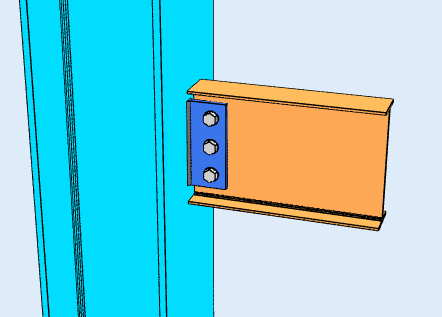
Die Einzelplattenverbindung, oder Scherlasche, ist eine der einfachen Scherverbindungen, die in Teil 10 des AISC-Handbuchs, und ein Favorit der Hersteller, weil es das günstigste der Gruppe ist: ein Teller, eine Schweißnaht, eine Schraubengruppe.
Die Platte ist immer mit dem Träger verschweißt und in der Regel Feldverschraubt zum Verbindungsbalken. Es kann stattdessen an einem in der Werkstatt montierten Rahmen an den Träger geschweißt werden. Was Sie nicht tun sollten, ist, diese Schweißnaht auf dem Feld anzubringen: Das Schweißen vor Ort ist neben dem Einarbeiten einer Schraube arbeitsintensiv und teuer.
Zwei Konfigurationstypen
Die Konfiguration, in der Sie sich befinden, entscheidet darüber, welche Regeln gelten, und es ergibt sich eher aus der Geometrie als aus einer von Ihnen gewählten Einstellung.
-
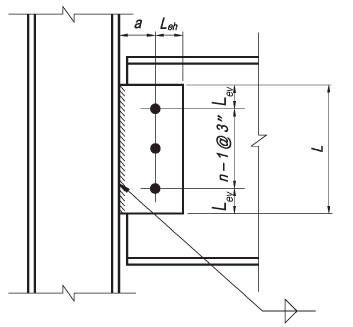
Konventionelle Konfiguration
- Es ist nur eine einzige vertikale Schraubenreihe zulässig. Die Anzahl der Schrauben in der Verbindung muss zwischen sein 2 und 12.
- Der Abstand von der Bolzenlinie zur Schweißlinie muss gleich oder kleiner sein als 3-1/2 im.
- Standardlöcher (STD) oder horizontale kurze Langlöcher (HSSL) dürfen wie in der Tabelle angegeben verwendet werden 10-9 der 15. Ausgabe des AISC-Handbuchs.
- Der vertikale Randabstand muss die Anforderungen der AISC-Spezifikationstabelle J3.4 erfüllen. Der horizontale Randabstand sollte sowohl für Blech als auch für den Trägersteg größer oder gleich 2d sein, wobei d der Schraubendurchmesser ist.
- Entweder die Plattendicke oder die Trägerstegdicke muss die in der Tabelle angegebene maximale Dickenanforderung erfüllen 10-9 der 15. Ausgabe des AISC-Handbuchs.

-
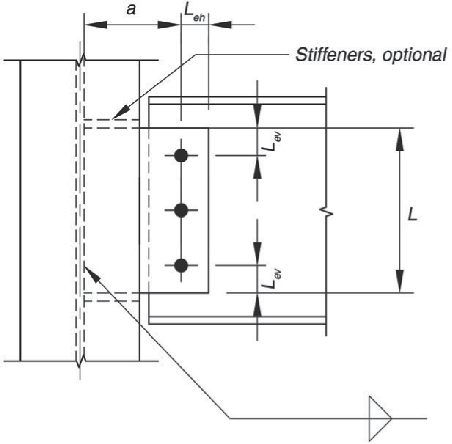
Erweiterte Konfiguration
- Die Anzahl der Schrauben ist nicht begrenzt.
- Der Abstand von der Schweißnaht zur Bolzenlinie, die der Stütze am nächsten liegt, ist nicht begrenzt.
- Die Verwendung von Löchern muss die Anforderungen von Abschnitt J3.2 der AISC-Spezifikation erfüllen.
- Die horizontalen und vertikalen Randabstände müssen die Anforderungen der AISC-Spezifikationstabelle J3.4 erfüllen.

Entwerfen einer Einzelplattenverbindung in SkyCiv
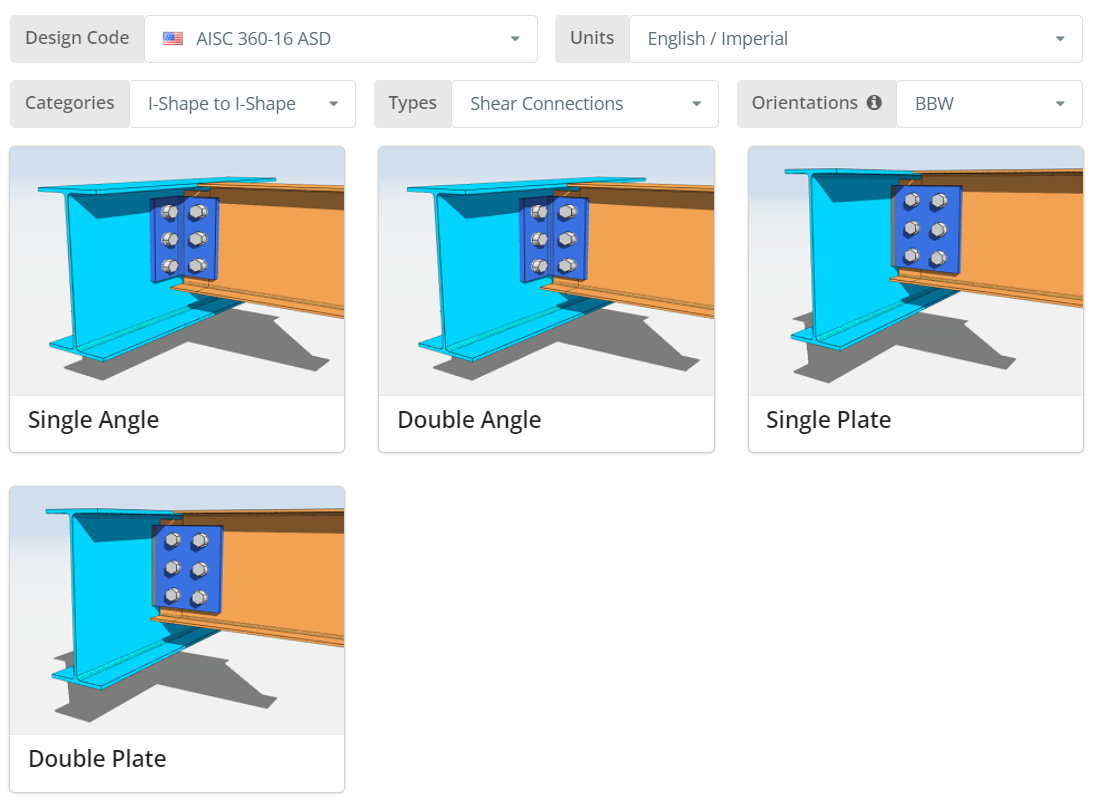
Der Designcode kann AISC sein 360-16 ASD oder LRFD, und Einheiten Englisch/Imperial oder SI/Metrisch. Die Ausrichtung ist BCF, BCW oder BBW; Bewegen Sie den Mauszeiger über den Tooltip, um zu erfahren, was die einzelnen Elemente bedeuten. Drücke den “Einzelplatte” Fliese.
Registerkarte Details
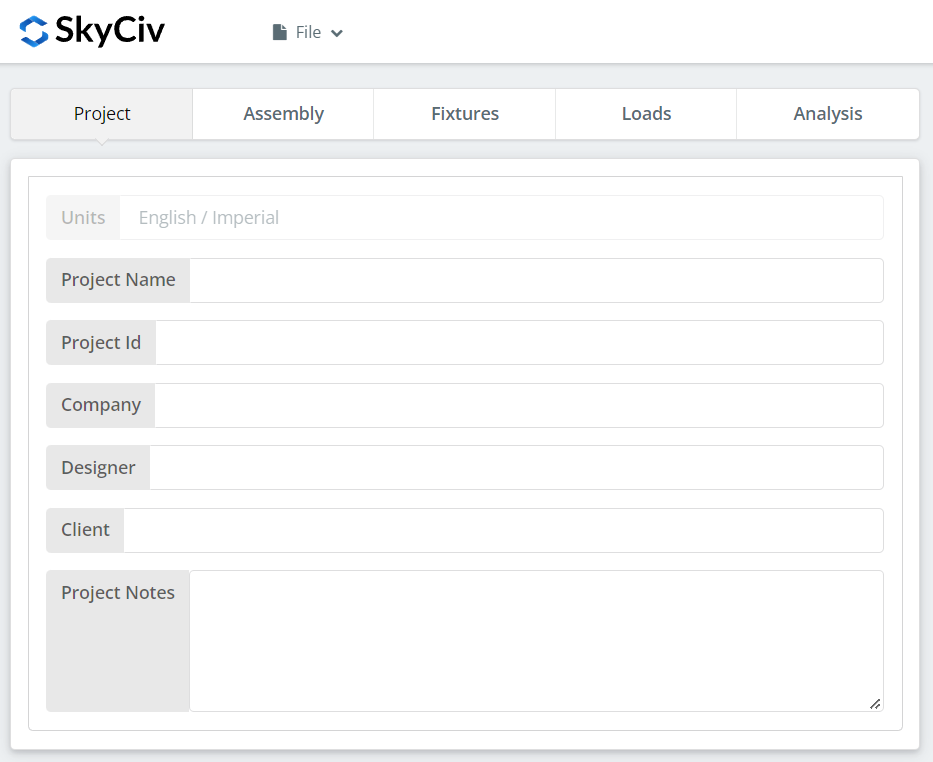
Tragen Sie hier die Projektdetails ein. Nichts davon ändert die Berechnungen, aber es geht in den Bericht über.
Registerkarte „Montage“.
Unter „Assembly“ befinden sich drei Registerkarten: der Träger, der Balken, und die Verbindung, der die Einzelplatte hält.
Registerkarte „Träger“.
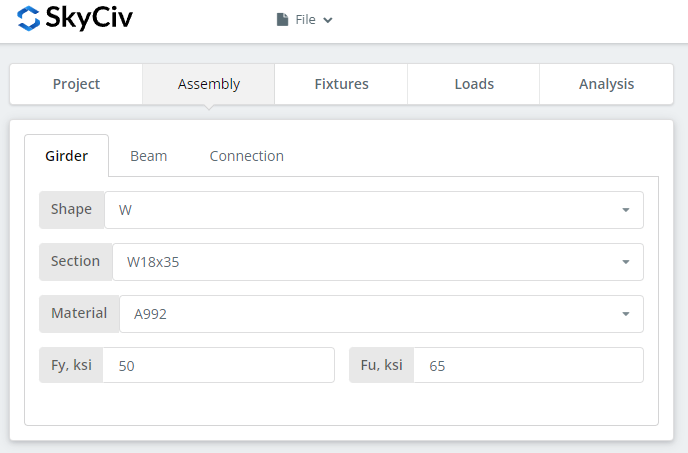
Geben Sie den Querschnitt und die Materialgüte des tragenden Elements an. A992 und A36 sind in der Liste; Für alles andere wählen Sie „Benutzerdefiniert“ und geben „Fy“ und „Fu“ ein.
Balken-Registerkarte
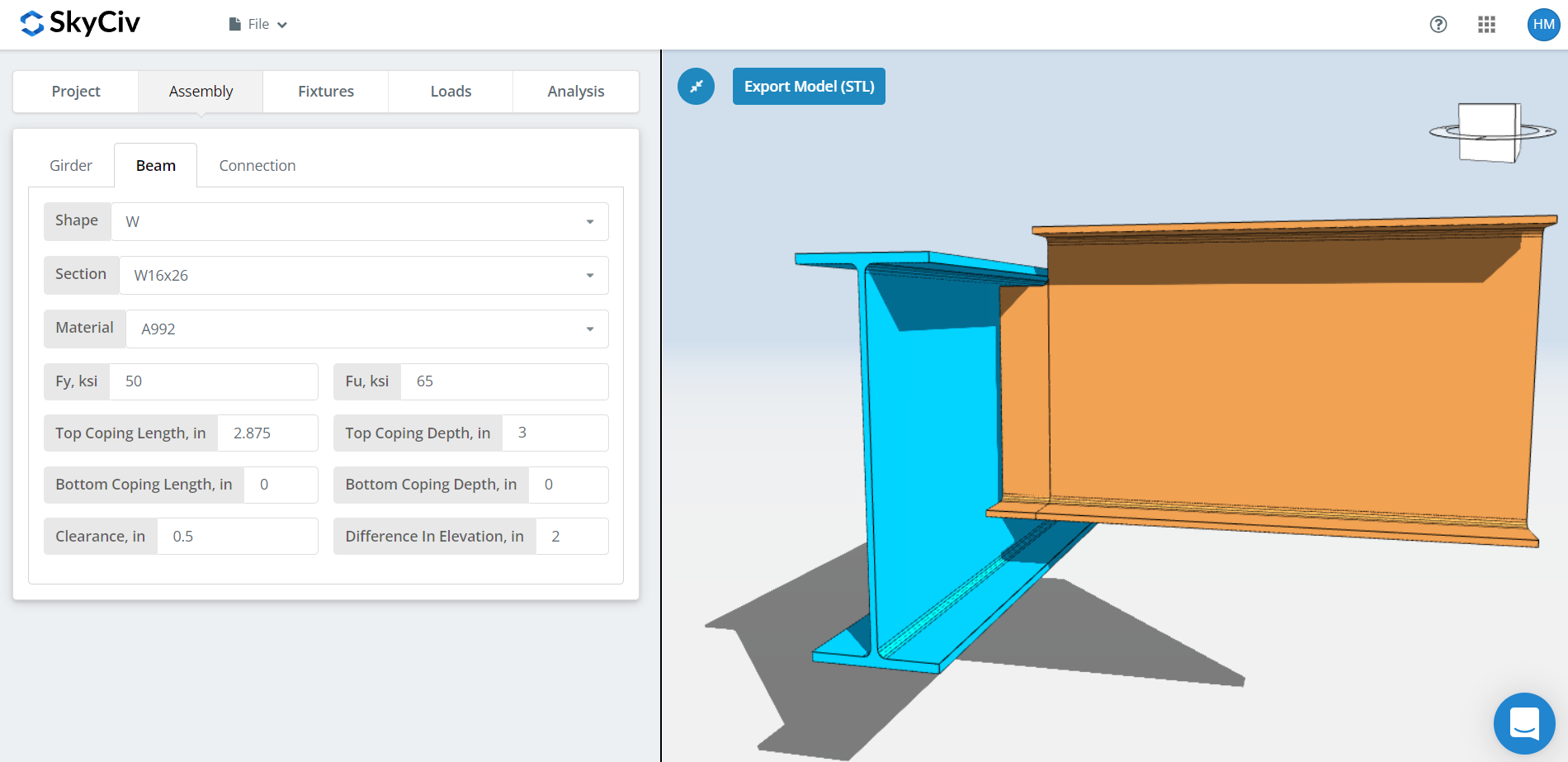
Die gleichen Eingaben für den Balken, plus Oberkastenabmessungen, Strahlabstand und Höhenunterschied.
Zur BBW-Orientierung wird das Coping automatisch erarbeitet, und Sie können es überschreiben. Die automatische Ausklinkung wird jedes Mal neu berechnet, wenn Sie den Trägerabschnitt ändern, der Trägerabschnitt, der Abstand oder der Höhenunterschied.
Der Abstand ist auch der Grund, warum Sie in die eine oder andere Konfiguration gelangen. Ein Abstand, der klein genug ist, dass der Träger noch im Träger sitzt, ergibt normalerweise eine herkömmliche Einzelplatte, es sei denn, der Trägerflansch ist breit genug, dass der Abstand vom Bolzen zum Trägersteg mehr als 3 1/2 beträgt″. Ein Abstand, der den Träger vollständig außerhalb des Trägerflansches platziert, ergibt eine verlängerte Einzelplatte. Für den Höhenunterschied, Ein positiver Wert bedeutet, dass sich der Träger über dem Träger befindet, ein negativer Wert darunter.
Registerkarte „Verbindung“.
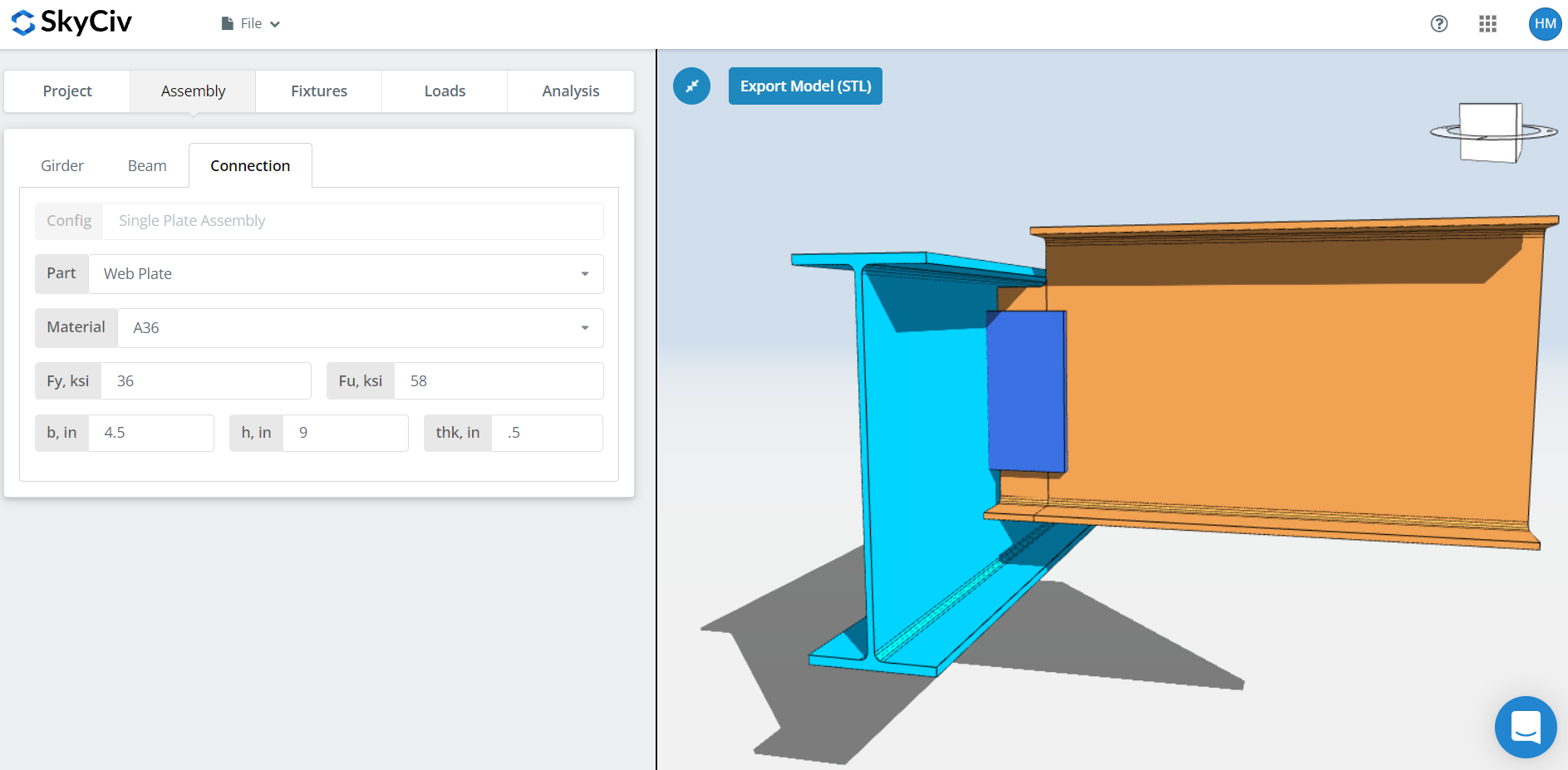
Legen Sie die Platteneigenschaften fest: Note A36 oder A992, oder individuell mit Ihrem eigenen Fy und Fu, dann die Plattenbreite „b“, Höhe „h’ und Dicke „thk“.
Beobachten Sie dabei den 3D-Renderer. Die Plattenhöhe sollte innerhalb der Balkentiefe liegen, und die Plattenbreite muss breit genug sein, damit der Träger angeschraubt oder angeschweißt werden kann, was in einer erweiterten Konfiguration am wichtigsten ist.
Befestigung 1 Tab
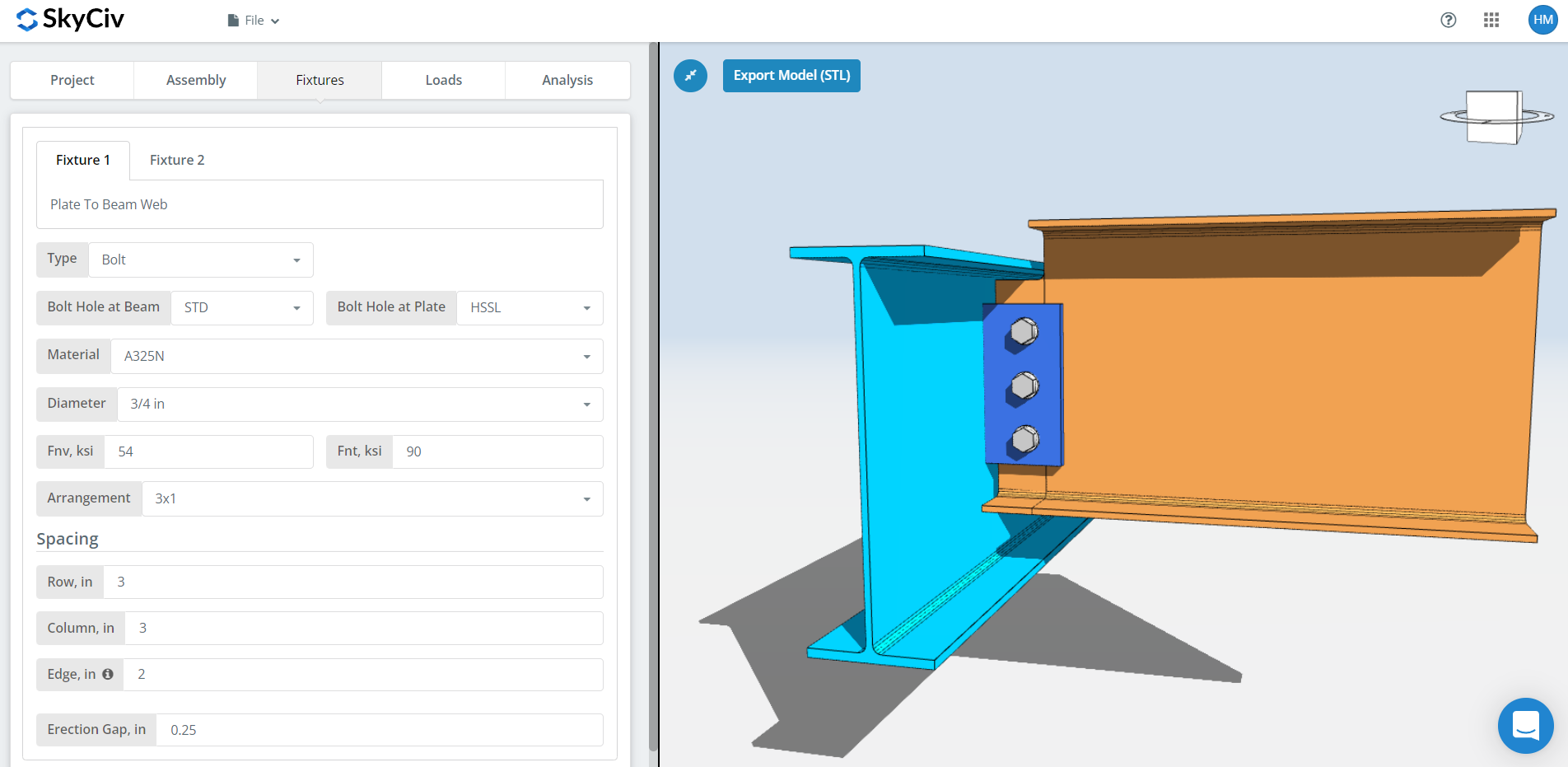
Befestigung 1 ist die Verbindung zwischen Platte und Trägersteg. Es kann geschraubt oder geschweißt werden; In dieser exemplarischen Vorgehensweise werden Schrauben verwendet.
Zuerst, die Bolzenlochtypen am Träger und an der Platte. Hersteller verlangen in der Regel Standardlöcher (STD) im Balken und horizontalen Kurzschlitzlöchern (HSSL) im Teller, was Passtoleranz vor Ort erkauft. Beachten Sie, dass diese beiden auch die einzigen Lochtypen sind, die die herkömmliche Konfiguration zulässt, Wenn Sie also nach übergroßen Löchern greifen, geraten Sie in die erweiterten Konfigurationsregeln.
Als nächstes, das Schraubenmaterial oder die Schraubensorte: A307, A325, A490 oder Benutzerdefiniert. A325 und A490 sind Güten gemäß ASTM F3125, wodurch die älteren eigenständigen Spezifikationen konsolidiert wurden. Wählen Sie N oder X für eine lagerartige Verbindung und SC für eine schlupfkritische Verbindung.
Gleitkritische Gelenke haben eine geringere konstruktive Schraubenkapazität als Lagergelenke, Verwenden Sie sie also dort, wo es tatsächlich auf Rutschfestigkeit ankommt: übergroße oder Langlöcher, Lastumkehr, oder Müdigkeit. Zwischen N und X, X gibt die größere Bolzenscherkapazität an, aber die Gewinde müssen aus der Scherebene ausgeschlossen werden, und das muss der Erbauer wissen. Zwischen SC(Ein) und SC(B.), SC(B.) bietet eine größere Kapazität und erfordert eine gründlicher vorbereitete Verbindungsfläche, zum Beispiel SSPC-SP6 gewerbliche Strahlreinigung.
Dann der Bolzendurchmesser, ab 5.8″ bis 1-1/2″ oder die metrischen Äquivalente, und die Anordnung, bis zu 12 Bolzenreihen und -spalten, mit dem Zeilen- und Spaltenabstand.
Wissenswertes: wenn Sie mehr Schraubengruppenkapazität benötigen, Durch Öffnen des Abstands kann dies erreicht werden, anstatt Schrauben hinzuzufügen, solange die Plattenhöhe noch in die Balkentiefe passt. Die Schraubengruppenstärke verwendet die Methode des momentanen Rotationszentrums (ICOR), Daher wird einem größeren Abstand die tatsächlich bereitgestellte Kapazität zugeschrieben. Erkundigen Sie sich zunächst bei Ihrem Hersteller, obwohl. Viele bevorzugen 3″ Abstände durchgehend typisch.
Mit der “Kante” Eingabe ist der Abstand vom Trägerende zur ersten Schraubensäule.
Zuletzt, die Erektionslücke. Dies ist die Lücke, die es ermöglicht, den Balken vor Ort einzulegen. Es kostet Kapazität, Geben Sie es also nur dort an, wo die Erektion es tatsächlich erfordert.
Befestigung 2 Tab
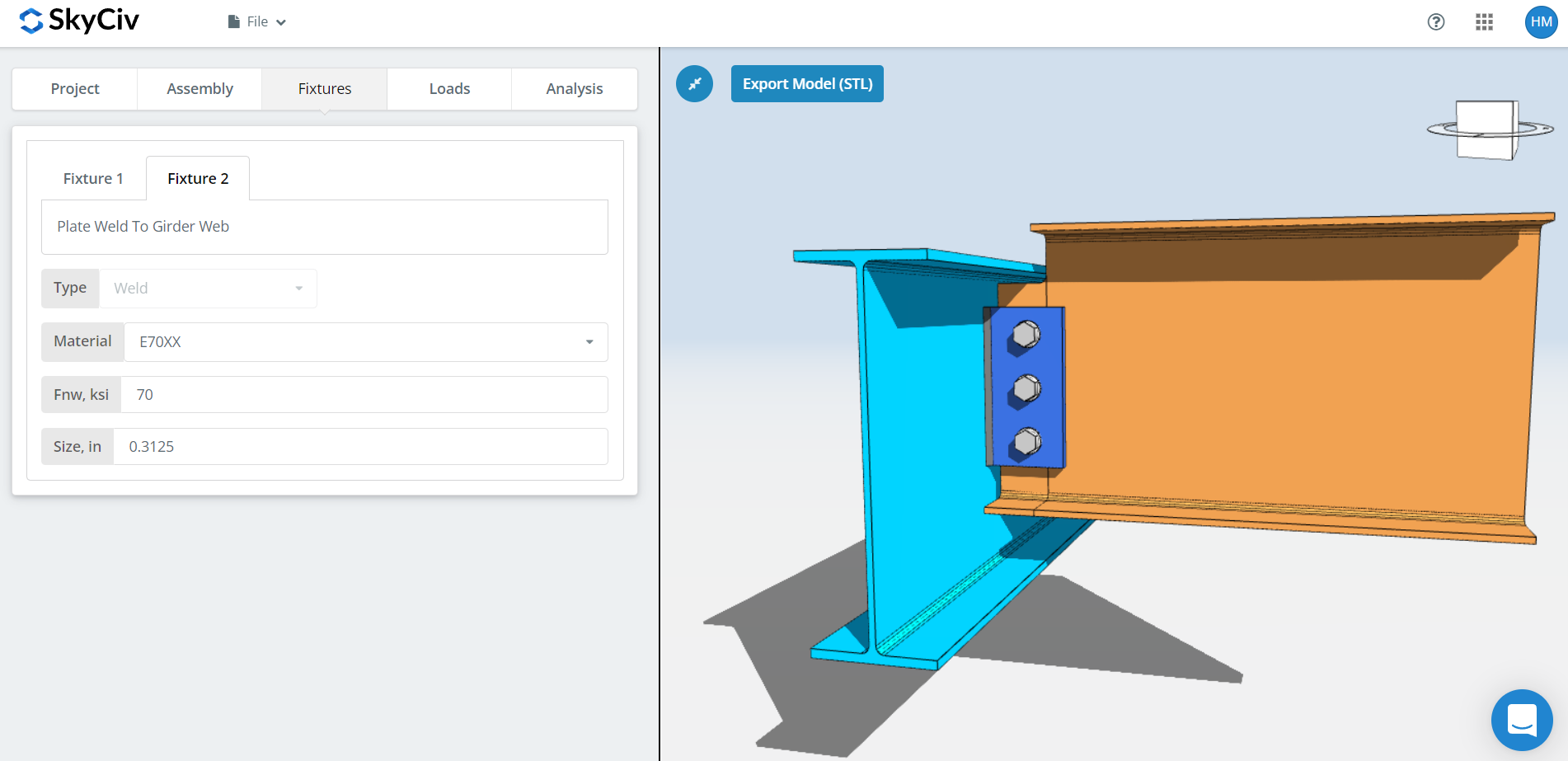
Befestigung 2 ist die Platte zur Unterstützung der Verbindung, ob es sich bei dieser Stütze um einen Trägersteg handelt, ein Stützenflansch oder ein Stützensteg. Bei einer einzelnen Platte wird diese nur geschweißt.
Geben Sie das Schweißmaterial an, oder „Benutzerdefiniert“.’ mit Ihrer eigenen Fnw, wenn die Elektrode nicht aufgeführt ist, dann die Schweißnahtgröße. Bei Einzelplattenverbindungen muss die Schweißnaht mindestens sein 5/8 mal die Plattendicke, so dass die Schweißnaht der Platte entsteht.
Diese Regel hat Kostenfolgen, die es wert sind, berücksichtigt zu werden. Tabelle 8-12 der 15. Ausgabe des AISC-Handbuchs, seite 8-126, zeigt einen großen Sprung in den Schweißdurchgängen zwischen 5/16″ und 3/8″ Filet: 5/16″ benötigt einen einzigen Durchgang, 3/8″ braucht drei. Eine 1/2″ Platte braucht nur eine 5/16″ Filet, um es zu entwickeln, wodurch Sie im Single-Pass-Bereich bleiben. Wenn also die Kapazität der Verbindung nicht ausreicht, Erhöhen Sie die Plattenhöhe auf das maximal zulässige Maß, bevor Sie die Dicke erhöhen. Eine dickere Platte erfordert eine größere Schweißnaht, und eine größere Schweißnaht bedeutet mehr Durchgänge, mehr abgeschiedenes Metall und mehr Arbeitszeit.
Registerkarte Lasten
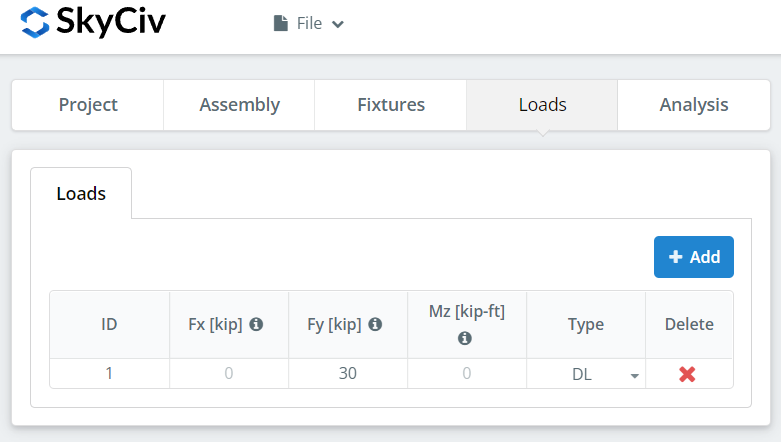
Geben Sie unter „Fy“ die vertikale Scherung ein..
Passen Sie die Last an die Entwurfsmethode an, die Sie zu Beginn ausgewählt haben. LRFD berücksichtigt faktorisierte Lasten anhand der Bemessungsfestigkeit; ASD nimmt Betriebslasten entgegen der zulässigen Stärke auf. Die Software kann nicht erkennen, was Sie eingegeben haben.
Registerkarte Ergebnisse
Klicken “Führen Sie Designprüfungen durch”. Alles, was in den früheren Registerkarten fehlt, wird hier markiert und nicht stillschweigend standardmäßig übernommen.
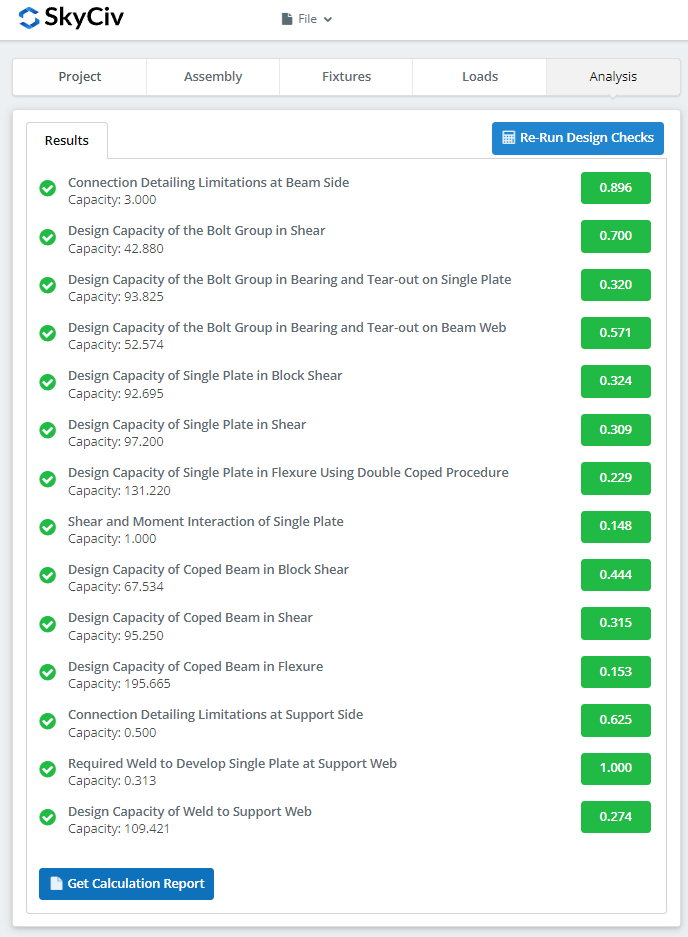
Die Zusammenfassung zeigt, ob die Verbindung erfolgreich war, mit einem Auslastungsgrad für jeden Scheck. Wenn es fehlgeschlagen ist, Ändern Sie die Eingaben auf den vorherigen Registerkarten und klicken Sie auf “Designprüfungen erneut ausführen”. Wenn es vorbei ist, “Berechnungsbericht anzeigen” öffnet den Detailbericht.
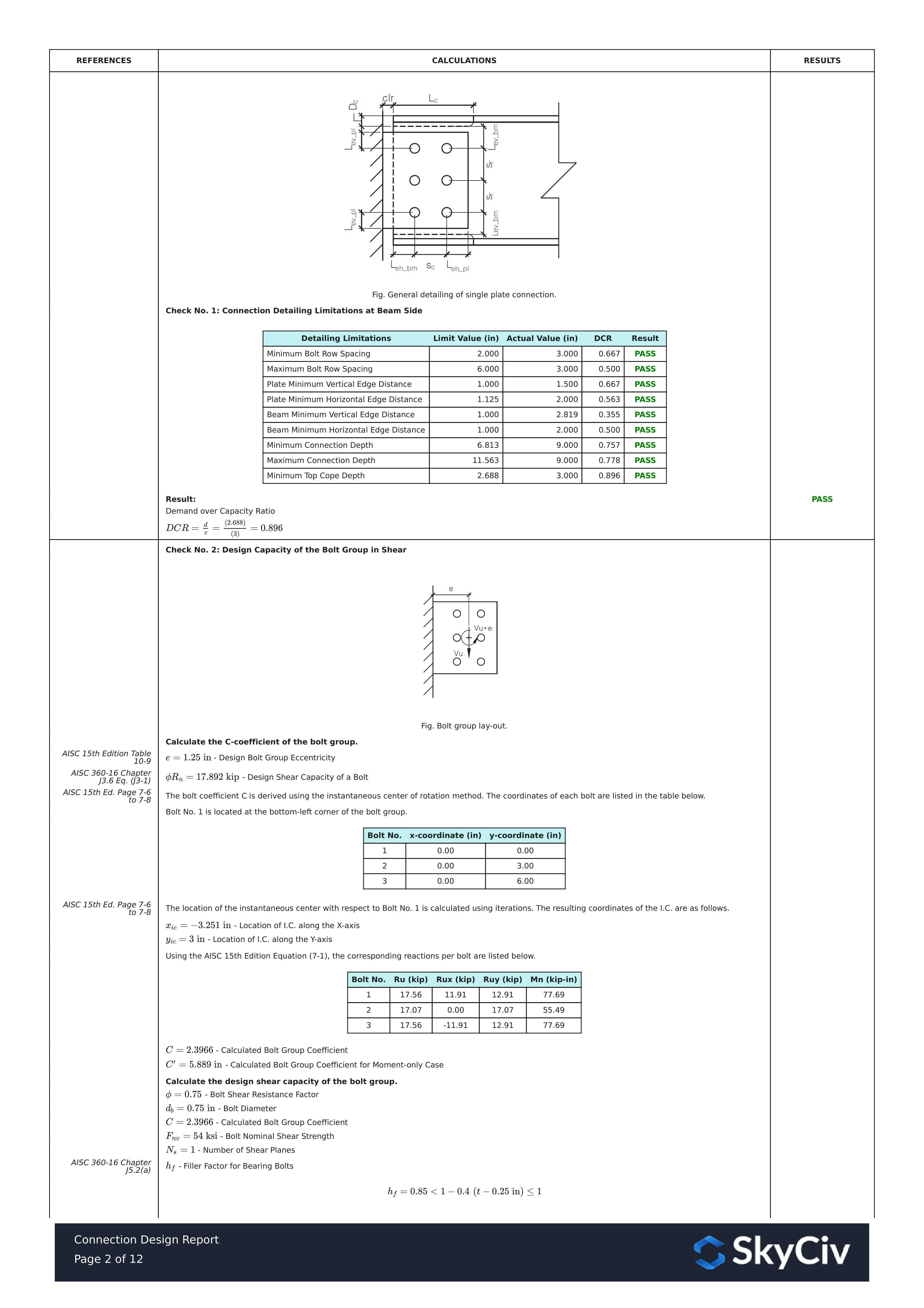
Das ist ein Auszug aus dem Bericht. Jede Prüfung enthält einen Verweis auf das AISC-Handbuch oder die AISC-Spezifikation, und die Arbeit folgt der Reihenfolge, die in der Spezifikation verwendet wird, So kann ein prüfender Ingenieur es Zeile für Zeile lesen, anstatt eine Zahl rückzuentwickeln.
Hier ist eine PDF-Kopie des vollständigen detaillierten Berechnungsberichts: Verbindungsentwurfsbericht.
Probieren Sie es selbst aus
Wählen Sie den einzelnen Teller, Geben Sie Ihre Abschnitte ein, Platte und Schere, und sehen Sie sich jeden Scheck mit seiner Codereferenz an. Es läuft im Browser, ohne dass es etwas zu installieren gibt.
Siehe auch die Rechner für Einzelplattenverbindungen, bleibt die Doppelwinkelrechner, und das Scherverbindungen Überblick.
