
Gli elementi strutturali in acciaio sono collegati tra loro per mezzo di elementi di riempimento o connettori che potrebbero essere sezioni angolari, piastre o anche canali flangiati paralleli (PFC). Queste sono alcune delle configurazioni comuni adottate nei cantieri, soprattutto quando vengono utilizzati principalmente bulloni o collegamenti bullonati. Per collegamenti saldati, i membri sono talvolta collegati direttamente tra loro senza elementi di riempimento o connettori intermedi. In questo articolo ci concentriamo sui bulloni, testa esagonale e svasata, e alcune delle comuni connessioni bullonate utilizzate.
Bulloni esagonali e svasati
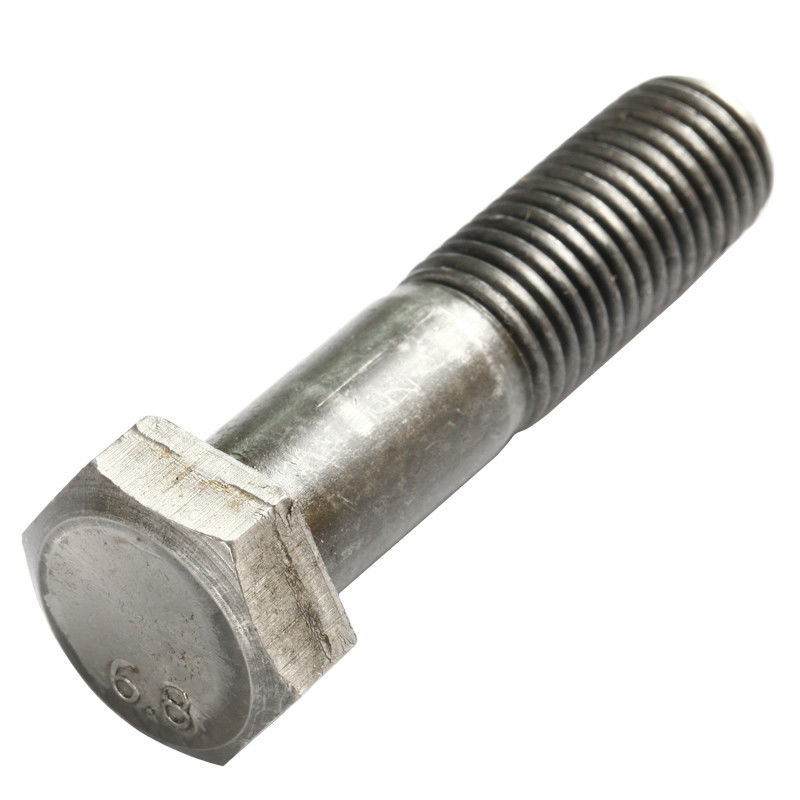

Il bullone a testa esagonale a sinistra è il normale fissaggio strutturale. Il bullone a testa svasata a destra ha una testa conica che si trova a filo con la superficie dello strato, il che conta nel caso in cui una testa sporgente sporcherebbe una superficie di appoggio o una parte in movimento. Quella conicità è anche ciò che riduce la sua capacità portante, come spiegato di seguito.
Istituto americano di costruzioni in acciaio (AISC)
L'AISC utilizza principalmente unità inglesi (pollice, libbre) sebbene anche la controparte SI sia supportata e disponibile. Una cosa da tenere presente è che le dimensioni nel sistema inglese sono solitamente con incrementi di un ottavo di pollice (⅛”), che potrebbero non corrispondere esattamente a quelli del SI.
Confronto del diametro del bullone
| ½” | – |
| ⅝” | M16 |
| ¾” | M20 |
| ⅞” | M22 |
| 1” | M24 |
| 1 ⅛” | M27 |
| 1 ¼” | M30 |
| 1 ⅜” | – |
| 1 ½” | M36 |
Questi sono gli equivalenti pratici più vicini, dimensioni non intercambiabili. Un bullone da ¾" lo è 19.05 mm contro 20 mm per un M20, quindi le dimensioni dei fori e le distanze dai bordi differiscono e le due non possono essere sostituite l'una con l'altra su un disegno.
Bulloni ad alta resistenza
Le specifiche per i materiali dei bulloni sono coperte dall'American Society for Testing and Materials (ASTM), e l'AISC li divide in due gruppi in base alla forza:
Gruppo A — ASTM F3125 Gradi A325, A325M e F1852; ASTM A354 Grado BC; ASTM A449
Girone B — ASTM F3125 Gradi A490, A490M e F2280; ASTM A354 Grado BD
ASTM F3125 è una specifica consolidata che ha assorbito la vecchia A325 autonoma, A490, Documenti F1852 e F2280, ecco perché ora questi appaiono come gradi al suo interno piuttosto che come specifiche a sé stanti. I disegni e i calcoli più vecchi li richiamano ancora alla vecchia maniera.
Oltre alle differenze di forza e altre proprietà, questi gruppi hanno requisiti diversi di pretensionamento minimo a seconda del diametro del bullone.
Eurocodice 3 (Allegato nazionale del Regno Unito)
L'Eurocodice è interamente in unità SI, quindi i bulloni sono indicati in millimetri con la dimensione preceduta da “M”, ad esempio M16 che significa a 16 bullone diametro mm.
| M12 |
| M16 |
| M20 |
| M24 |
| M30 |
Classi e punti di forza dei bulloni
I bulloni Eurocodice sono classificati con una designazione in due parti che codifica entrambi i punti di forza. Per una classe scritta come a.b, la resistenza alla trazione finale è un carico × 100 MPa, e la resistenza allo snervamento è b/10 di quel valore. Quindi classe 4.6 ha un carico di rottura a trazione pari a 400 MPa e una resa di 240 MPa, mentre Classe 8.8 ha 800 MPa ultimo e 640 Rendimento in MPa.
Ottenere questi due nel modo giusto è importante, perché le formule di resistenza dei bulloni assumono il valore ultimo. Nel calcolo delle resistenze effettive dei bulloni, la capacità è influenzata anche dal precarico, chiamato pretensione in termini AISC, che in alcuni casi aumenta la capacità di carico dell'otturatore se viene applicata la giusta quantità di tensione.
| Classe | Trazione, fub (MPa) | Prodotto, fyb (MPa) | Gamma di diametri |
| 4.6 | 400 | 240 | M5 – M36 |
| 4.8 | 400 | 320 | M1.6 – M16 |
| 5.8 | 500 | 400 | M5 – M24 |
| 8.8 | 800 | 640 | M1.6 – M36 |
| 9.8 | 900 | 720 | M1.6 – M16 |
| 10.9 | 1000 | 900 | M5 – M36 |
| 12.9 | 1200 | 1080 | M1.6 – M36 |
Note sui bulloni esagonali e svasati
Le differenze nella geometria tra i bulloni esagonali e quelli a testa svasata influiscono sulla capacità portante, perché la testa conica rimuove il materiale dallo strato in cui si trova. Lo spessore effettivo nel cuscinetto è lo spessore dello strato meno la profondità della svasatura, che è ciò che mostra la figura seguente. (Vedi Manuale AISC 14a ed, Figura. 7-10.)
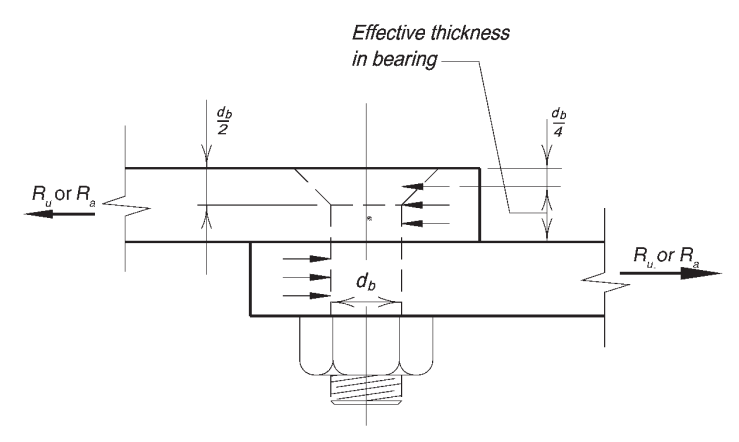
figura 1. Spessore effettivo nel cuscinetto di un bullone a testa svasata
Specifiche di connessione e fori per bulloni
Le connessioni bullonate possono essere specificate come serrate a fondo, precaricato o slip-critical. Queste condizioni giocano un ruolo importante nella scelta del foro per il bullone utilizzato. I tipi di foro sono standard (normale, in termini EN), sovradimensionato, o scanalato corto o lungo, e vengono adottati secondo le specifiche di connessione. La specifica RCSC stabilisce i requisiti per la condizione di perfetta tenuta. Se la connessione è progettata per qualcosa di diverso dalla perfetta tenuta, tale condizione dovrà essere chiaramente individuata sui disegni, che si tratti di un requisito di pretensione AISC o di precarico EN.
La distinzione non è una questione di scartoffie. Un bullone ben serrato resiste al carico sopportando una volta che è entrato in contatto, mentre una connessione antiscivolo è progettata in modo che la forza di serraggio impedisca del tutto il movimento degli strati.
Le connessioni critiche allo scivolamento sono importanti ovunque sia necessario prevenire lo scivolamento, e nel calcolo della resistenza allo scivolamento vengono applicati diversi fattori a seconda del tipo di foro, poiché un foro sovradimensionato o asolato offre allo strato più spazio per muoversi prima di sopportare. Nella maggior parte dei casi, vengono adottati fori per bulloni standard o normali insieme a un livello specifico di pretensione o precarico. Queste variabili possono essere modellate e analizzate utilizzando strumenti come Analisi e progettazione della struttura in acciaio SkyCiv, che aiuta gli ingegneri a tenere conto del comportamento delle connessioni nel sistema strutturale più ampio.
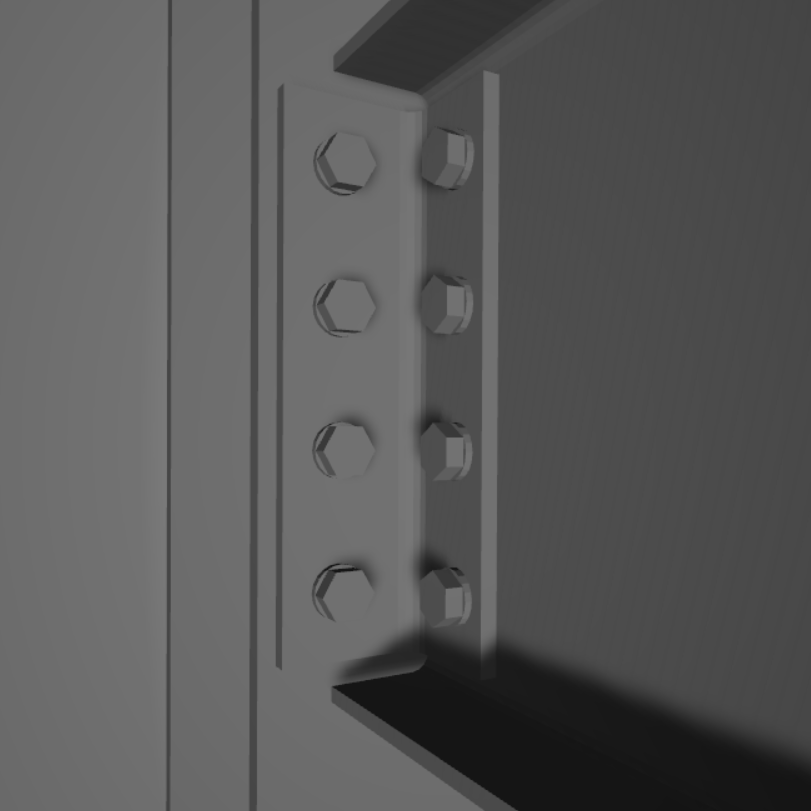
figura 2. Angolo imbullonato, un tipo di connessione a taglio
Collegamenti imbullonati
Le connessioni bullonate possono essere utilizzate sia nei connettori con piastre di taglio come nelle piastre d'anima, magliette, e angoli del nastro e del sedile, e in connessioni momentanee (rigido, completamente trattenuto) che comunemente usano riempitivo, continuità e piastre di giunzione. Utilizzare i bulloni significa aggiungere un connettore intermedio o un elemento di collegamento del tipo appena menzionato.
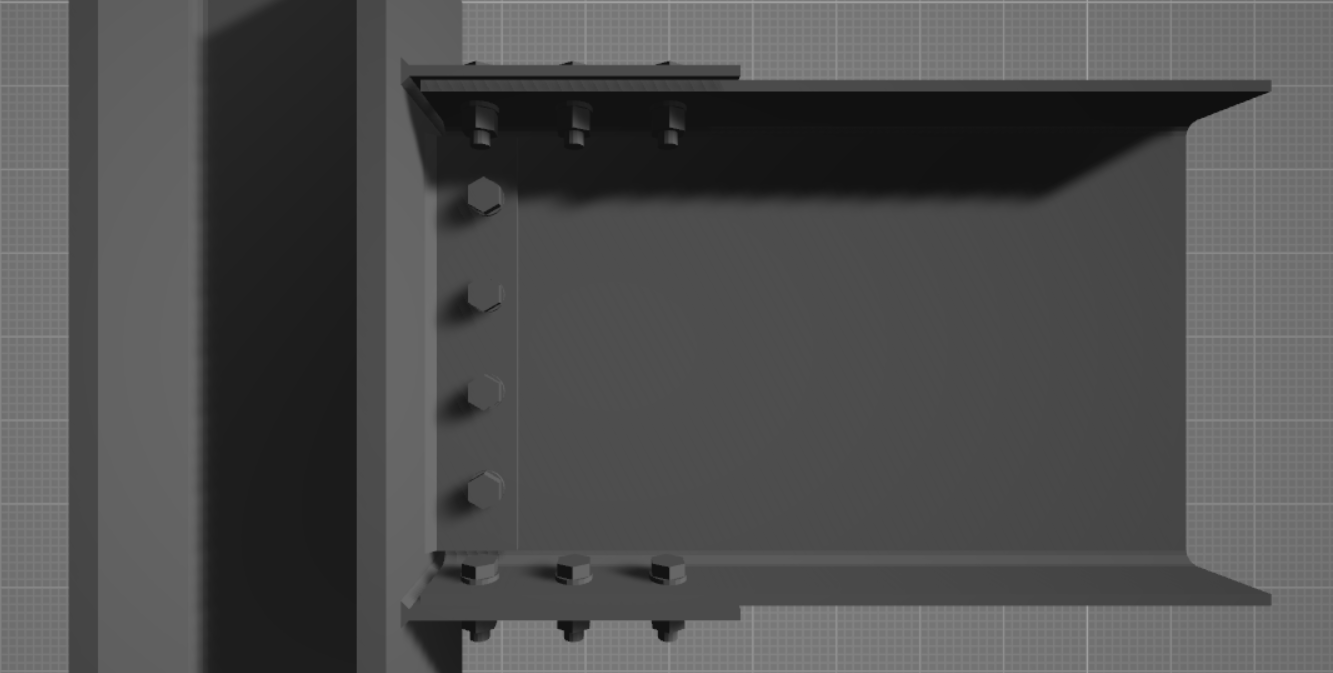
figura 3. Connessione piastra flangiata imbullonata
In teoria esistono molti modi per combinare le configurazioni di connessione. In pratica, la costruibilità e i costi di fabbricazione fanno sì che alcuni tipi di connessione siano preferiti rispetto ad altri e siano quindi più ampiamente adottati. Di seguito sono riportati alcuni dei tipi di connessione comuni che utilizzano i bulloni, con brevi descrizioni.
cesoia (Semplice) Connessioni
- Piatto singolo/doppio (linguetta o aletta) utilizza una o più piastre per collegare l'anima della trave all'elemento di supporto, una trave o una colonna. Un lato di solito necessita di una saldatura sul bordo della piastra, mentre i bulloni lo collegano in sovrapposizione all'anima della trave.
- Separare/Doppio angolo è simile ai piatti, tranne che gli angoli possono essere imbullonati su entrambi i lati della connessione.
- Angolo del sedile, Come suggerisce il nome, utilizza una sezione angolare per sostenere la flangia dell'elemento supportato (oppure la parete piana per una sezione chiusa) in modo che la trave possa appoggiarsi su di essa. I bulloni possono essere utilizzati in questo tipo di connessione.
Momento (Trattenuto) Connessioni
- Piastre flangiate, utilizzato insieme ad una connessione a taglio, fornire continuità alle flange che incorniciano le colonne di un telaio resistente al momento, o più in generale nelle giunzioni degli elementi.
- Collare e piastre passanti si trovano sulle colonne HSS (RHS o CHS) facente parte di un telaio resistente al momento. Una piastra passante taglia la colonna, mentre attorno ad esso è montata una piastra a collare, indossato in modo molto simile al colletto di una camicia. Entrambi sono costosi da fabbricare a causa del taglio e dell'adattamento coinvolti.
Visita il nostro articolo su Tipi di connessioni in acciaio per saperne di più, confrontare gli elementi di fissaggio in bulloni vs saldature vs rivetti, oppure prova il nostro calcolatore della resistenza a taglio dei bulloni. La documentazione sui bulloni copre la classificazione dei bulloni, i tipi di foro e il pretensionamento vengono inseriti nel modulo di progettazione della connessione.
Provalo adesso
Scegli una connessione bullonata, impostare il grado del bullone, diametro e tipo di foro, e ogni controllo dei bulloni ritorna con il suo rapporto di utilizzo e la clausola dietro di esso. Funziona nel browser, senza niente da installare.
Riferimenti
[1] Istituto americano di costruzioni in acciaio (AISC). (2016). Specifiche per edifici in acciaio strutturale. Chicago, IL 60601-6204
[2] Istituto americano di costruzioni in acciaio (AISC). (2011). Manuale di costruzione in acciaio. 14esimo ed. Chicago, IL 60601-6204
[3] The Steel Construction Institute e The British Constructional Steelwork Association. (2014). Giunti in costruzioni in acciaio Giunti semplici all'Eurocodice 3. Ascot SL5 7QN; Londra SW1A 2ES, UK
[4] The Steel Construction Institute e The British Constructional Steelwork Association. (2014). Giunti nelle costruzioni in acciaio Giunti resistenti ai momenti dell'Eurocodice 3. Ascot SL5 7QN; Londra SW1A 2ES, UK
