
A vertical brace carries lateral load down through a braced bay as axial force, rather than by bending the frame. At each end the brace force has to be resolved into the beam and the column, and that is the job of the gusset plate. The connection is therefore three interfaces working together: brace to gusset, gusset to beam, and gusset to column.
SkyCiv Connection Design checks the vertical brace connection to AISC 360-16 nell'ASD o LRFD. It resolves the gusset interface forces by the Uniform Force Method, then returns every check with its utilization ratio and the clause behind it.
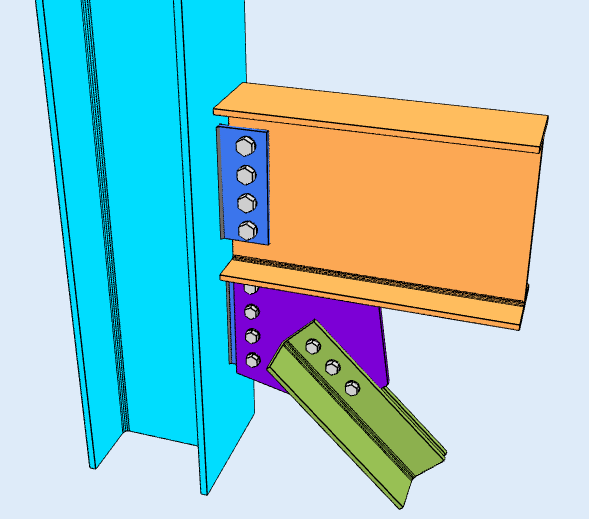
Braced Frames Against Moment Frames
A braced frame resists lateral load axially. The members work in tension and compression, so they stay light, and the connections are mostly bolted shear and bearing work that a fabricator can produce without special procedures. A moment frame resists the same load in flexure, which needs heavier members and connections stiff enough to transfer moment, often with complete joint penetration welds at the flanges. For the same drift limit, the braced frame is usually the cheaper structure.
What the braced frame costs is the bay itself. A diagonal running corner to corner blocks that bay for doors, glazing and services, and the architect has to plan around it. A moment frame leaves the bay clear, which is why it survives in frontages and open floor plates despite costing more. Bracing saves steel; it constrains the layout rather than freeing it.
Where a full diagonal will not fit, the usual answers are a chevron brace, which frees the centre of the bay for an opening, o a knee brace, which sits in the corner.
The module designs these connections to AISC 360-16. Seismic force-resisting detailing, the ductility and capacity-design rules in AISC 341, is not covered. If the brace is part of a seismic force-resisting system, the demands you enter have to come from that assessment.
Designing a Vertical Brace Connection in SkyCiv
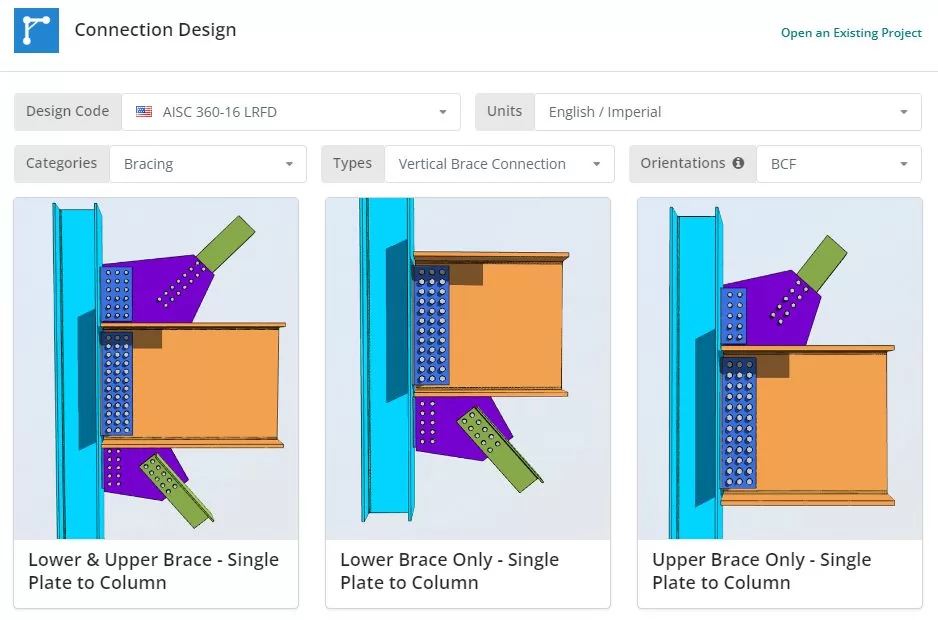
Il codice di progettazione può essere AISC 360-16 ASD o LRFD, e unità inglesi/imperiali o SI/metriche. Il rinforzo è disponibile solo con AISC; it is not offered under AS 4100.
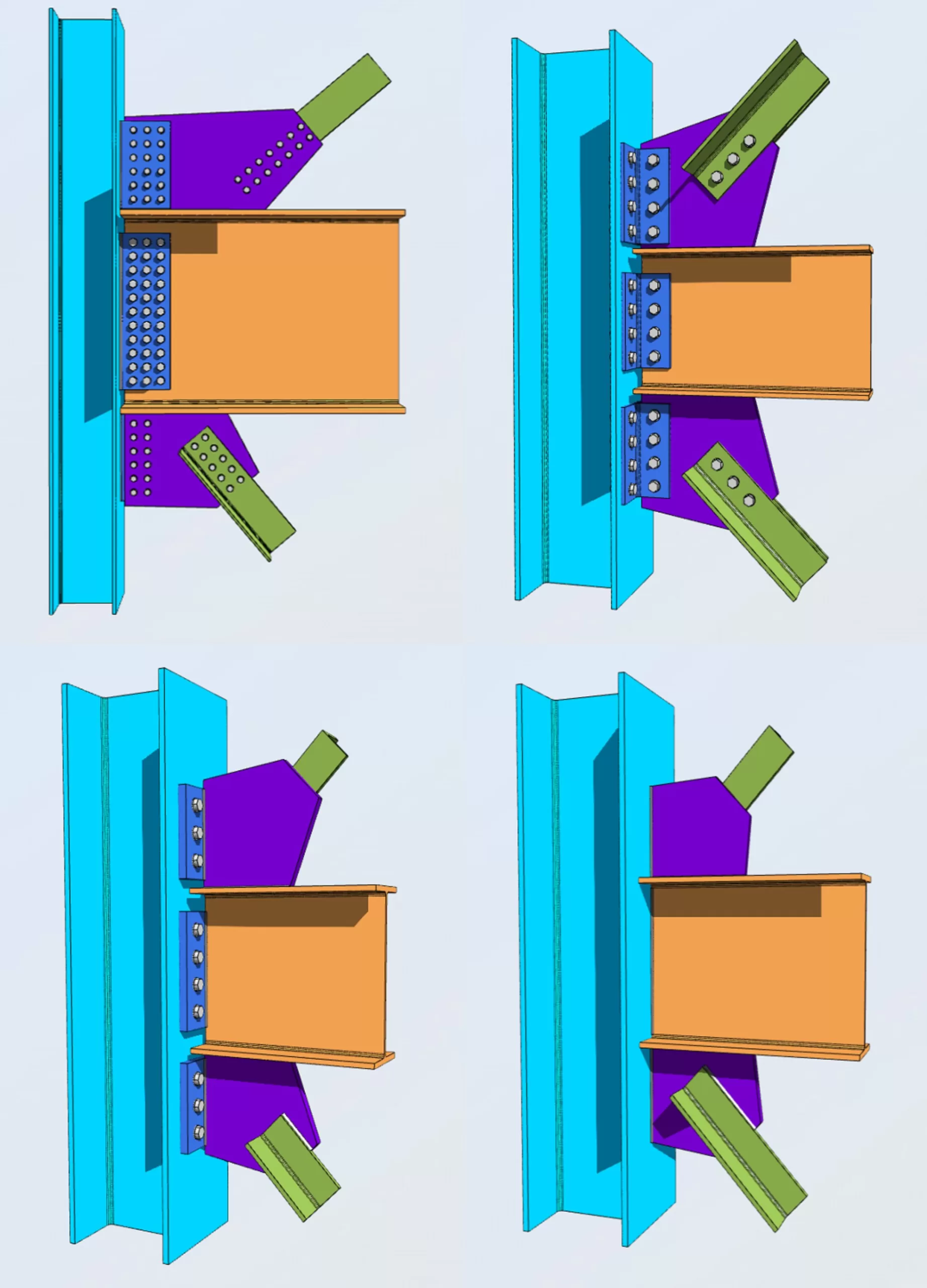
Click any tile to start. There are four connections to the column, piatto unico, doppio angolo, piastra terminale and directly welded, and each comes in a lower brace only, upper brace only, or lower and upper variant. The choice sets both the beam to column connection and the gusset to column connection. Each configuration can frame to the column flange or the column web.
Scheda Dettagli
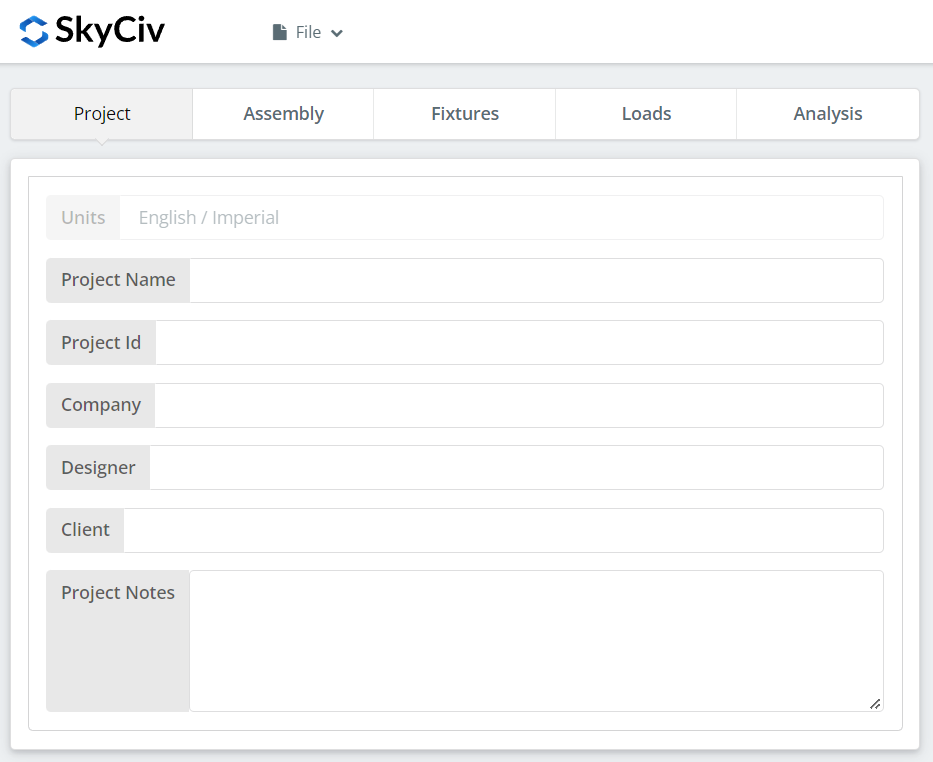
Registra qui i dettagli del progetto. Niente di tutto ciò cambia i calcoli, ma riporta nel rapporto.
Scheda assemblaggio
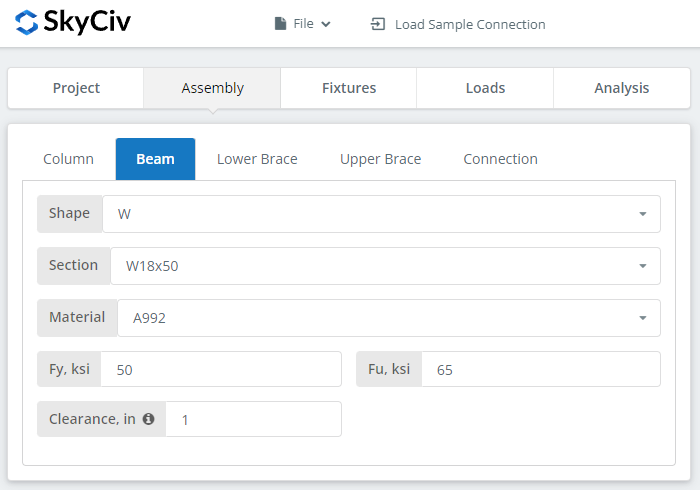
The tabs under Assembly are the Column, il Fascio, the Brace or Braces, e la connessione, which holds the gusset plate and any angle. A configuration with both an upper and a lower brace has a tab for each, so the count is four or five depending on the tile you picked.
Scheda Colonna
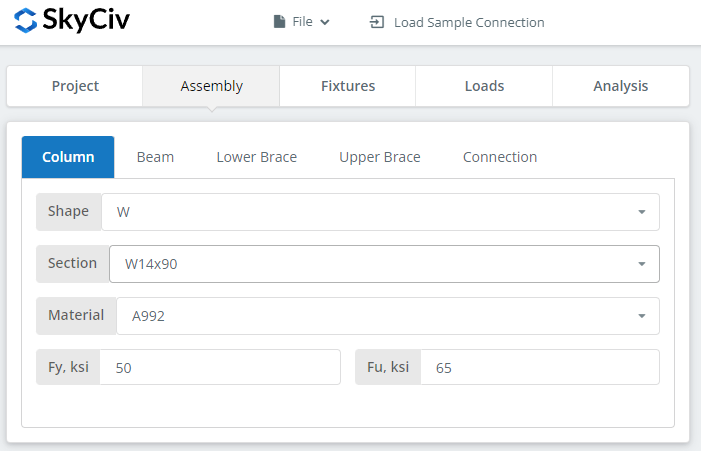
Scheda Trave
Scheda Controvento Inferiore o Superiore
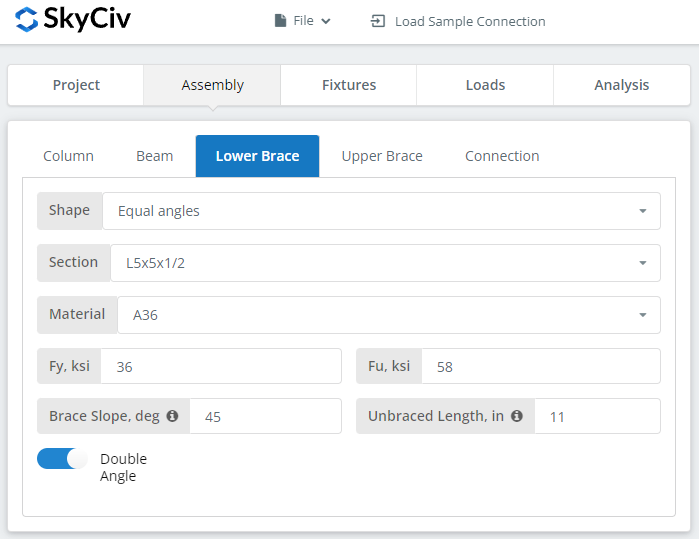
The brace can be a single angle, a double angle, a square or rectangular HSS, or a WT section. The shape drives how the brace meets the gusset. An angle connects through one leg, which puts the load off the brace centreline and brings shear lag into the net section check. An HSS is normally slotted over the plate and welded each side, which keeps the load concentric but needs the slot end checked.
The brace angle matters as much as the section. It sets how the brace force splits into the horizontal and vertical components that the gusset has to deliver, so a shallow brace drives the beam interface and a steep one drives the column interface.
Scheda Connessione
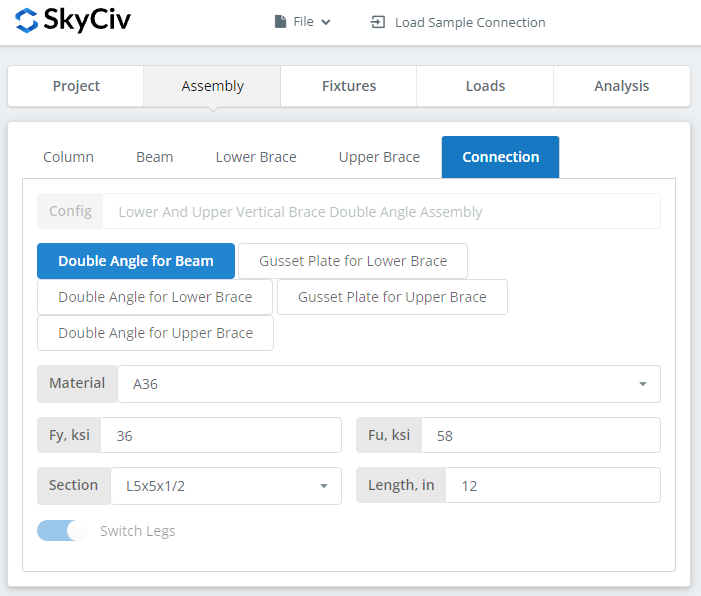
Set the gusset plate and angle properties here. For this example we selected the “Tutore inferiore e superiore – Doppio angolo rispetto alla colonna” piastrella.
The gusset has to be deep enough to develop the brace connection and still reach both the beam and the column, so watch the 3D renderer as you size it. Its proportions are not free: the Uniform Force Method sets the interface forces from the gusset geometry, so changing the plate dimensions changes the load split, not just the capacity.
Scheda Infissi
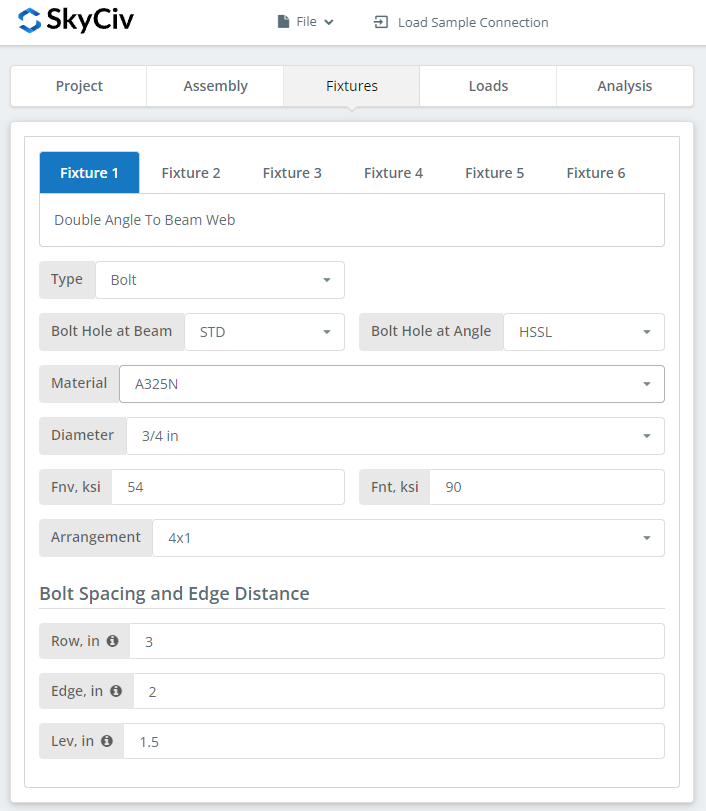
Four interfaces are set here: beam to column, brace to gusset, gusset to beam, and gusset to column. Each can be bolted or welded, and each is checked separately.
Where an interface is bolted, the bolt grades are A307, A325, A490 o personalizzato. A325 e A490 sono gradi all'interno di ASTM F3125, che ha consolidato le vecchie specifiche autonome. Where it is welded, specificare il materiale di saldatura, o "Personalizzato".’ with your own Fnw, and the weld size.
Per ulteriori informazioni sul lato degli elementi di fissaggio, vedere la documentazione su bulloni e saldature.
Scheda Carichi
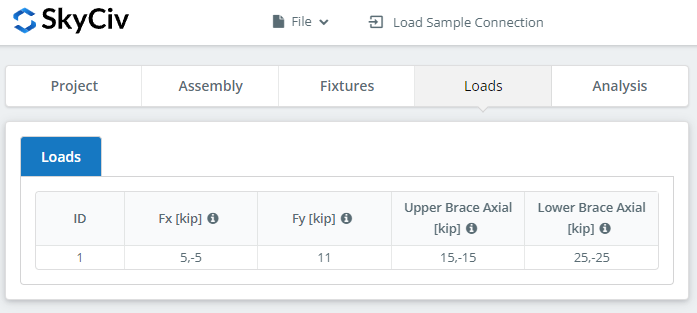
Enter the brace loads and the beam reaction here. Hover the tooltips for the sign convention and direction of each.
Match the loads to the design method you picked at the start. LRFD prende in considerazione i carichi fattorizzati rispetto alla resistenza di progetto; L'ASD sopporta i carichi di servizio rispetto alla resistenza ammissibile. Il software non è in grado di riconoscere cosa hai digitato. Check the brace in compression as well as tension, because the compression case governs the gusset buckling check and often the plate thickness with it.
Scheda Risultati
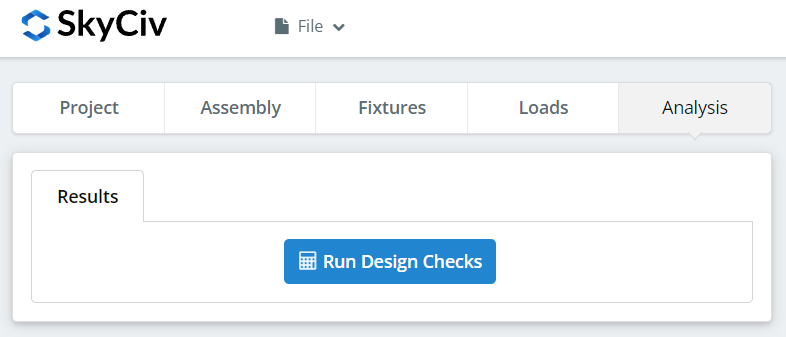
Clic “Esegui controlli di progettazione”. Tutto ciò che manca nelle schede precedenti viene contrassegnato qui anziché essere impostato automaticamente come predefinito.
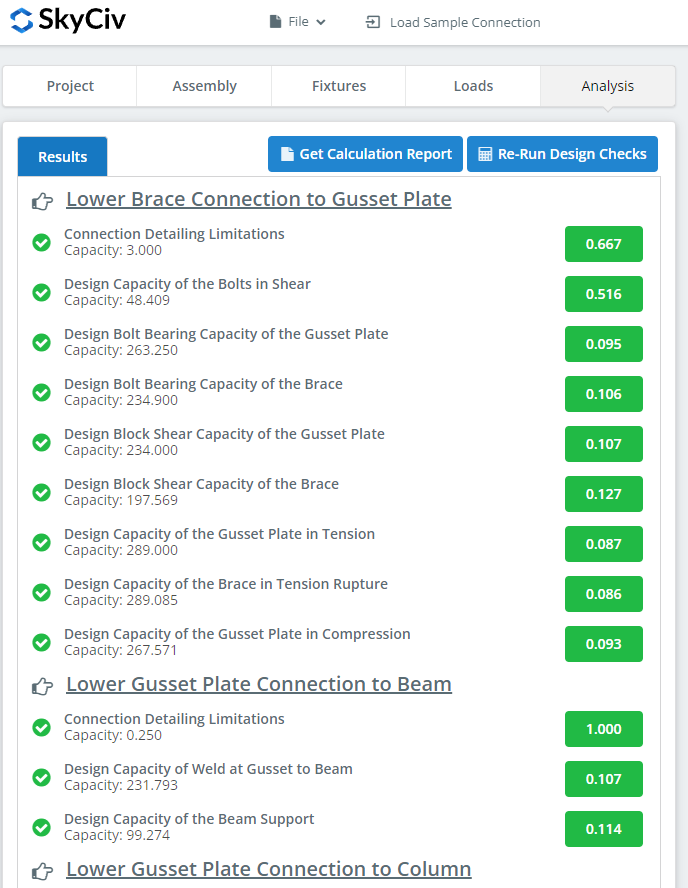
Il riepilogo mostra se la connessione è riuscita, con un rapporto di utilizzo rispetto a ciascun controllo. Across the four interfaces that covers gusset buckling and tension, taglio del blocco, taglio dei bulloni, bearing and tearout, prying, capacità di saldatura, shear and moment interaction, and the detailing limits on plate thickness and edge distance.
Se ha fallito, modificare gli input nelle schede precedenti e fare clic “Rieseguire i controlli di progettazione”. Quando passa, passa il mouse sopra “rapporto” and pick “Relazione di sintesi” o “Rapporto completo”.
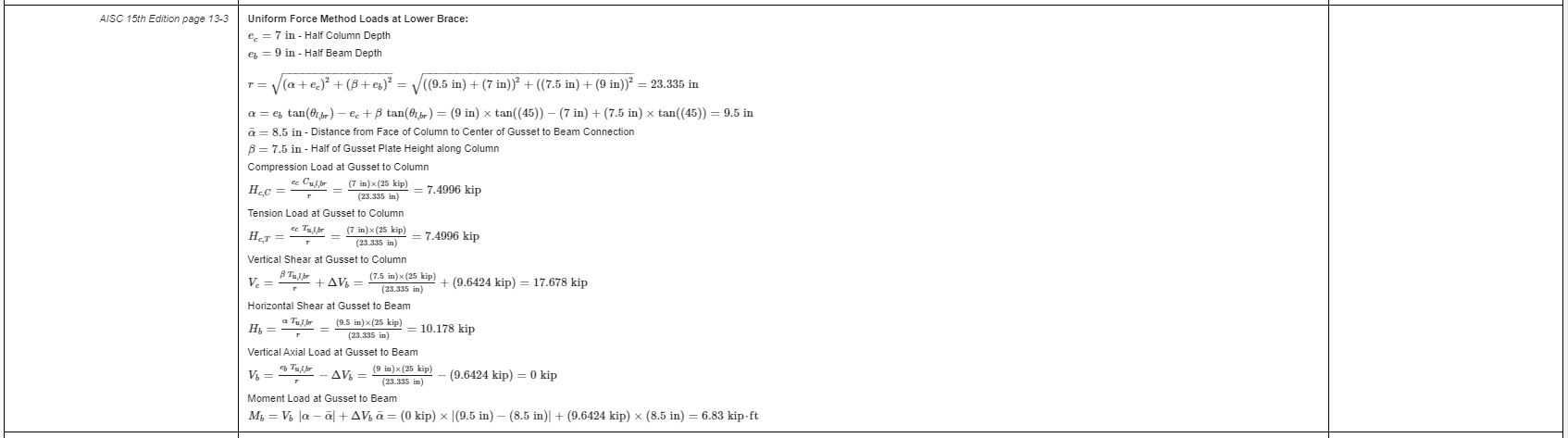
That is an extract from the full report. Ogni controllo riporta il riferimento al manuale o alla specifica AISC, e la lavorazione segue l'ordine utilizzato dalle specifiche, in questo modo un tecnico revisore può leggerlo riga per riga invece di eseguire il reverse engineering di un numero.
QuiÈ una copia PDF della relazione di calcolo dettagliata completa.
Provalo tu stesso
Pick the vertical brace, enter your brace, gusset and loads, e vedere ogni controllo con il relativo riferimento al codice. Funziona nel browser, senza niente da installare.
Vedi anche il vertical bracing connection calculator, che per il chevron brace e knee brace calculators for the other bracing configurations.
