
La connessione a piastra singola, o sezione di taglio, è una delle connessioni semplici a taglio previste nella Part 10 del Manuale AISC, e uno dei preferiti dai produttori perché è il più economico del gruppo: un piatto, una linea di saldatura, un gruppo di bulloni.
La piastra viene sempre saldata in officina al supporto e normalmente imbullonato sul campo alla trave di collegamento. Può essere saldato alla trave invece che su un telaio assemblato in officina. Quello che non dovresti fare è mettere quella saldatura sul campo: la saldatura sul campo è ad alta intensità di manodopera e costosa oltre all'inserimento di un bullone.
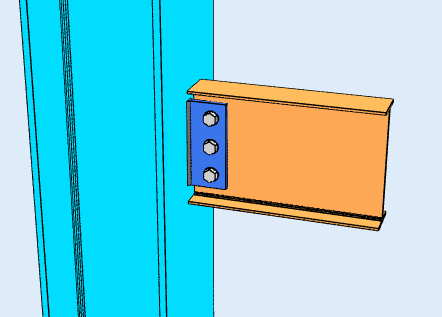
Due tipi di configurazione
La configurazione in cui ti trovi determina quali regole si applicano, e deriva dalla geometria piuttosto che dall'impostazione scelta.
-
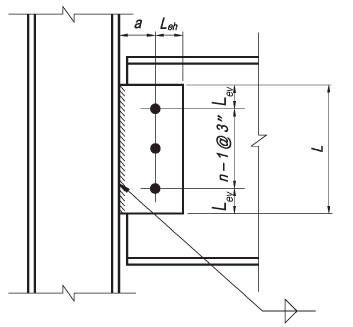
Configurazione convenzionale
- È consentita una sola fila verticale di spit. Il numero di bulloni nella connessione deve essere compreso tra 2 e 12.
- La distanza dalla linea dei bulloni alla linea di saldatura deve essere uguale o inferiore a 3-1/2 pollici.
- Fori standard (malattie sessualmente trasmissibili) o fori orizzontali ad asola corta (HSSL) sono consentiti per essere utilizzati come indicato nella tabella 10-9 del manuale AISC XV Edizione.
- La distanza dal bordo verticale deve soddisfare i requisiti della tabella J3.4 delle specifiche AISC. La distanza dal bordo orizzontale deve essere maggiore o uguale a 2d sia per la piastra che per l'anima della trave, dove d è il diametro del bullone.
- Lo spessore della piastra o lo spessore dell'anima della trave devono soddisfare il requisito di spessore massimo indicato nella tabella 10-9 del manuale AISC XV Edizione.

-
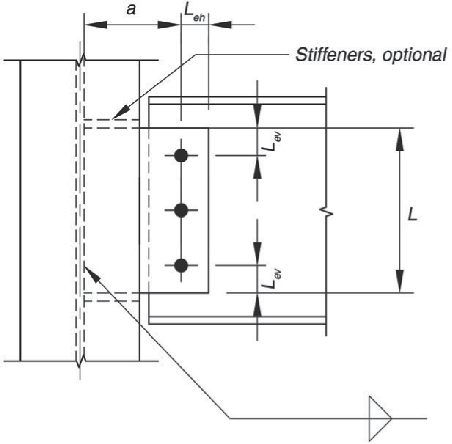
Configurazione estesa
- Il numero di bulloni non è limitato.
- La distanza dalla linea di saldatura alla linea di bulloni più vicina al supporto non è limitata.
- L'uso dei fori deve soddisfare i requisiti della sezione J3.2 delle specifiche AISC.
- Le distanze dal bordo orizzontale e verticale devono soddisfare i requisiti della tabella J3.4 delle specifiche AISC.

Progettazione di una connessione a piastra singola in SkyCiv
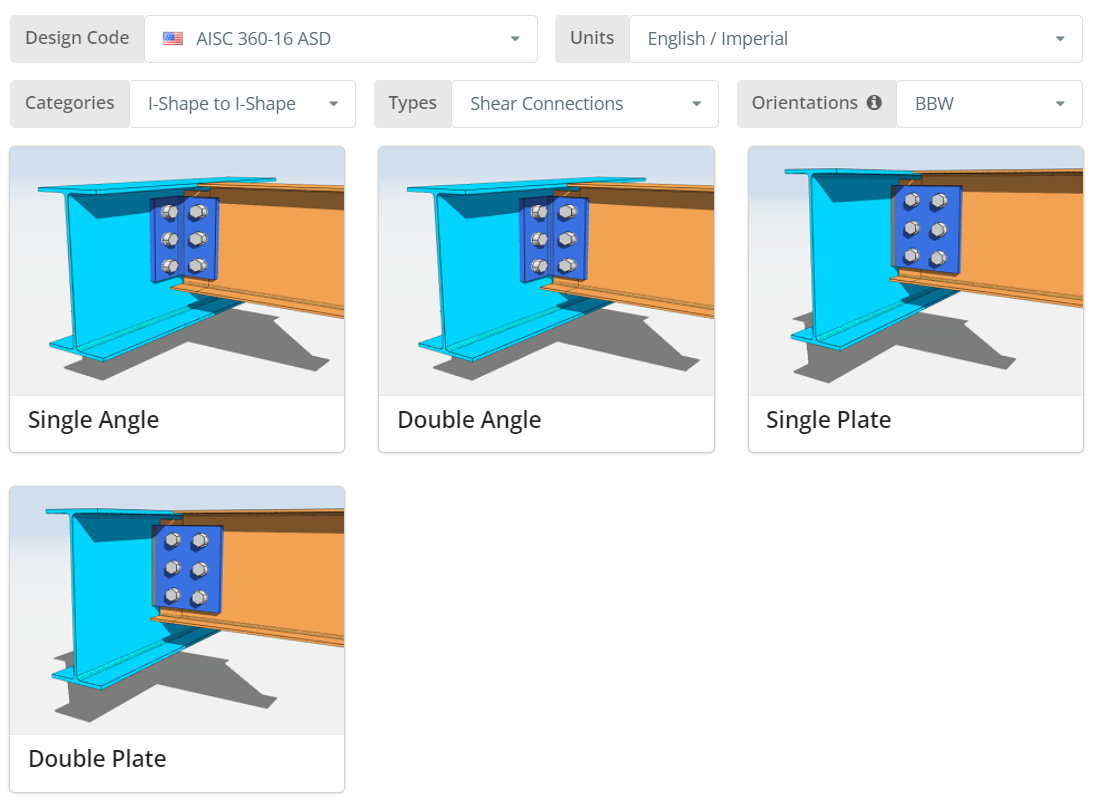
Il codice di progettazione può essere AISC 360-16 ASD o LRFD, e unità inglesi/imperiali o SI/metriche. L'orientamento è BCF, BCW o BBW; passa il mouse sulla descrizione comando per sapere cosa significa ciascuno. Clicca il “Piatto unico” piastrella.
Scheda Dettagli
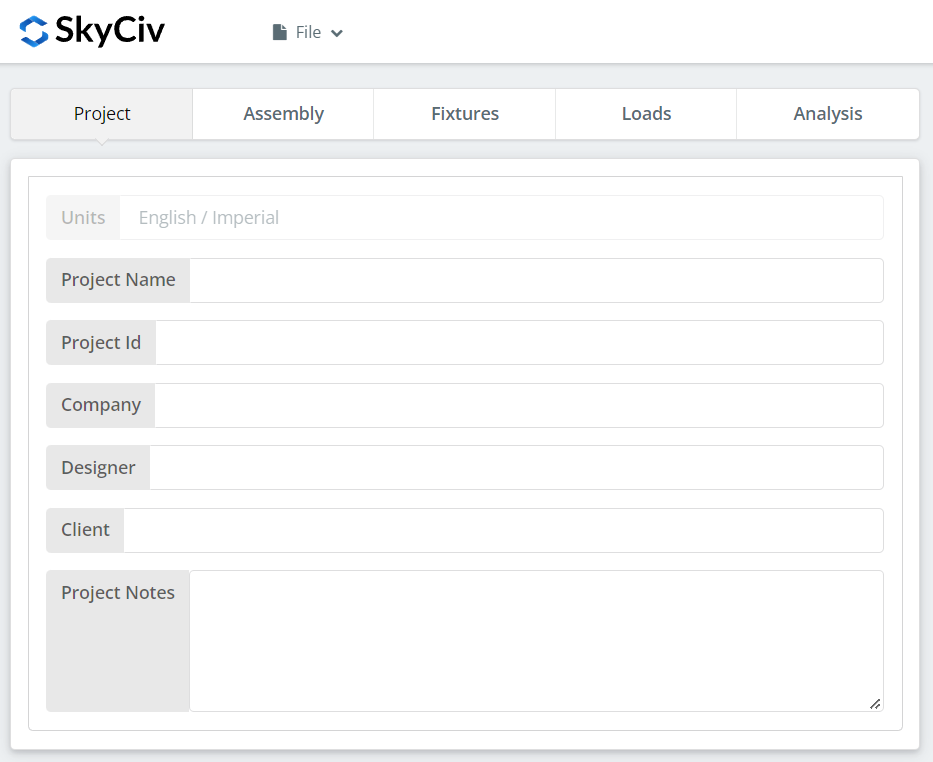
Registra qui i dettagli del progetto. Niente di tutto ciò cambia i calcoli, ma riporta nel rapporto.
Scheda assemblaggio
Tre schede si trovano sotto Assemblaggio: la Trave, il Fascio, e la connessione, che contiene la piastra unica.
Scheda trave
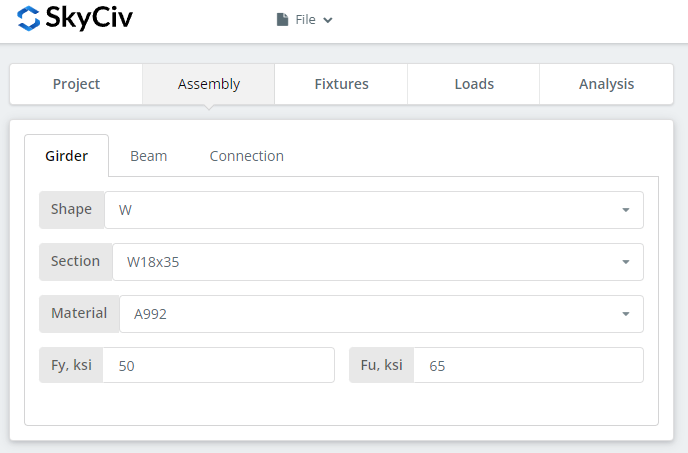
Specificare la sezione e la qualità del materiale dell'elemento di supporto. A992 e A36 sono nell'elenco; per qualsiasi altra cosa scegli Personalizzato e inserisci Fy e Fu.
Scheda Trave
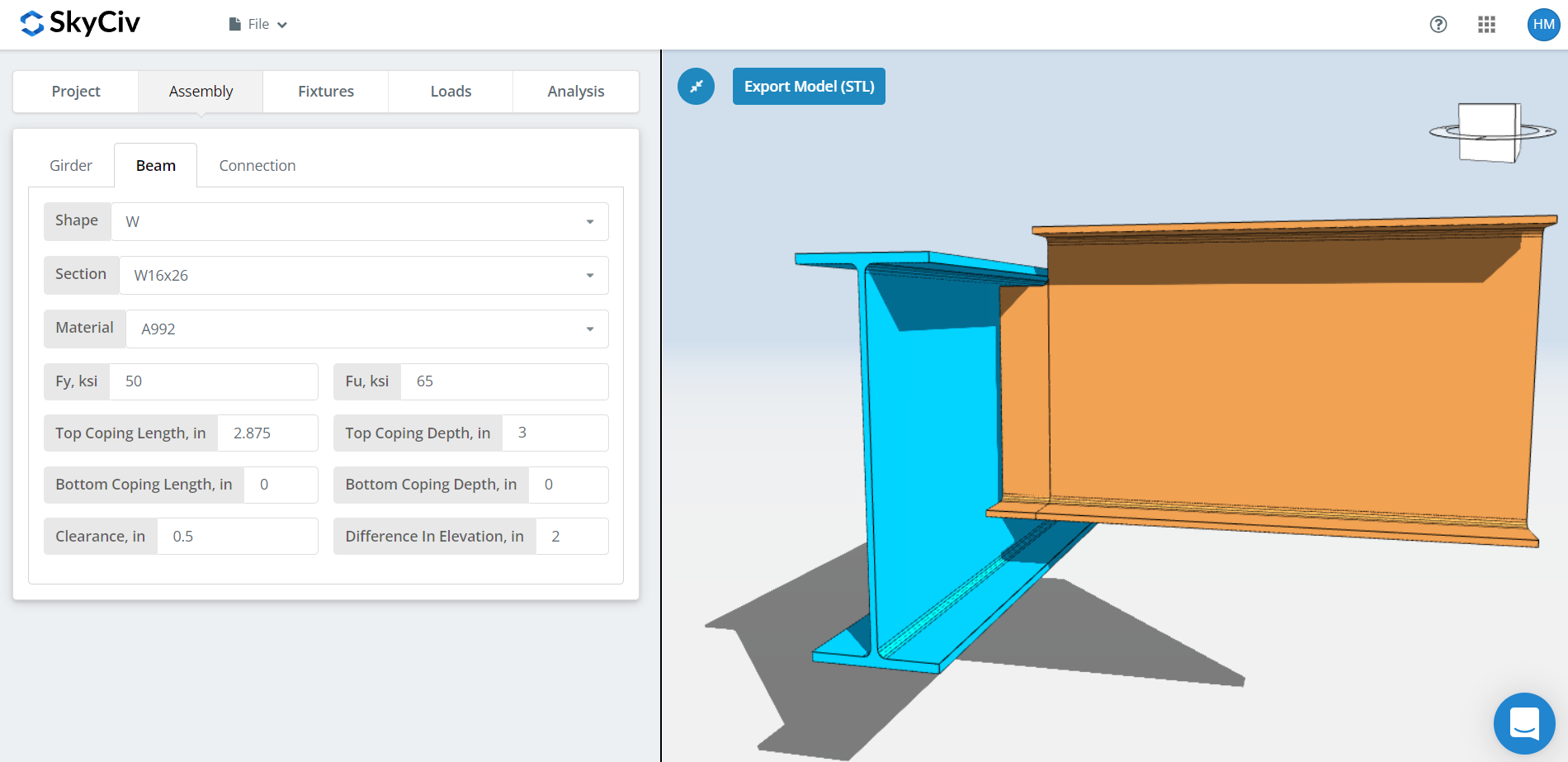
Gli stessi input per la trave, più le dimensioni del fronte, distanza tra le travi e il dislivello.
Per l'orientamento BBW la cappetta viene elaborata automaticamente, e puoi sovrascriverlo. La cimasa automatica viene ricalcolata ogni volta che si cambia la sezione della trave, la sezione della trave, la distanza o il dislivello.
L'autorizzazione è anche ciò che ti mette in una configurazione o nell'altra. Uno spazio sufficientemente piccolo da far sì che la trave rimanga all'interno della trave di solito dà come risultato una piastra singola convenzionale, a meno che la flangia della trave non sia sufficientemente larga da far sì che la distanza tra il bullone e l'anima della trave superi 3-1/2″. Una distanza che pone la trave completamente all'esterno della flangia della trave dà come risultato una piastra singola estesa. Per il dislivello, un valore positivo significa che la trave è sopra la trave e un valore negativo sotto.
Scheda Connessione
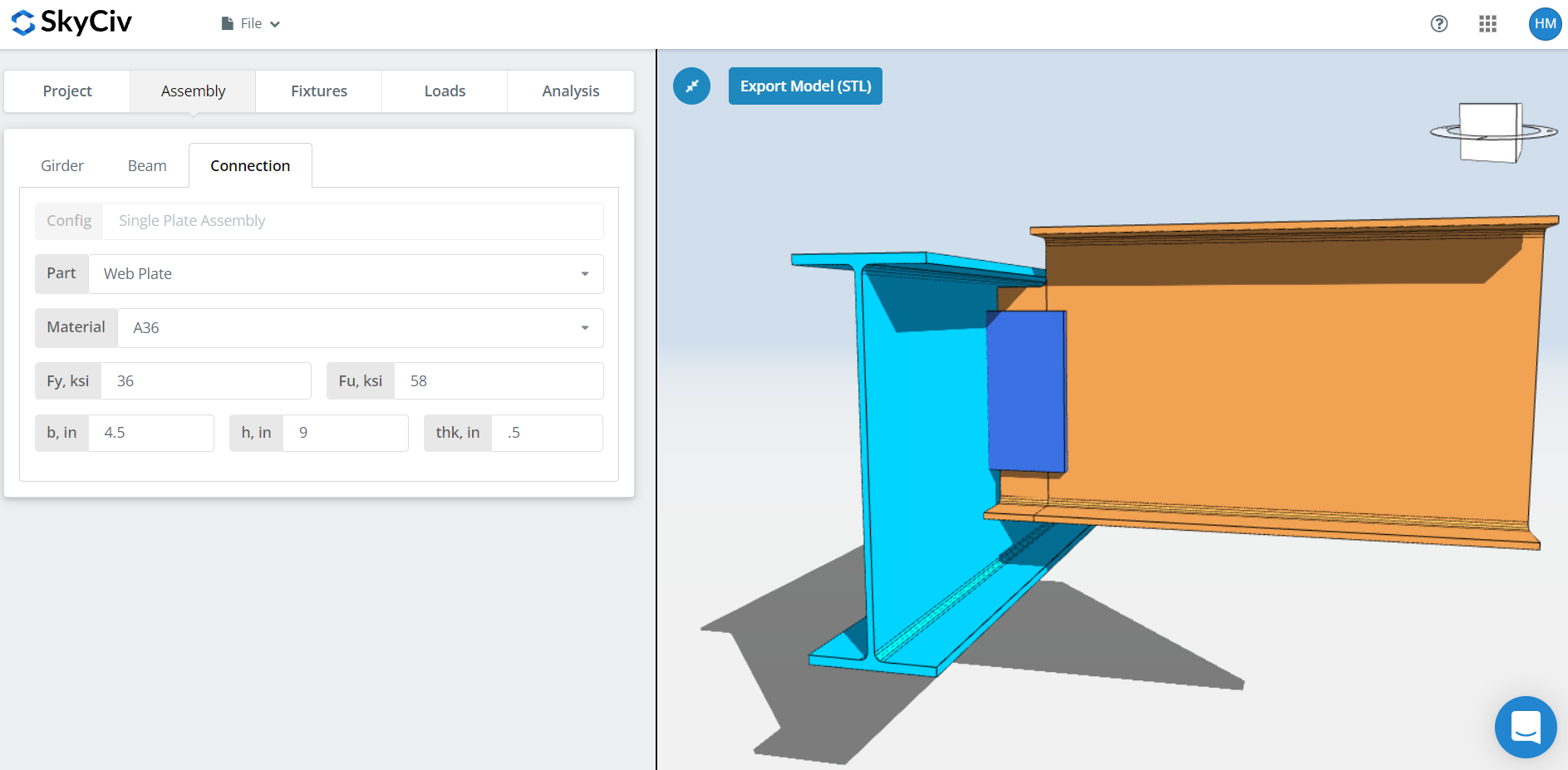
Imposta le proprietà della piastra: grado A36 o A992, o Personalizzato con il tuo Fy e Fu, quindi la larghezza della piastra "b", altezza 'h’ e spessore 'thk'.
Guarda il renderer 3D mentre procedi. L'altezza della piastra dovrebbe rientrare nella profondità della trave, e la larghezza della piastra deve essere sufficientemente ampia da consentire la bullonatura o la saldatura della trave, che conta di più in una configurazione estesa.
Infisso 1 Scheda
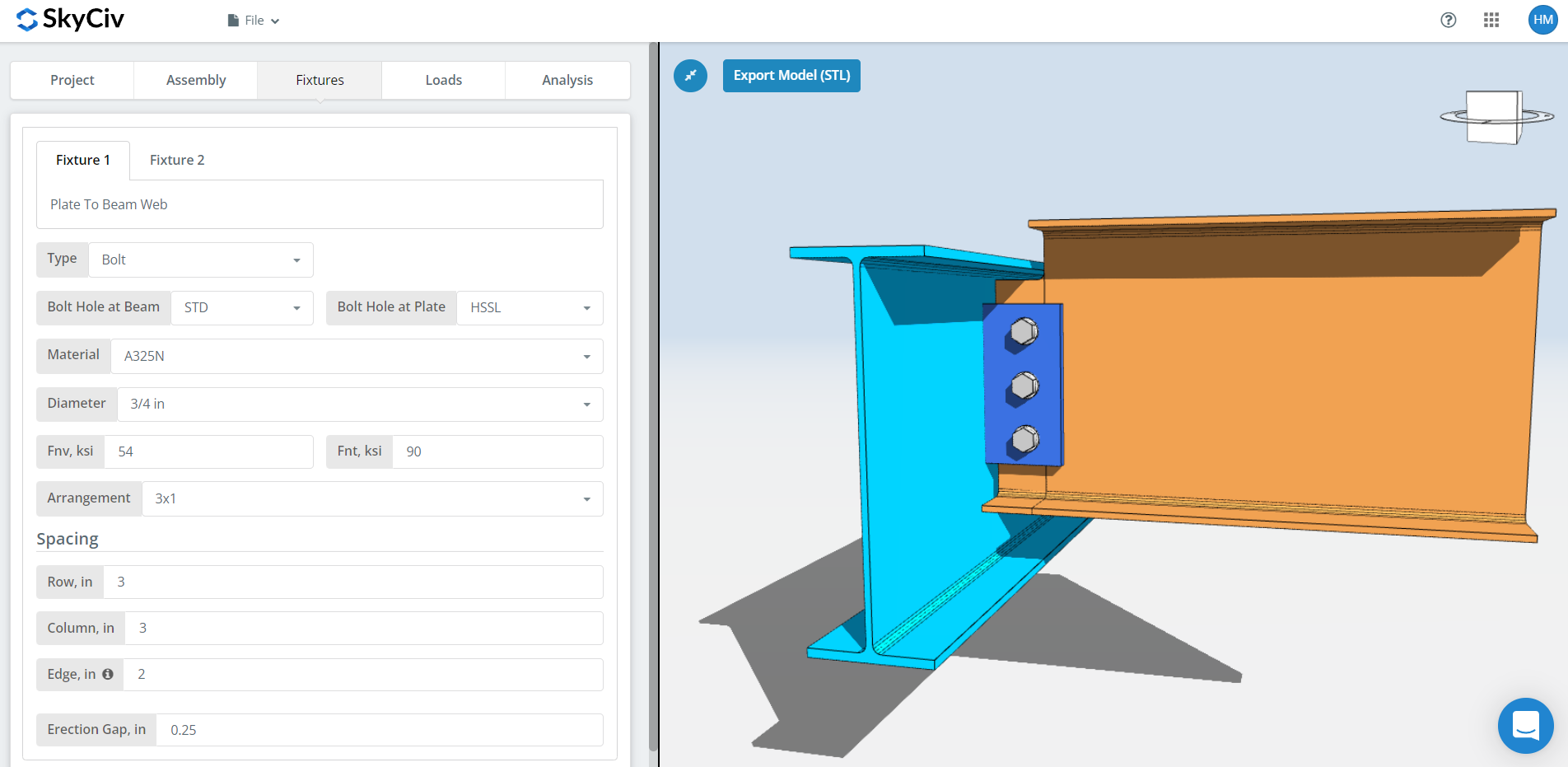
Infisso 1 è la connessione tra piastra e anima della trave. Può essere imbullonato o saldato; questa procedura dettagliata utilizza imbullonati.
Primo, i tipi di fori per bulloni sulla trave e sulla piastra. I produttori di solito richiedono fori standard (malattie sessualmente trasmissibili) nella trave e fori orizzontali a fessura corta (HSSL) nel piatto, che acquista la tolleranza adeguata sul campo. Si noti che questi due sono anche gli unici tipi di foro consentiti dalla configurazione convenzionale, quindi raggiungere fori sovradimensionati ti porta nelle regole di configurazione estese.
Successivamente, il materiale o la qualità del bullone: A307, A325, A490 o personalizzato. A325 e A490 sono gradi all'interno di ASTM F3125, che ha consolidato le vecchie specifiche autonome. Scegliere N o X per una connessione di tipo cuscinetto e SC per una connessione critica allo scorrimento.
I giunti critici per lo scivolamento hanno una capacità di progettazione dei bulloni inferiore rispetto al tipo con cuscinetti, quindi usali dove lo scivolamento conta davvero: fori maggiorati o asolati, inversione di carico, o stanchezza. Tra N e X, X indica la maggiore capacità di taglio del bullone, ma i fili devono essere esclusi dal piano di taglio, e l'erettore deve saperlo. Tra SC(A) e SC(B), SC(B) offre una capacità maggiore e richiede una superficie di contatto preparata in modo più accurato, ad esempio la sabbiatura commerciale SSPC-SP6.
Quindi il diametro del bullone, dal 5/8″ a 1-1/2″ o gli equivalenti metrici, e la disposizione, fino a 12 file e colonne di bulloni, con la spaziatura delle righe e delle colonne.
Vale la pena saperlo: se è necessaria una maggiore capacità del gruppo bulloni, l'apertura della spaziatura può farlo invece di aggiungere bulloni, purché l'altezza della piastra rientri ancora nella profondità della trave. La forza del gruppo di bulloni utilizza il metodo del centro di rotazione istantaneo (ICOR), quindi una spaziatura più ampia viene attribuita alla capacità effettivamente fornita. Controlla prima con il tuo produttore, Anche se. Molti preferiscono 3″ spaziatura tipica ovunque.
La “bordo” l'input è la distanza dall'estremità della trave alla prima colonna di bulloni.
Scorso, il divario di erezione. Questo è lo spazio che consente alla trave di essere posizionata in loco. Costa capacità, quindi specificatelo solo dove l'erezione ne ha effettivamente bisogno.
Infisso 2 Scheda
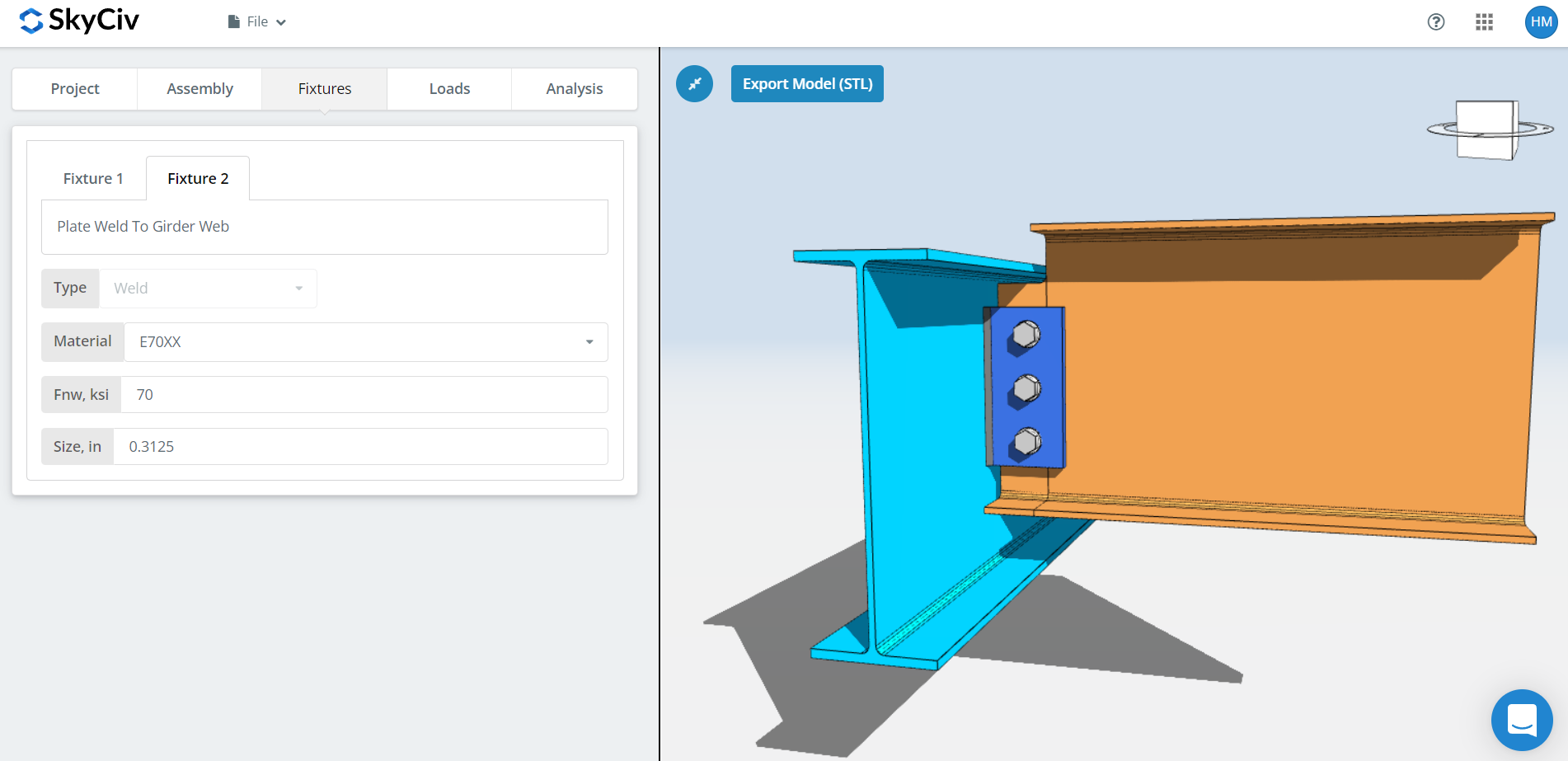
Infisso 2 è la piastra per supportare la connessione, se quel supporto è una rete di travi, un'ala della colonna o l'anima di una colonna. Per una piastra singola questa viene solo saldata.
Specificare il materiale di saldatura, o "Personalizzato".’ con il proprio Fnw se l'elettrodo non è presente nell'elenco, quindi la dimensione della saldatura. Per le connessioni a piastra singola la saldatura deve essere almeno 5/8 volte lo spessore della piastra, in modo che la saldatura sviluppi la piastra.
Questa regola ha una conseguenza in termini di costi che vale la pena pianificare. tavolo 8-12 del Manuale AISC XV Edizione, . 8-126, mostra un grande salto nei passaggi di saldatura tra 5/16″ e 3/8″ filetto: 5/16″ necessita di un unico passaggio, 3/8″ ne servono tre. Un 1/2″ la piastra necessita solo di un 5/16″ filetto per svilupparlo, che ti mantiene nel territorio del passaggio singolo. Quindi, se la connessione ha poca capacità, aumentare l'altezza della piastra al massimo consentito prima di aumentare lo spessore. Una piastra più spessa richiede una saldatura più ampia, e una saldatura più grande significa più passaggi, più metallo depositato e più tempo di lavoro.
Scheda Carichi
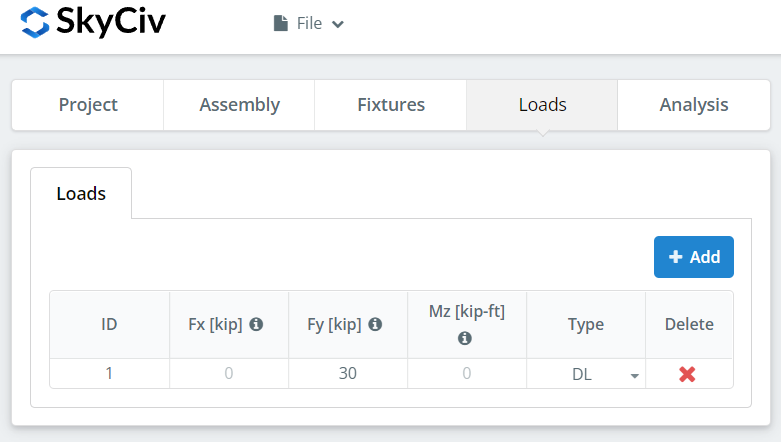
Inserisci il taglio verticale sotto "Fy".
Abbina il carico al metodo di progettazione scelto all'inizio. LRFD prende in considerazione i carichi fattorizzati rispetto alla resistenza di progetto; L'ASD sopporta i carichi di servizio rispetto alla resistenza ammissibile. Il software non è in grado di riconoscere cosa hai digitato.
Scheda Risultati
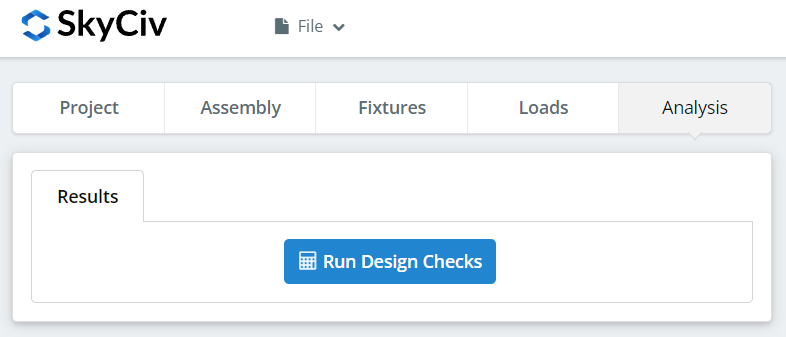
Clic “Esegui controlli di progettazione”. Tutto ciò che manca nelle schede precedenti viene contrassegnato qui anziché essere impostato automaticamente come predefinito.
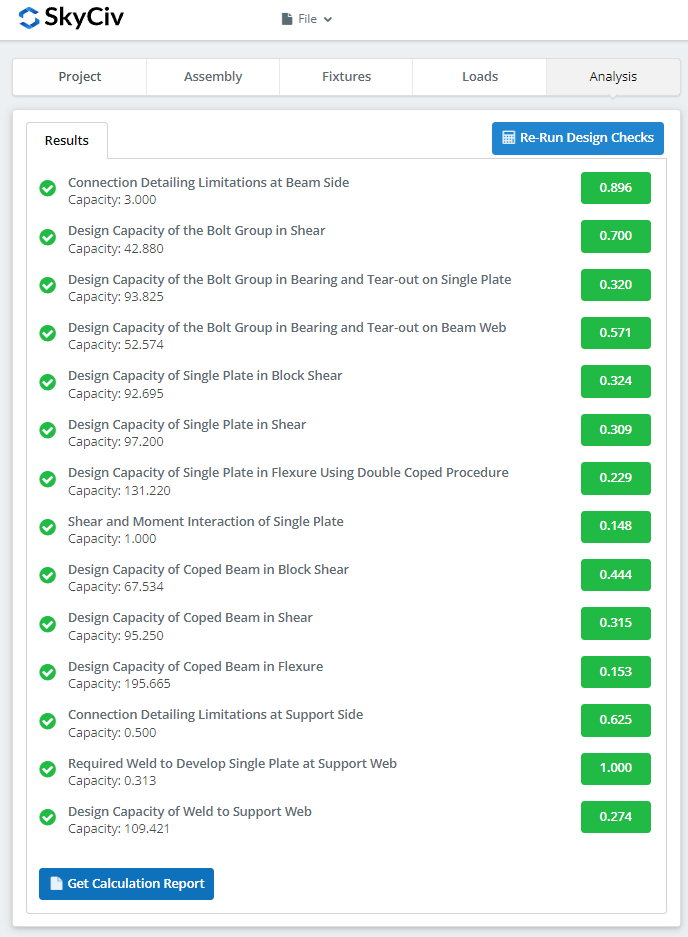
Il riepilogo mostra se la connessione è riuscita, con un rapporto di utilizzo rispetto a ciascun controllo. Se ha fallito, modificare gli input nelle schede precedenti e fare clic “Rieseguire i controlli di progettazione”. Quando passa, “Visualizza il rapporto di calcolo” apre il rapporto dettagliato.
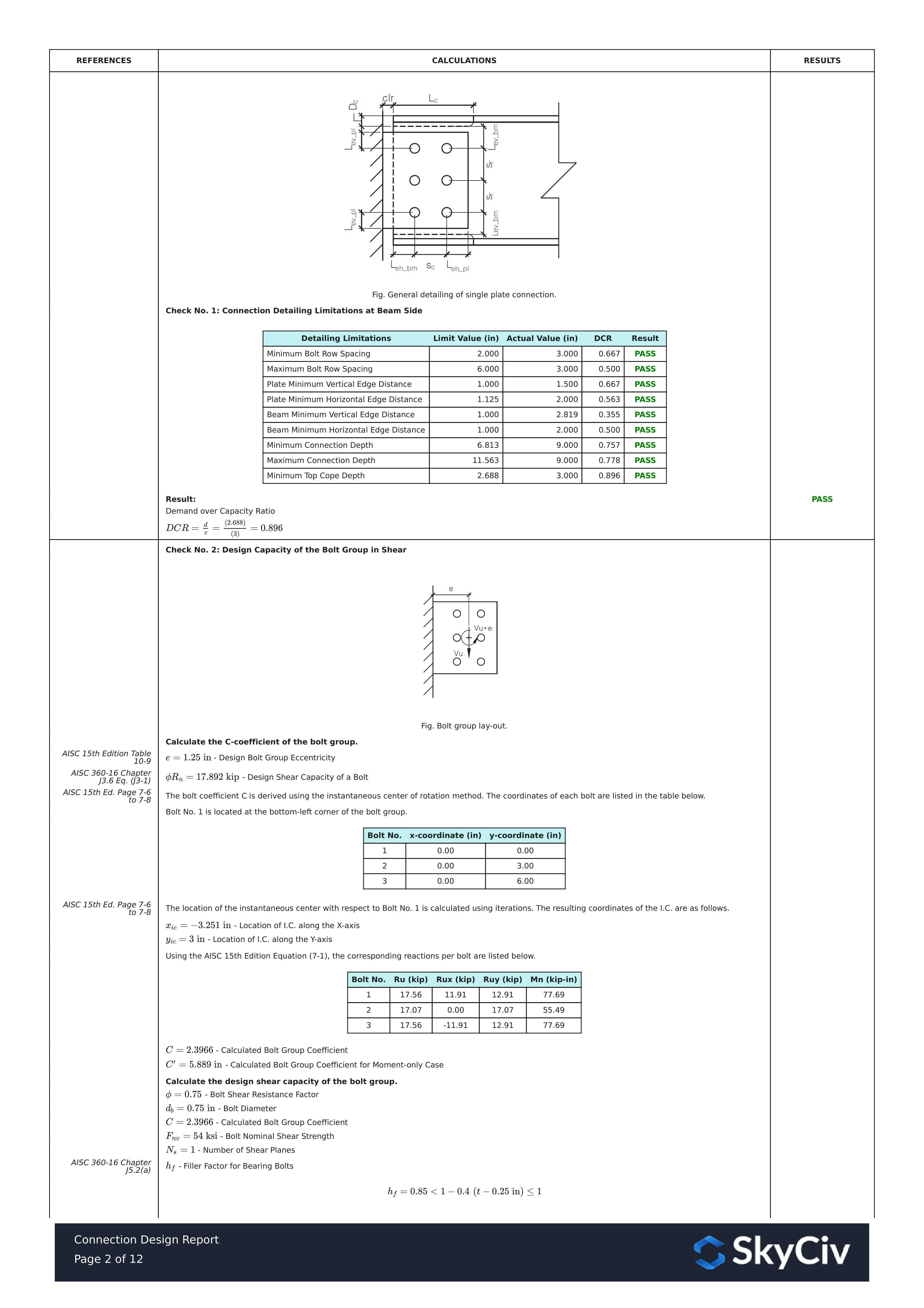
Questo è un estratto del rapporto. Ogni controllo riporta il riferimento al manuale o alla specifica AISC, e la lavorazione segue l'ordine utilizzato dalle specifiche, in questo modo un tecnico revisore può leggerlo riga per riga invece di eseguire il reverse engineering di un numero.
Ecco una copia in PDF del rapporto di calcolo dettagliato completo: Rapporto di progettazione della connessione.
Provalo tu stesso
Scegli il piatto unico, inserisci le tue sezioni, piastra e cesoia, e vedere ogni controllo con il relativo riferimento al codice. Funziona nel browser, senza niente da installare.
Vedi anche il calcolatore di connessione a piastra singola, il calcolatore del doppio angolo, che per il connessioni a taglio panoramica.
