
的 运作方式 group in the right toolbar contains geometry editing tools for trimming, extending, splitting, joining, 缩放比例, and property matching.
Most operations work on selected geometry. Use the active 折断 settings for precise picks and target points.
运作方式
Operations tools are grouped into drop-down stacks in the right bar. Click the category button to activate the current tool, or open the mini toolbar to choose another tool in the same stack.
匹配属性
Copy style and attribute properties from one object to others
的 匹配属性 command applies properties from a source object to compatible target objects.
一步一步
- 1Select a source object to copy its properties from.
- 2请点击 匹配属性 to activate brush mode.
- 3Click compatible target elements to apply properties instantly.
- 4Continue clicking, or use fence or window selection for multiple targets.
- 5按 Esc键 to exit brush mode.
提示: Match Properties copies visual properties such as color, 线宽, line style, and layer. Only properties compatible with the target object type are applied.
拉紧
Move selected vertices using a crossing window or lasso
拉紧 moves vertices while preserving topology around connected geometry.
[__插入图像__]
一步一步
- 1启用 拉紧.
- 2Select vertices with a right-to-left crossing window or lasso.
- 3Drag the center handle for a free move, or the X/Y handles for a constrained move.
提示: Only the vertices inside the crossing selection are moved; lines connected to those vertices outside the selection are stretched to maintain connectivity.
延长线
Extend a line until it meets a target line or point
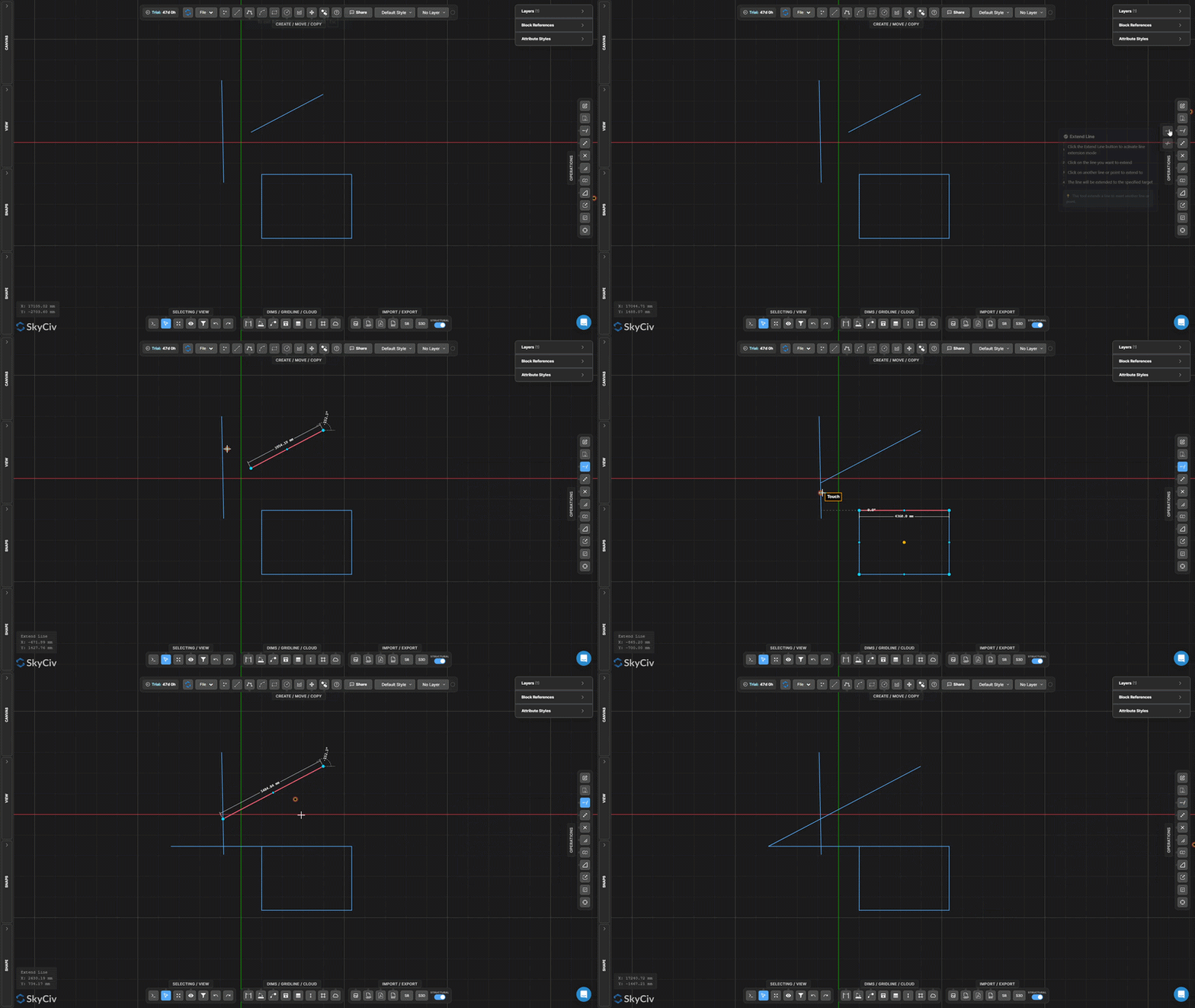
延长线 lengthens a selected line to meet a target boundary. The line is extended along its existing direction until it intersects the picked target.
一步一步
- 1启用 延长线.
- 2Click the line to extend (near the end you want to grow).
- 3Click the target line or point to extend to.
提示: Click near the end of the line you want extended – the tool extends from the nearest endpoint in the direction of the target.
修剪
Remove line or arc segments defined by cutting edges
修剪 removes portions of lines or arcs using other geometry as cutting edges. First select the cutting edges, confirm them, then click or fence the segments you want to remove.
一步一步
- 1启用 修剪.
- 2Select the cutting edge geometry (线, 弧线, 界).
- 3按 通过去 要么 Spacebar to confirm cutting edges.
- 4Click or fence the segments to remove.
提示: You can use a window or fence selection to trim multiple segments simultaneously after confirming the cutting edges.
将线分割成线段
Divide a line into N equal segments
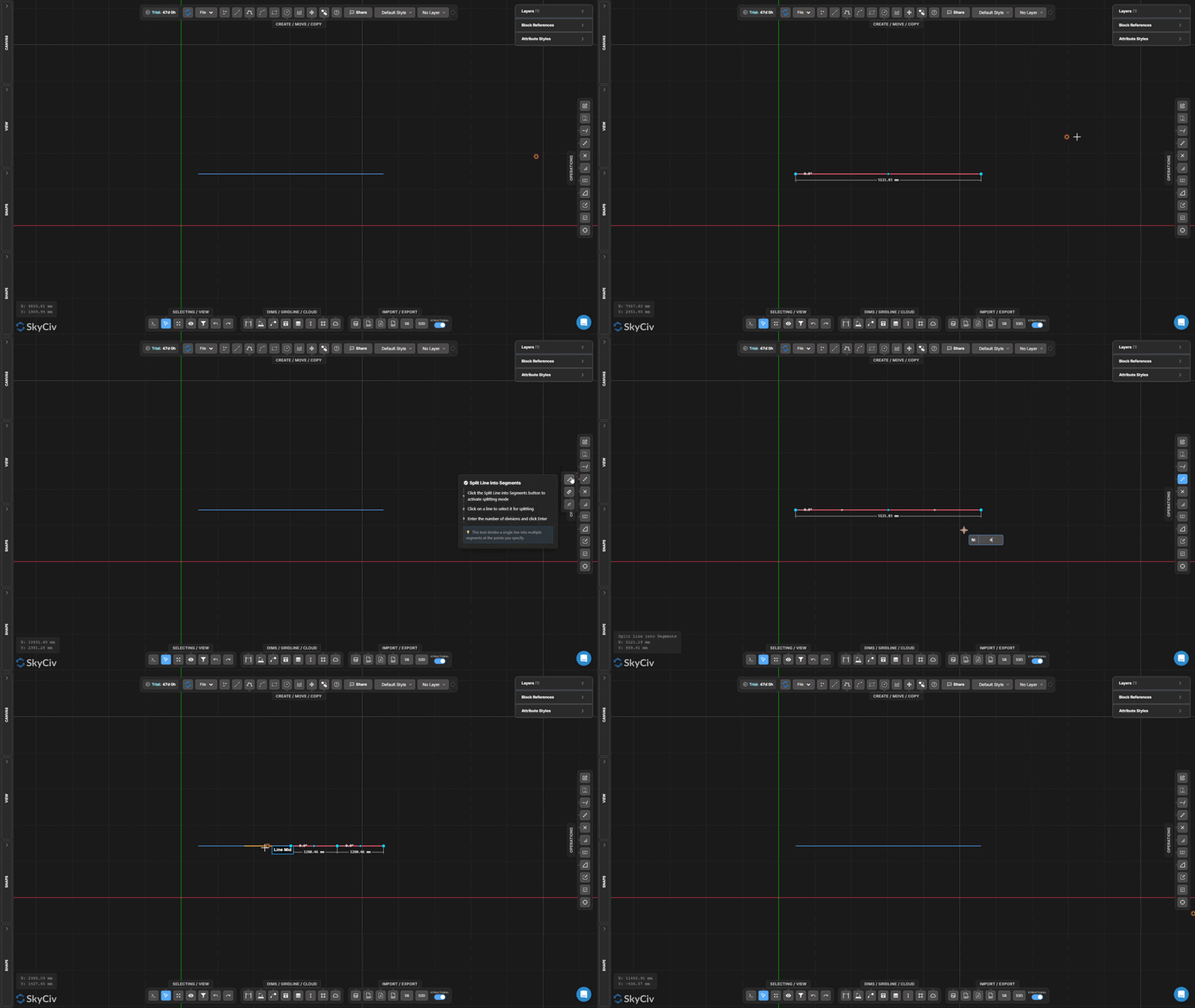
将线分割成线段 divides a single line into a specified number of equal-length segments. Each resulting segment is an independent line element.
一步一步
- 1Activate the tool.
- 2Click the line to split.
- 3Enter the number of divisions and press 通过去.
提示: Useful for creating equally spaced support points along a beam or dividing a span for load distribution analysis.
按间隔分割线
Split a line into repeated fixed-length intervals
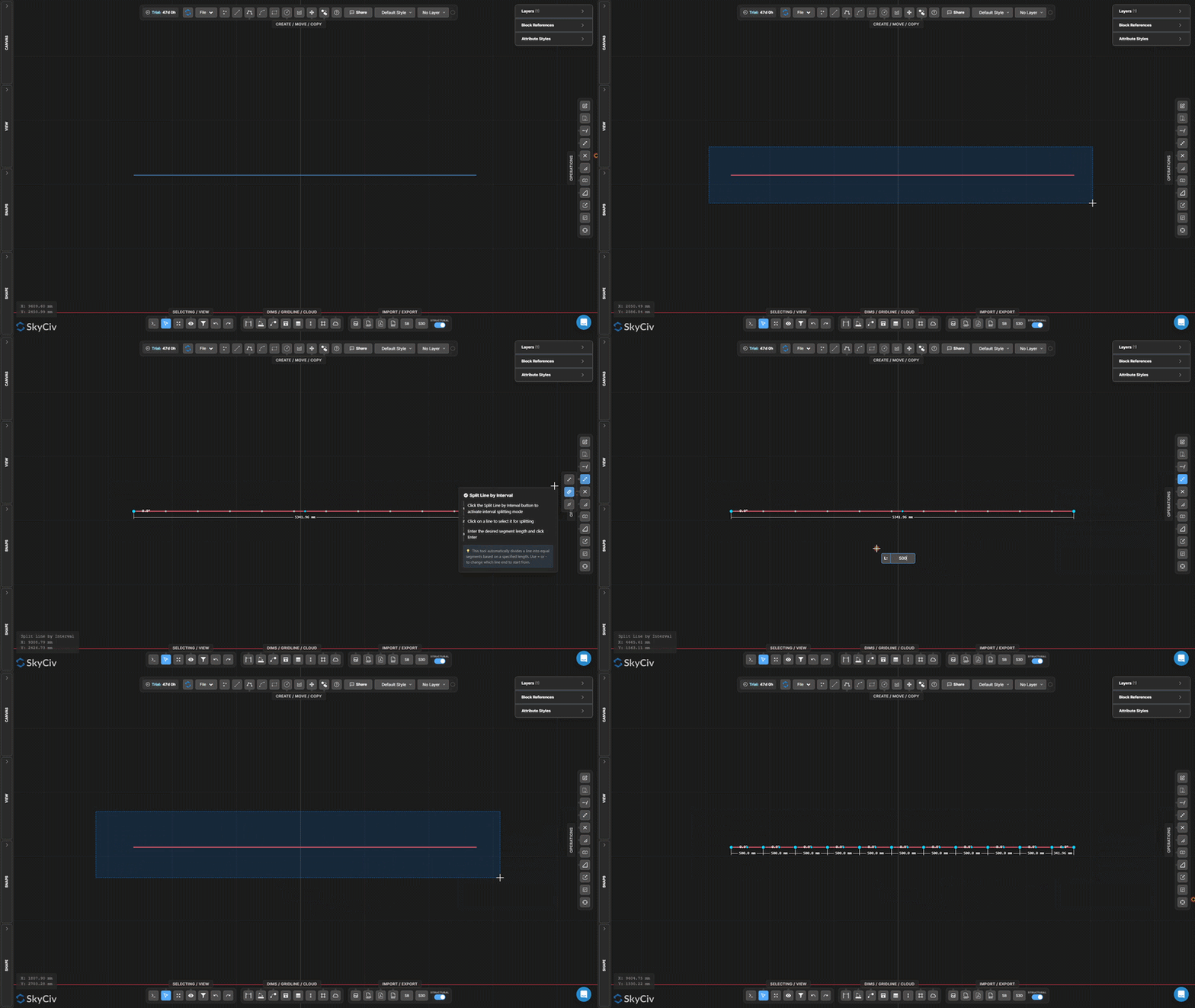
按间隔分割线 divides a line into segments of a specified fixed length. A remainder segment is created at the end if the line length is not a whole multiple of the interval.
一步一步
- 1Activate the tool.
- 2Click the line to split.
- 3Enter the interval length and press 通过去.
提示: Use this for creating evenly spaced intermediate nodes along a continuous member at a known spacing (例如, every 500 mm for joist layout).
按线位置分割
Split a line at an offset distance from one of its endpoints
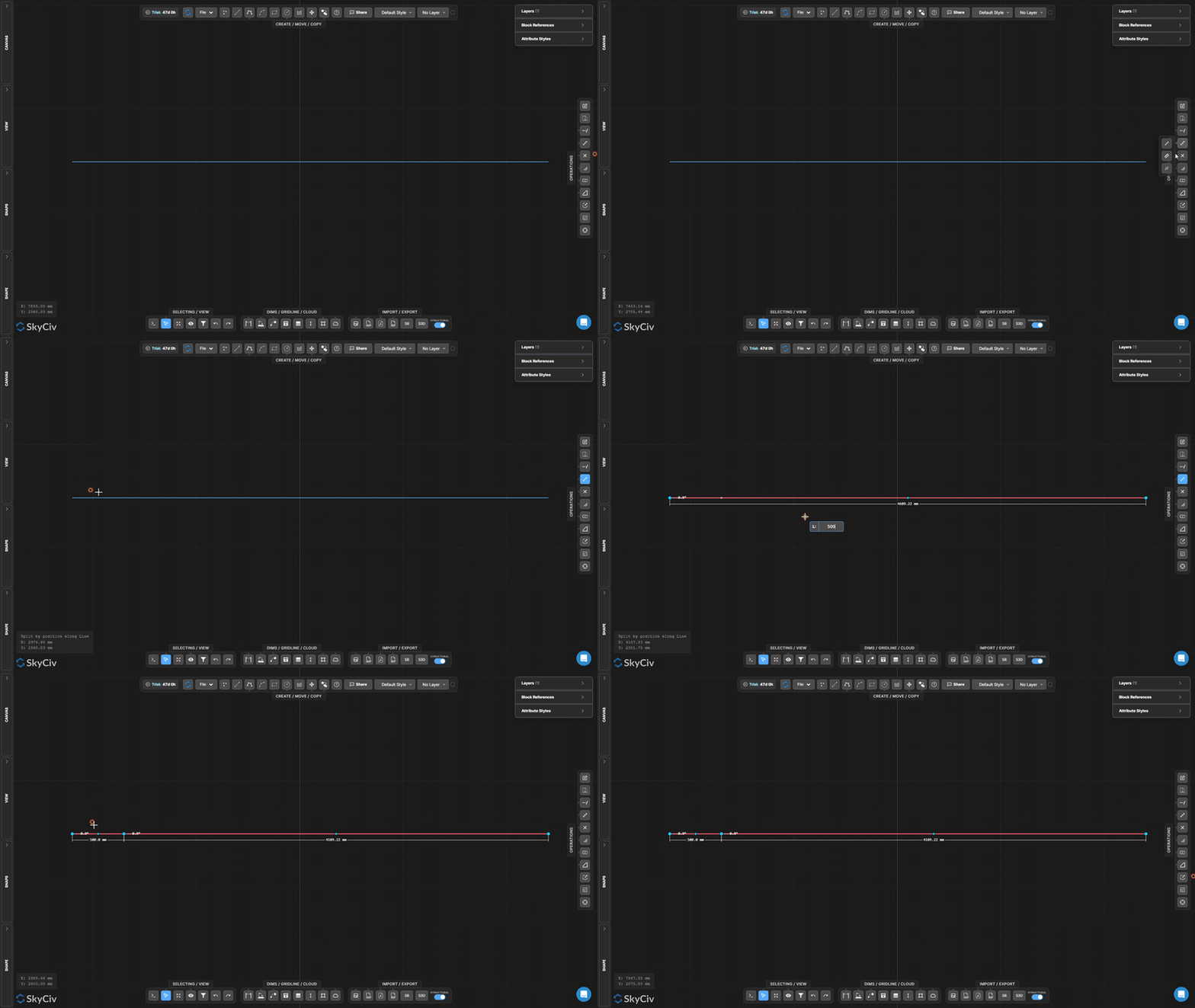
Split by Position inserts a break point at a measured distance from one end of the selected line, creating two separate segments at that offset position.
一步一步
- 1Activate the tool.
- 2Click a line (the click position determines which endpoint to measure from).
- 3Enter the offset distance and press 通过去.
提示: Click near the endpoint you want to measure from – the tool uses the nearest endpoint as the reference for the offset distance.
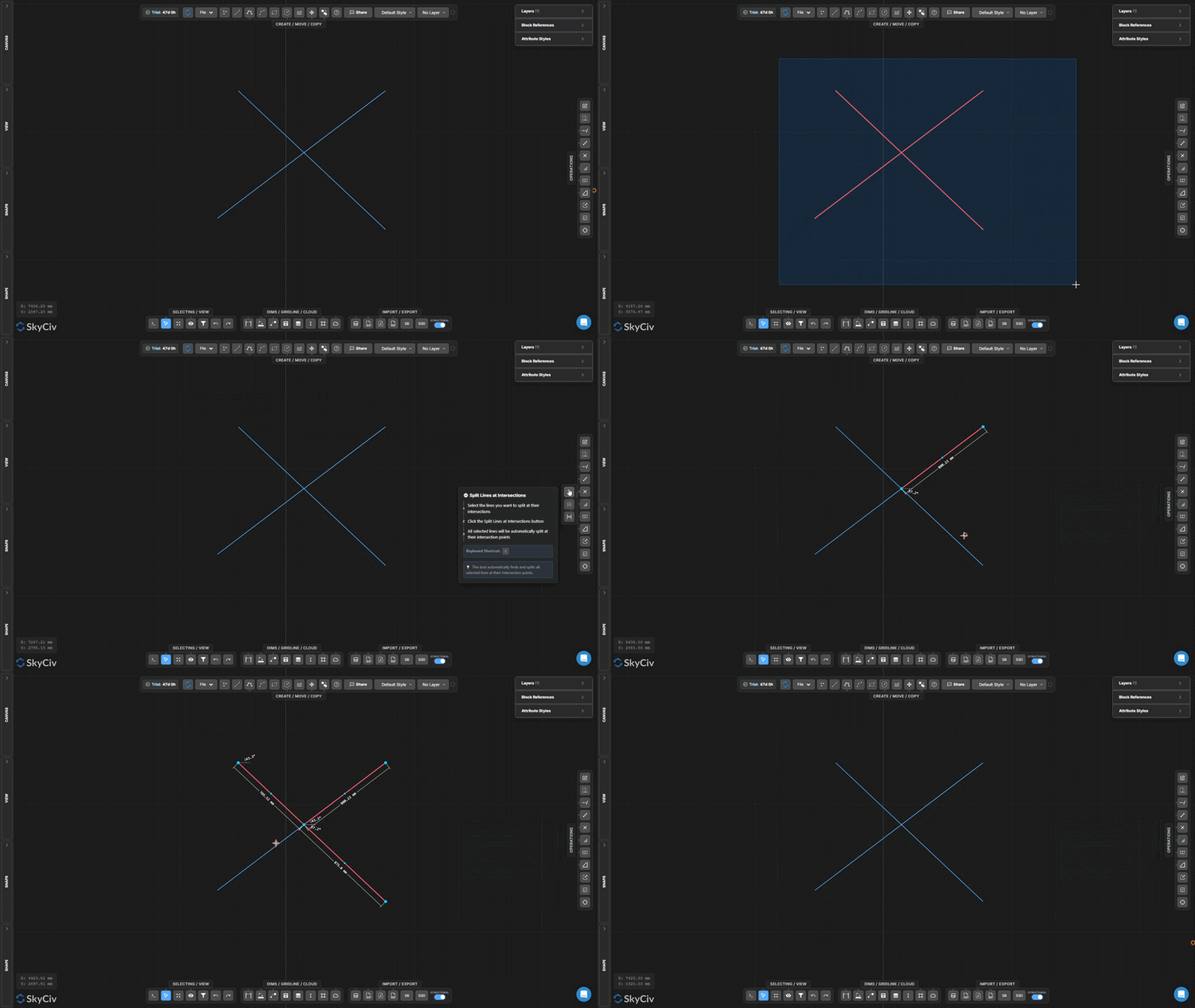
Split Lines at Intersections
Automatically split all selected lines at crossing points
Split Lines at Intersections finds all points where selected lines cross each other and inserts split nodes at each intersection. No input values are required – the operation is fully automatic.
一步一步
- 1Select the lines to process.
- 2请点击 Split Lines at Intersections.
- 3All crossing intersections are detected and split automatically.
提示: Run this before using 联合选拔 or performing topology-dependent operations – it ensures crossing lines share actual node points.
Split Target
Split pre-selected target objects using separate splitter geometry
Split Target is a two-stage split where you first mark the objects to be split (targets), then separately select the geometry to split them with (splitters). Only target objects are cut.
[__插入图像__]
一步一步
- 1Pre-select the target objects to be split.
- 2启用 Split Target.
- 3Select the splitter geometry.
- 4按 通过去 to split targets at intersections with splitters.
提示: Use Split Target when you want to split specific lines with a cutting edge but need to preserve the cutting geometry intact (unlike Trim, which also modifies the cutter).
在重叠处分割
Detect and separate overlapping collinear line segments
在重叠处分割 finds segments of selected lines that are collinear and overlap each other, then splits them so the overlapping regions become discrete, individually selectable geometry.
[__插入图像__]
一步一步
- 1Select lines that may have overlapping collinear portions.
- 2请点击 在重叠处分割.
- 3Overlapping regions are split into separate segments.
提示: Combine with 选择重复项 to identify and remove redundant overlapping lines in imported DXF files.
爆炸折线
Break a polyline into independent line or arc segments
爆炸折线 decomposes a multi-segment polyline into individual independent segments. Useful when you need to edit, 删除, or apply operations to only part of a polyline.
[__插入图像__]
一步一步
- 1Select the polyline to explode.
- 2请点击 爆炸折线.
- 3Each segment becomes individually selectable and editable.
提示: The inverse operation is 连接直线和圆弧, which merges connected segments back into a single polyline.
连接直线和圆弧
Merge connected lines and arcs into a single polyline
连接直线和圆弧 combines a chain of connected segments into a single continuous polyline object. Lines and arcs must share endpoints to be joined.
一步一步
- 1Select lines and arcs that share endpoints.
- 2请点击 连接直线和圆弧.
- 3Connected segments merge into one continuous polyline.
提示: All selected segments must form a single continuous chain. If segments have gaps, 用 对齐线端 and the Move Point tool first to close the endpoints.
Create Fillet
Round a sharp corner between two lines with an arc
Create Fillet replaces a sharp corner between two lines with a tangent arc of a specified radius. The original line ends are trimmed to accommodate the arc.
一步一步
- 1启用 Create Fillet.
- 2Set the fillet radius in the dialog.
- 3Click the corner (intersection area) of the two lines to apply.
提示: The radius must be small enough to fit within the lengths of both lines from the corner. A live preview is shown before confirming.
Create Chamfer
Create a straight bevel cut at a corner
Create Chamfer cuts a straight diagonal bevel across a corner between two lines. Set the chamfer distance to control how far back from the corner each line is trimmed.
一步一步
- 1启用 Create Chamfer.
- 2Set the chamfer distance in the dialog.
- 3Click the corner geometry to apply the chamfer.
提示: Chamfer cuts equally from both lines by default. For an asymmetric bevel (different distances on each side), set two separate chamfer values in the dialog.
缩放对象
Scale selected geometry by a factor from a pivot point
缩放对象 resizes selected geometry by a uniform scale factor relative to a chosen pivot point. A dialog lets you choose whether annotations (方面, 文本, 领导者, 网格线, 桌子) are also scaled.
一步一步
- 1Select the objects to scale.
- 2请点击 缩放对象 and configure annotation scale options in the dialog.
- 3Click the canvas to set the scale pivot (起源) 点.
- 4Type the scale factor and press 通过去 (1.0 = no change, 0.5 = half, 2.0 = double).
提示: Use the Scale Options dialog to control whether annotation sizes (方面, 文本, 领导者, 桌子) scale with the geometry or remain at their current sizes.
Scale Frame
Create a persistent local scale zone with a visible frame
Scale Frame creates a persistent rectangular zone with an associated scale factor. Geometry drawn or placed inside the frame is rendered at that local scale. Useful for detail callouts at a different drawing scale.
[__插入图像__]
一步一步
- 1启用 Scale Frame.
- 2Click the first corner, then the opposite corner to define the frame.
- 3Type the scale factor in the input and press Esc键 申请.
提示: The frame persists on canvas after creation. Select and delete it when no longer needed. The scale input remains available for later editing while the frame is selected.
更新原点
Move the drawing coordinate origin (0,0) to a new location
更新原点 relocates the drawing’s reference coordinate system. All coordinate values (X, 和) displayed in the canvas and exported in data are recalculated relative to the new origin.
[__插入图像__]
一步一步
- 1启用 更新原点.
- 2Click the new origin location on the canvas.
- 3Coordinate readouts update immediately relative to the new (0,0) 点.
提示: Snap to an existing node for a precise new origin. For structural drawings, snap to a known column or datum intersection to align coordinates with the project reference grid.
