
Os membros estruturais de aço são conectados uns aos outros por meio de elementos de enchimento ou conectores que podem ser seções angulares, placas ou mesmo canais de flange paralelos (PFC). Essas são algumas das configurações comuns adotadas nos canteiros de obras, especialmente quando parafusos ou conexões aparafusadas são usados principalmente. Para conexões soldadas, os membros às vezes são conectados diretamente uns aos outros sem quaisquer elementos de preenchimento ou conectores intermediários. Neste artigo nos concentramos em parafusos, cabeça hexagonal e escareada, e algumas das conexões aparafusadas comuns usadas.
Parafusos hexagonais e escareados
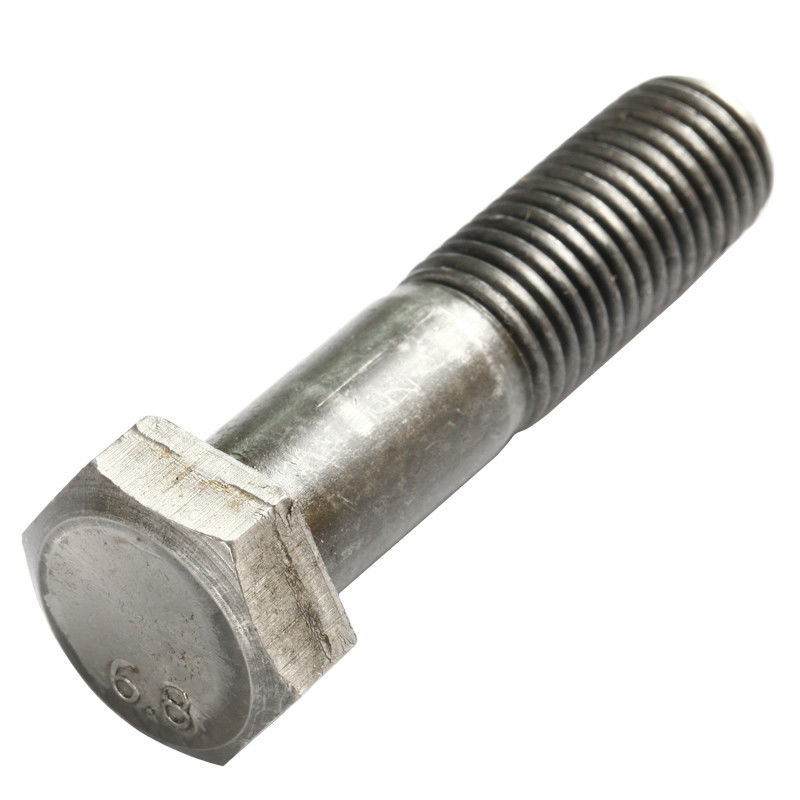

O parafuso de cabeça hexagonal à esquerda é o fixador estrutural normal. O parafuso escareado à direita tem uma cabeça cônica que fica nivelada com a superfície da lona, o que importa onde uma cabeça saliente poderia obstruir uma superfície de apoio ou uma peça móvel. Essa conicidade também é o que reduz sua capacidade de carga, conforme abordado abaixo.
Instituto Americano de Construção em Aço (AISC)
AISC usa principalmente unidades inglesas (polegada, libras) embora a contraparte SI também seja suportada e disponível. Uma coisa a observar é que as dimensões no sistema inglês geralmente são em incrementos de um oitavo de polegada (⅛”), que podem não corresponder exatamente aos do SI.
Comparação do Diâmetro do Parafuso
| ½” | – |
| ⅝” | M16 |
| ¾” | M20 |
| ⅞” | M22 |
| 1” | M24 |
| 1 ⅛” | M27 |
| 1 ¼” | M30 |
| 1 ⅜” | – |
| 1 ½” | M36 |
Estes são os equivalentes práticos mais próximos, tamanhos não intercambiáveis. Um parafuso de ¾” é 19.05 mm contra 20 mm para um M20, portanto, os tamanhos dos furos e as distâncias das arestas diferem e os dois não podem ser substituídos um pelo outro em um desenho.
Parafusos de alta resistência
As especificações para materiais de parafusos são cobertas pela Sociedade Americana de Testes e Materiais (ASTM), e o AISC os classifica em dois grupos por força:
Grupo A - ASTM F3125 Graus A325, A325M e F1852; ASTM A354 Grau BC; ASTM A449
Grupo B — ASTM F3125 Graus A490, A490M e F2280; ASTM A354 Grau BD
ASTM F3125 é uma especificação consolidada que absorveu o antigo A325 independente, A490, Documentos F1852 e F2280, é por isso que agora aparecem como notas dentro dele, em vez de especificações por direito próprio. Desenhos e cálculos mais antigos ainda os destacam da maneira antiga.
Além das diferenças de resistência e outras propriedades, esses grupos têm requisitos diferentes para pré-tensão mínima dependendo do diâmetro do parafuso.
Eurocódigo 3 (Anexo Nacional do Reino Unido)
O Eurocódigo está inteiramente em unidades SI, portanto, os parafusos são designados em milímetros com o tamanho prefixado por “M”, por exemplo M16 significando um 16 parafuso de diâmetro mm.
| M12 |
| M16 |
| M20 |
| M24 |
| M30 |
Classes e pontos fortes de parafusos
Os parafusos Eurocódigo são classificados por uma designação de duas partes que codifica ambas as resistências. Para uma classe escrita como a.b., a resistência à tração final é uma × 100 MPa, e o limite de escoamento é b/10 desse valor. Então classe 4.6 tem uma resistência à tração final de 400 MPa e um rendimento de 240 MPa, enquanto aula 8.8 tem 800 MPa final e 640 Rendimento de MPa.
Colocar esses dois da maneira certa é importante, porque as fórmulas de resistência do parafuso assumem o valor final. Ao calcular as resistências reais dos parafusos, a capacidade também é afetada pela pré-carga, chamada pretensão em termos AISC, o que, em certos casos, aumenta a capacidade de carga do parafuso se a quantidade certa de tensão for aplicada.
| Aula | Tração, merda (MPa) | Colheita, mentira (MPa) | Faixa de diâmetro |
| 4.6 | 400 | 240 | M5 – M36 |
| 4.8 | 400 | 320 | M1.6 – M16 |
| 5.8 | 500 | 400 | M5 – M24 |
| 8.8 | 800 | 640 | M1.6 – M36 |
| 9.8 | 900 | 720 | M1.6 – M16 |
| 10.9 | 1000 | 900 | M5 – M36 |
| 12.9 | 1200 | 1080 | M1.6 – M36 |
Notas sobre parafusos hexagonais e escareados
As diferenças na geometria entre parafusos hexagonais e escareados afetam a capacidade de carga, porque a cabeça cônica remove material da camada em que assenta. A espessura efetiva no rolamento é a espessura da camada menos a profundidade do escareador, que é o que a figura abaixo mostra. (Consulte o Manual AISC 14ª ed., Figura. 7-10.)
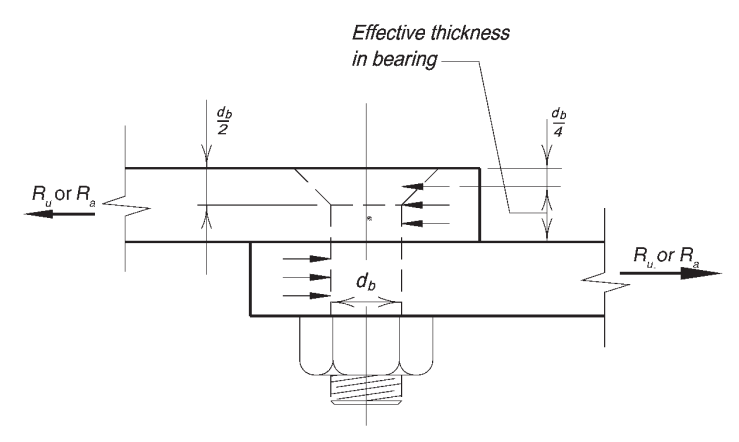
Figura 1. Espessura efetiva no rolamento de um parafuso escareado
Especificações de conexão e furos de parafuso
As conexões aparafusadas podem ser especificadas como bem apertadas, pré-tensionado ou antiderrapante. Estas condições desempenham um papel importante na escolha do furo do parafuso utilizado. Os tipos de furo são padrão (Força de rotação no membro, em termos EN), superdimensionado, ou com fenda curta ou longa, e são adotados de acordo com a especificação de conexão. A especificação RCSC estabelece os requisitos para a condição de estanqueidade. Se a conexão for projetada para algo diferente de um aperto confortável, essa condição deve ser claramente identificada nos desenhos, se é uma pré-tensão AISC ou um requisito de pré-carga EN.
A distinção não é papelada. Um parafuso bem apertado resiste à carga pelo rolamento depois de entrar em contato, enquanto uma conexão com deslizamento crítico é projetada para que a força de fixação impeça o movimento das lonas..
Conexões críticas contra deslizamento são importantes sempre que o deslizamento deve ser evitado, e diferentes fatores são aplicados no cálculo da resistência ao deslizamento dependendo do tipo de furo, já que um furo superdimensionado ou com fenda dá à camada mais espaço para se mover antes de suportar. Na maioria dos casos, furos de parafusos padrão ou normais são adotados juntamente com um nível especificado de pré-tensão ou pré-carga. Essas variáveis podem ser modeladas e analisadas usando ferramentas como Análise e projeto de estrutura de aço SkyCiv, que ajuda os engenheiros a explicar o comportamento da conexão no sistema estrutural mais amplo.
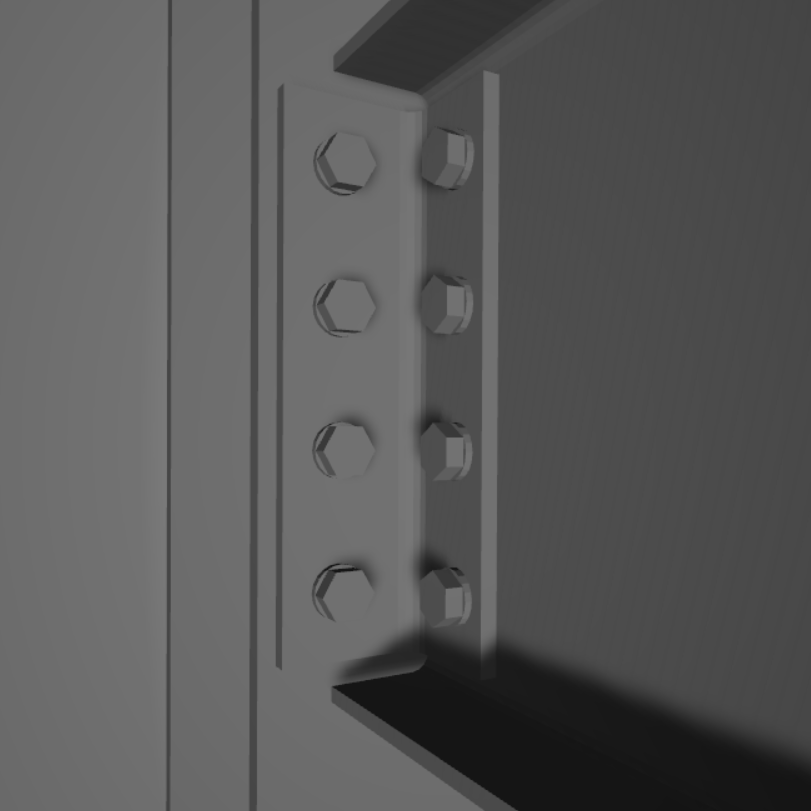
Figura 2. Ângulo parafusado, um tipo de conexão de cisalhamento
Conexões aparafusadas
Conexões aparafusadas podem ser usadas tanto em conectores de placas de cisalhamento como em placas de alma, camisetas, e ângulos da web e do assento, e em conexões momentâneas (rígido, totalmente contido) que comumente usam enchimento, placas de continuidade e emenda. Usar parafusos significa adicionar um conector intermediário ou elemento de conexão do tipo que acabamos de mencionar.
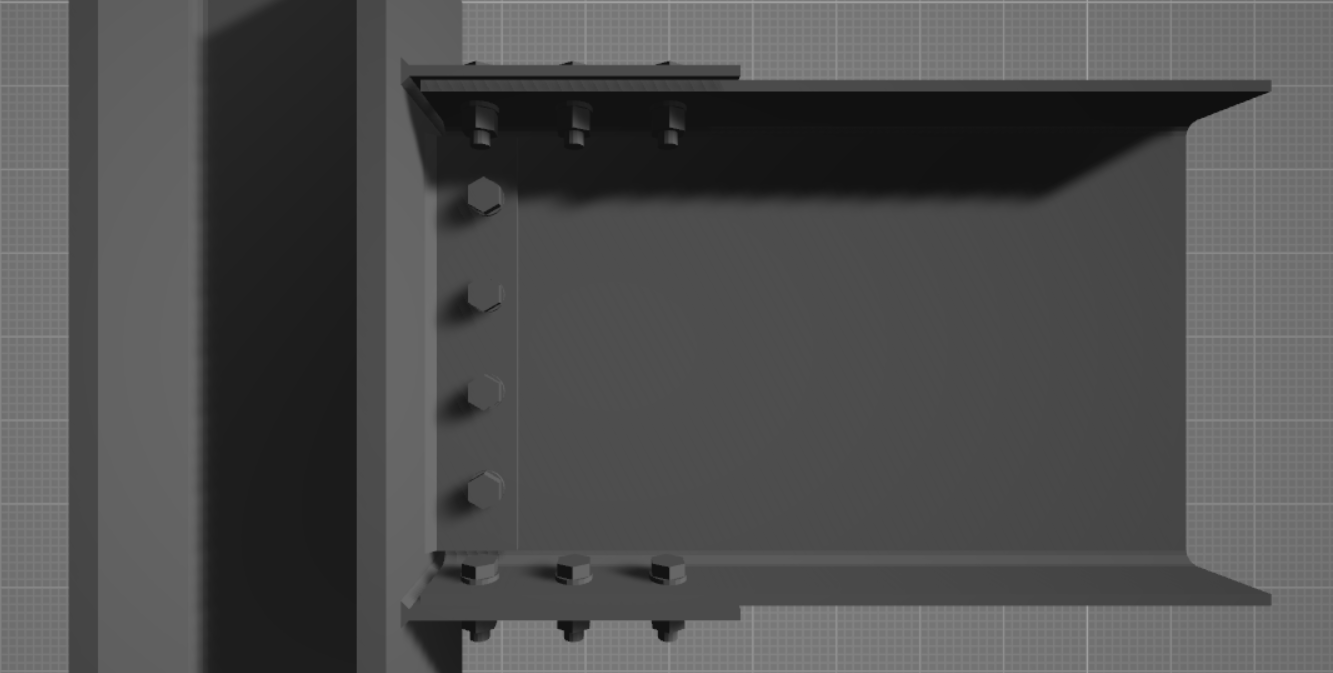
Figura 3. Conexão da placa de flange aparafusada
Em teoria, existem muitas maneiras de combinar configurações de conexão. Na prática, a capacidade de construção e o custo de fabricação significam que certos tipos de conexão são favorecidos em detrimento de outros e, portanto, são mais amplamente adotados. Aqui estão alguns dos tipos de conexão comuns que usam parafusos, com breves descrições.
Cisalhamento (Simples) Conexões
- Placa Simples/Dupla (aba ou barbatana) usa uma placa ou placas para conectar uma alma de viga ao membro de suporte, uma viga ou uma coluna. Um lado geralmente precisa de uma solda na borda da placa, enquanto os parafusos o conectam no colo à rede da viga.
- solteiro/Ângulo Duplo é semelhante a placas, exceto que os ângulos podem ser aparafusados em ambos os lados da conexão.
- Ângulo do assento, como o nome sugere, usa uma seção angular para suportar o flange do membro suportado (ou a parede plana para uma seção fechada) para que a viga possa assentar sobre ela. Os parafusos podem ser usados em todo este tipo de conexão.
Momento (Restringido) Conexões
- Placas de flange, usado ao lado de uma conexão de cisalhamento, fornecer continuidade aos flanges enquadrados nas colunas de uma estrutura resistente ao momento, ou mais geralmente em emendas de membros.
- Colar e placas passantes são encontrados em colunas HSS (RHS ou CHS) fazendo parte de uma estrutura resistente ao momento. Uma placa passante corta a coluna, enquanto uma placa de colar é colocada em torno dele, usado como o colarinho de uma camisa. Ambos são caros de fabricar devido ao corte e encaixe envolvidos.
Visite nosso artigo sobre Tipos de conexões de aço aprender mais, comparar fixadores em parafusos vs soldas vs rebites, ou experimente o nosso calculadora de resistência ao cisalhamento do parafuso. A documentação de parafusos cobre como as classes dos parafusos, tipos de furo e pré-tensão são inseridos no módulo de projeto de conexão.
Experimente agora
Escolha uma conexão parafusada, definir o grau do parafuso, diâmetro e tipo de furo, e cada verificação de parafuso retorna com sua taxa de utilização e a cláusula por trás dela. Ele roda no navegador, sem nada para instalar.
Referências
[1] Instituto Americano de Construção em Aço (AISC). (2016). correspondente às especificações para aço estrutural. Chicago, A 60601-6204
[2] Instituto Americano de Construção em Aço (AISC). (2011). Manual de construção em aço. 14ª Ed. Chicago, A 60601-6204
[3] O Steel Construction Institute e a British Constructional Steelwork Association. (2014). Juntas em Construção em Aço Juntas Simples ao Eurocódigo 3. Ascot SL5 7QN; Londres SW1A 2ES, Reino Unido
[4] O Steel Construction Institute e a British Constructional Steelwork Association. (2014). Juntas em Construção de Aço Juntas Resistentes ao Momento para Eurocode 3. Ascot SL5 7QN; Londres SW1A 2ES, Reino Unido
