
The double angle connection is one of the simple shear connections set out in Part 10 of the AISC Manual, and a fabricator favourite at beam to column web connections.
It consists of two angles, one each side of the beam web, bolted or welded to the beam web and to the support. On a beam to column web connection the angles are usually welded to the beam and bolted to the support. That combination needs a shorter leg on the support side, which matters when the space inside the column web is tight and an all-bolted detail would need clearance for a wrench.
An all-bolted double angle is the usual choice at a beam to girder connection, particularly where a ângulo único will not carry the shear: the second angle gives the support bolts two shear planes instead of one.
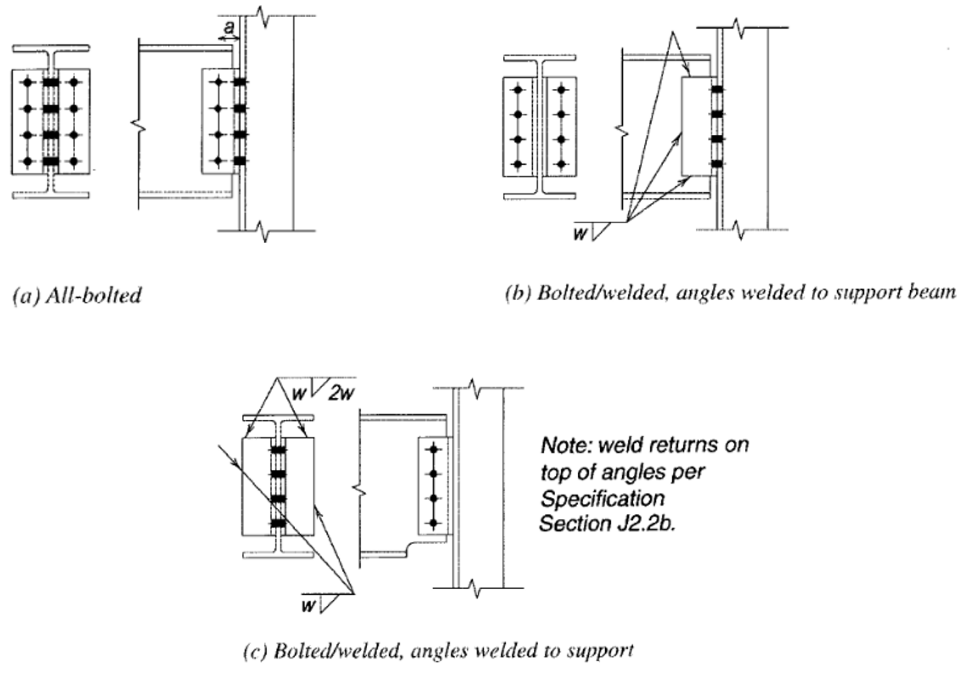
The three arrangements are all-bolted, bolted with the angles welded to the supporting beam, and bolted with the angles welded to the support. Where the angles are welded, weld returns are required across the top of the angles per Specification Section J2.2b.
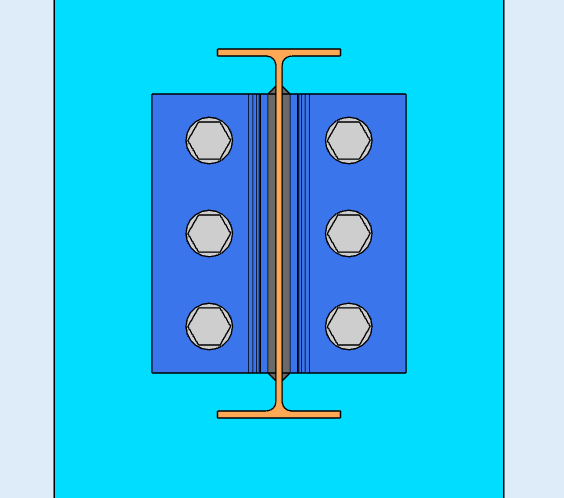
What Governs the Design
The double angle is popular because it goes together in the field with ordinary tools and needs no special fabrication. Designing it still comes down to a handful of things that interact.
Bolt spacing drives the bolt group. Too few bolts and the bolts and angles are overstressed; too many and you are paying for a connection that is harder to install than it needs to be. Edge distances matter for the same reason, both from the angle edge and between adjacent bolts, since a short edge distance fails in tear-out long before the bolt fails in shear.
The angles themselves deform. A simple shear connection has to rotate as the beam end rotates, and the angle legs bend to let it. That flexibility is the point, but taken too far it turns into lost capacity and overstressed bolts, which is why the angle thickness and leg length are as much a part of the design as the bolt group.
The design also depends on how the beam is supported. A simply supported beam and a continuous beam put different demands on the same detail.
Designing a Double Angle Connection in SkyCiv
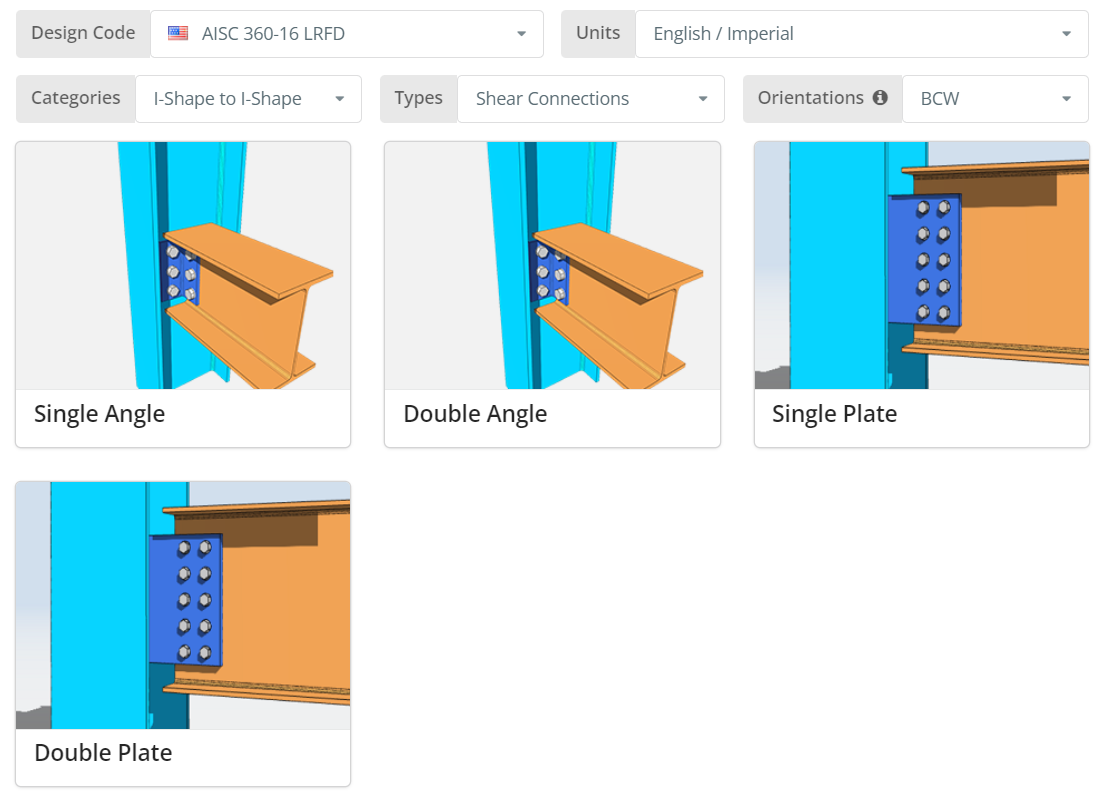
O código de projeto pode ser AISC 360-16 ASD ou LRFD, e unidades inglesas/imperiais ou SI/métricas. Orientation is BCF, BCW ou BBW; hover the tooltip for what each one means. Clique no “Ângulo Duplo” telha.
Guia Detalhes
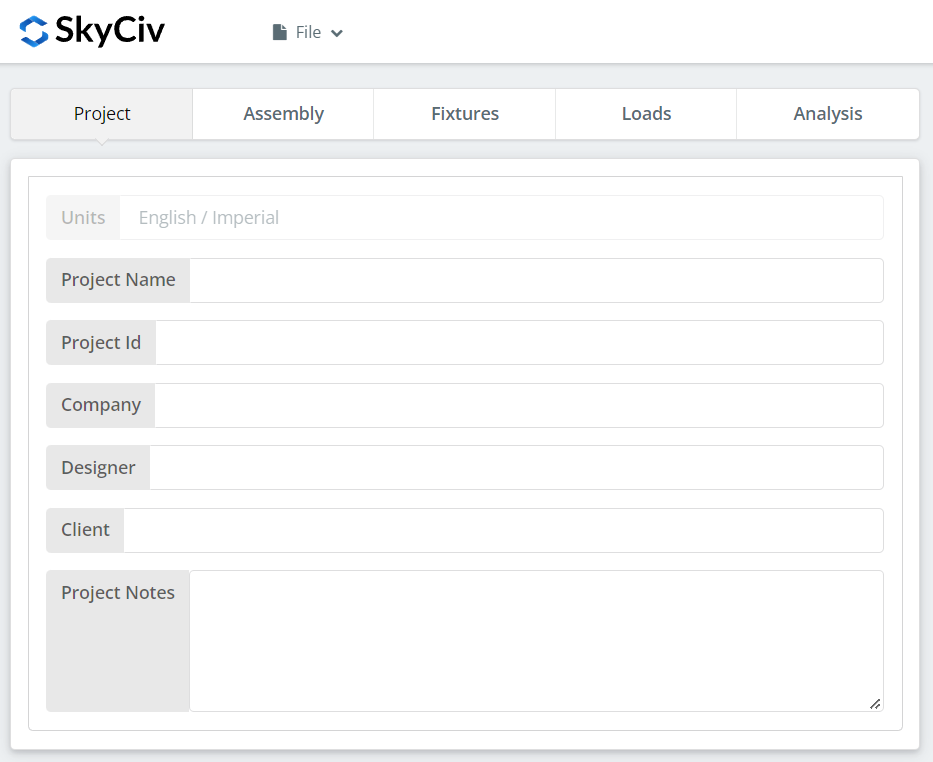
Registre aqui os detalhes do projeto. Nada disso altera os cálculos, mas isso traz para o relatório.
Aba de montagem
Três guias ficam em Assembly: a coluna, o feixe, e a Conexão, which holds the double angle.
Aba Coluna
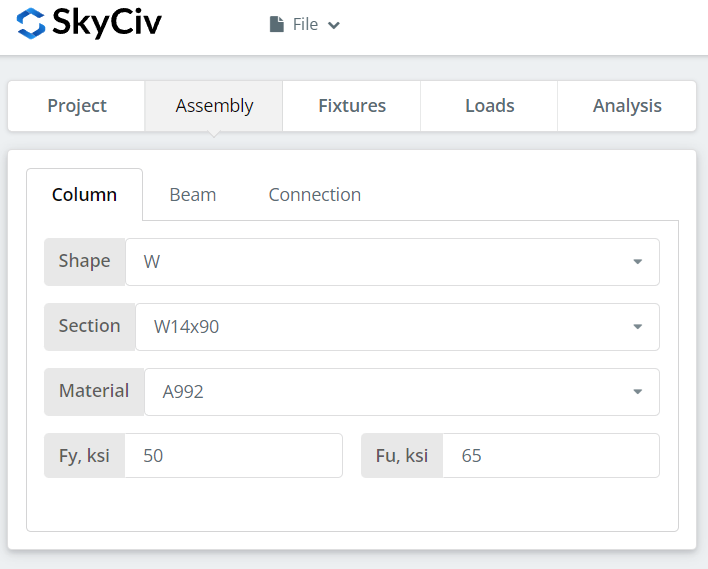
Especifique a seção e o tipo de material da coluna. A992 e A36 estão na lista; para qualquer outra coisa, escolha Personalizado e insira Fy e Fu.
Aba de Feixe
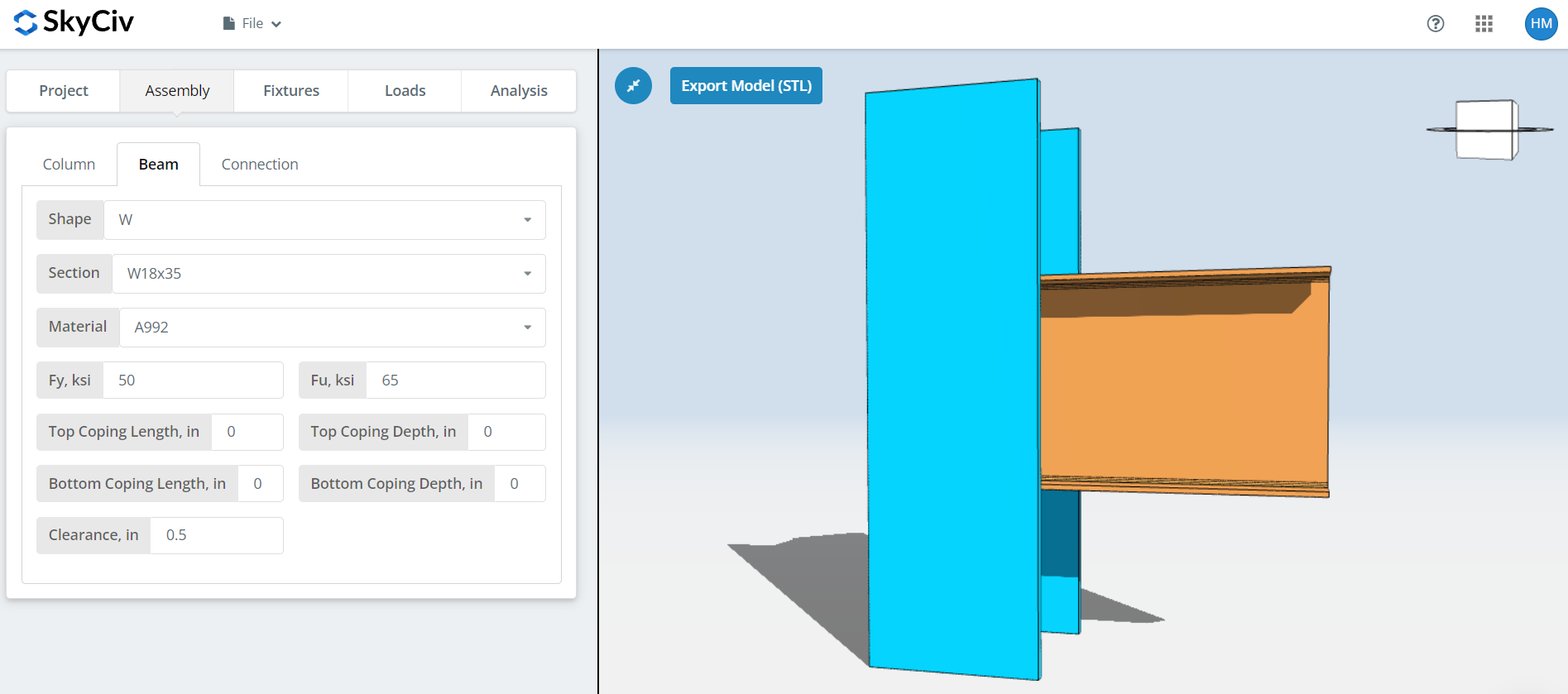
As mesmas entradas para o feixe, plus cope dimensions and beam clearance. Add a cope where the beam frames into a supporting member of similar depth and the flange has to be cut back, since the coped section governs checks the uncoped one does not.
Aba Conexão
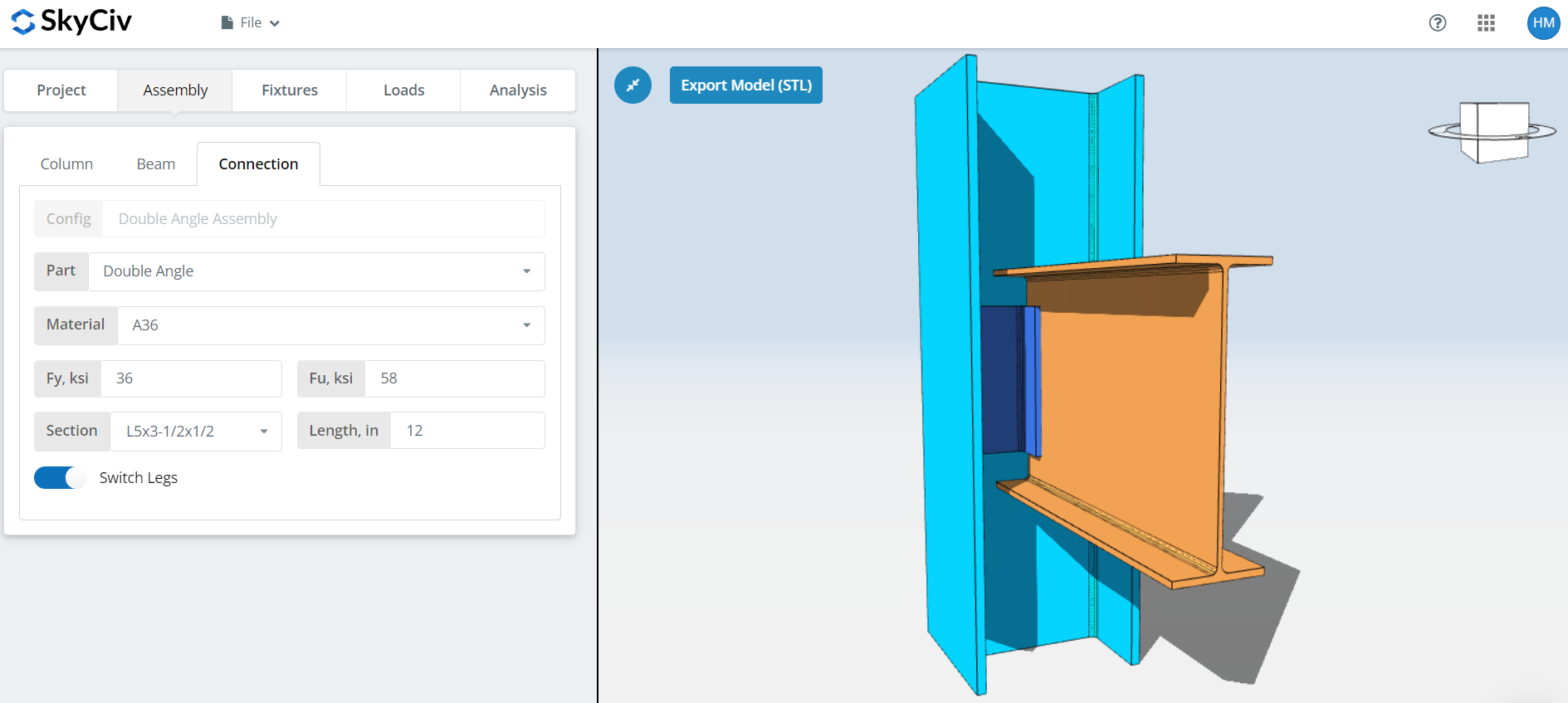
Set the angle properties: grade A36 or A992, ou personalizado com seu próprio Fy e Fu, then the section size and length. Where the angle has unequal legs you can switch which leg goes where. Para BCW, put the shorter leg on the column side, because that is where the space runs out.
Watch the 3D renderer as you go. The angle height should sit within the beam depth, and the total angle width should not exceed the column T-dimension or the clear web depth.
Luminária 1 Aba
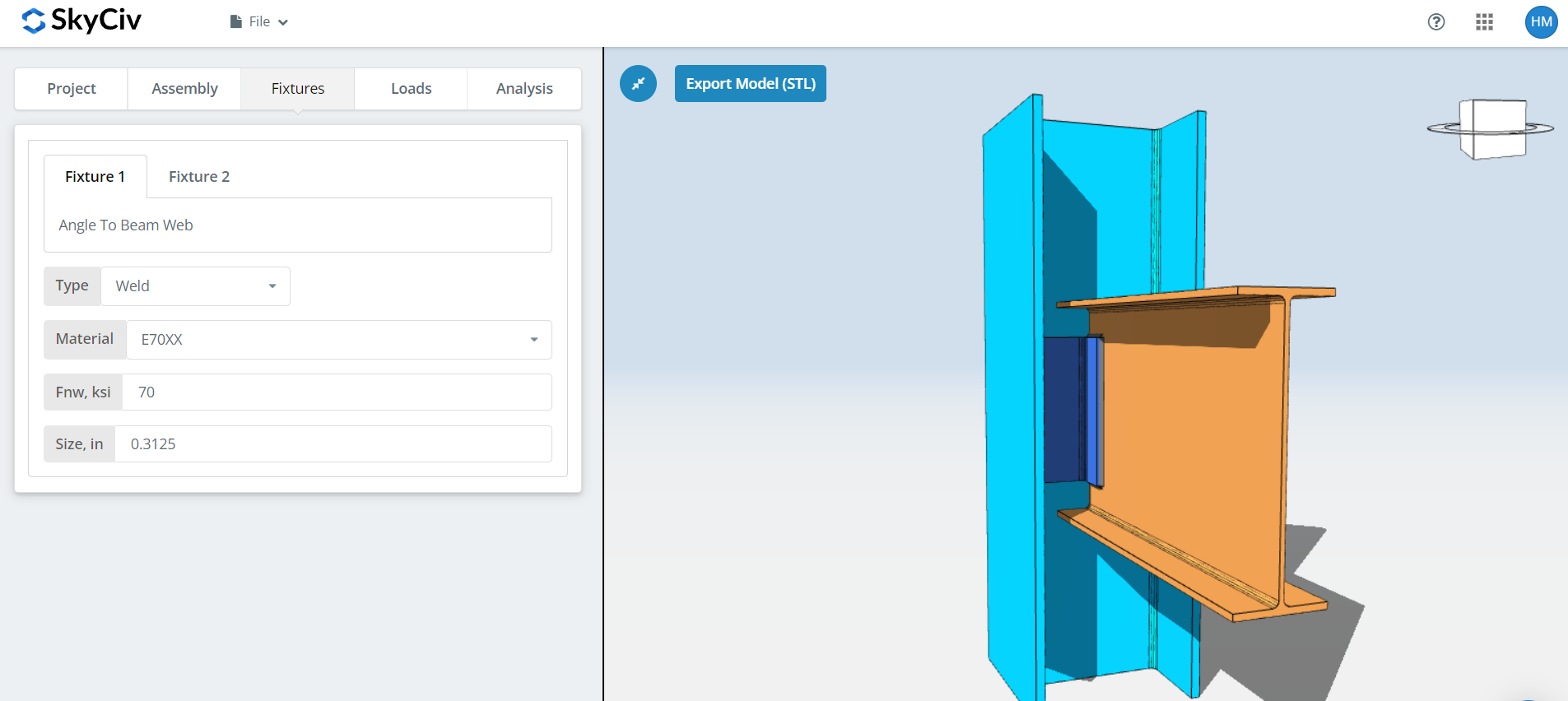
This is the angle to beam web connection. Pode ser parafusado ou soldado; this walkthrough uses welded, since for BCW a welded-to-beam, bolted-to-support double angle is the arrangement that fits the column web.
Especifique o material de solda, ou escolha ‘Personalizado’ e insira Fnw se o eletrodo desejado não estiver listado. Then the weld size. Keep the weld size no larger than the angle thickness, or there is no room to lay the weld.
Luminária 2 Aba
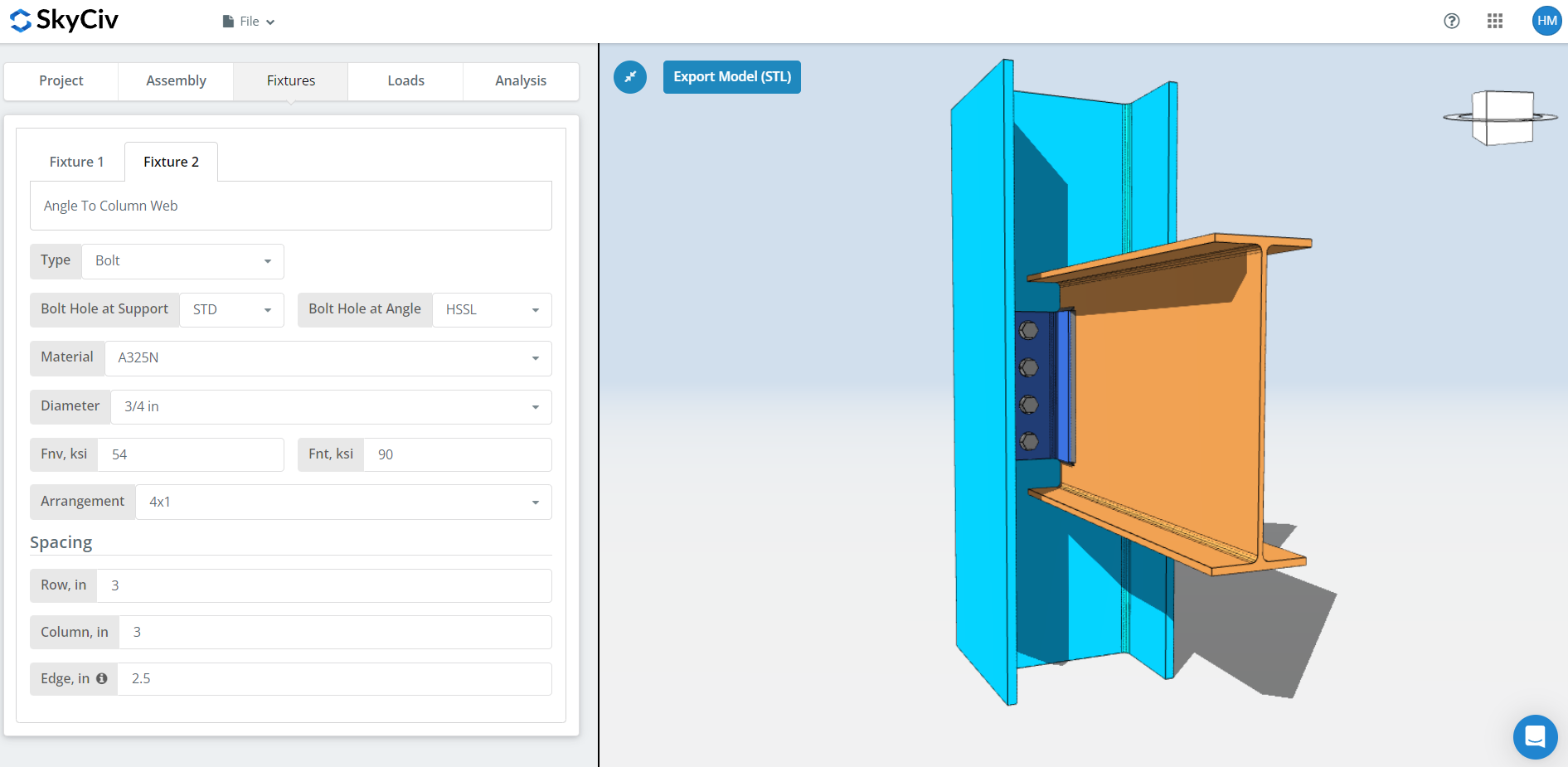
This is the angle to support connection, whether that support is a girder web, a column flange or a column web. Bolted or welded again; este passo a passo usa aparafusado.
Primeiro, the bolt hole types at the beam and at the angle. Os fabricantes geralmente pedem furos padrão (DST) na barra e nos furos horizontais com fenda curta (HSSL) in the angle, que compra tolerância adequada no campo.
A continuação, o material ou classe do parafuso: A307, A325, A490 ou personalizado. A325 e A490 são classes dentro da ASTM F3125, que consolidou as especificações independentes mais antigas. Entre N e X, X fornece a maior capacidade de cisalhamento do parafuso, mas as roscas devem ser excluídas do plano de cisalhamento, e o montador tem que saber disso.
Então o diâmetro do parafuso, de 08/05″ para 1-1/2″ ou os equivalentes métricos, e o arranjo, até 12 linhas e colunas de parafuso, com o espaçamento entre linhas e colunas.
Worth knowing: if you need more bolt group capacity, opening up the spacing can do it instead of adding bolts, as long as the angle height still fits within the beam depth. The bolt group strength uses the instantaneous centre of rotation method (ICOR), so a wider spacing is credited with the capacity it actually provides rather than rounded down to a table value. Check with your fabricator first, no entanto. Many prefer 3″ spacing typical throughout and will price variable spacing accordingly.
A “Beira” input here is the horizontal distance from the centre of the beam to the nearest bolt.
Para saber mais sobre o lado do fixador, veja a documentação em parafusos e soldas.
Guia de Cargas
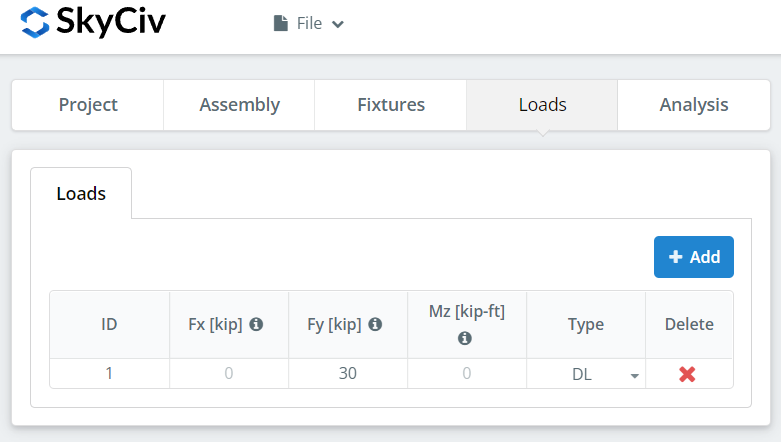
Enter the vertical shear under ‘Fy’.
Match the load to the design method you picked at the start. O LRFD leva cargas fatoradas em relação à resistência do projeto; ASD leva cargas de serviço contra a força permitida. O software não consegue dizer o que você digitou.
Guia Resultados
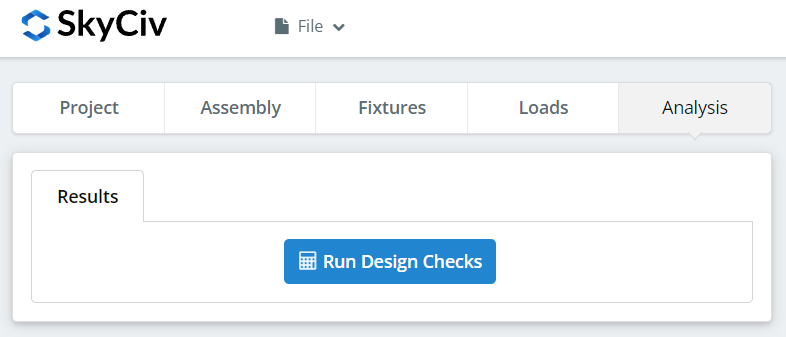
Clique “Executar verificações de design”. Qualquer coisa que esteja faltando nas guias anteriores é sinalizada aqui, em vez de ser padronizada silenciosamente.
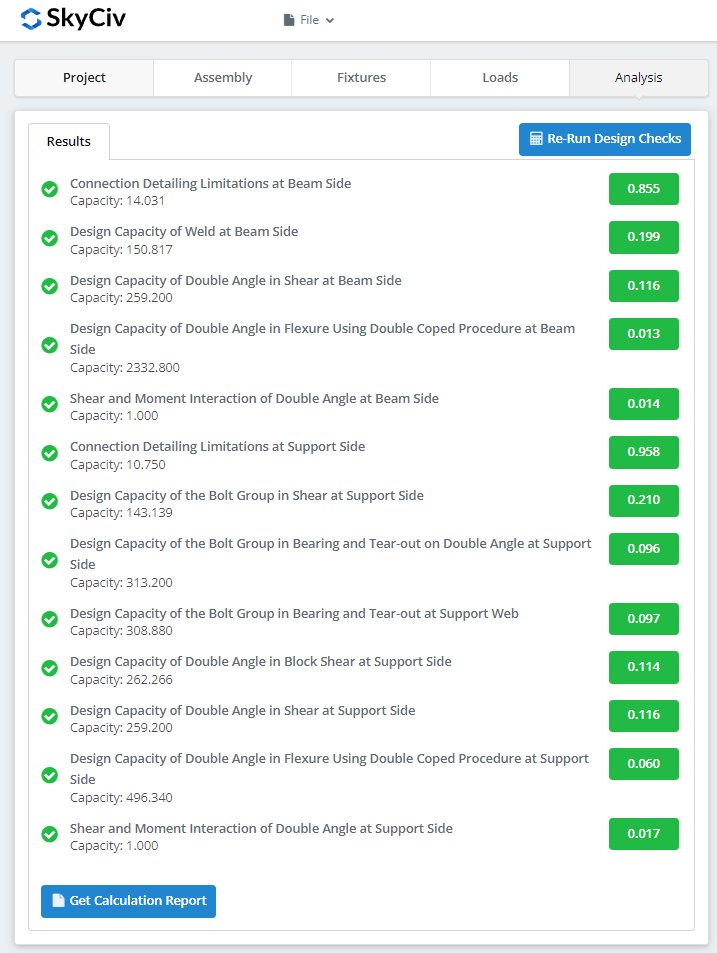
O resumo mostra se a conexão passou, com uma taxa de utilização contra cada cheque. Se falhou, altere as entradas nas guias anteriores e clique em “Executar novamente verificações de design”. Quando isso passa, “Ver relatório de cálculo” abre o relatório detalhado.
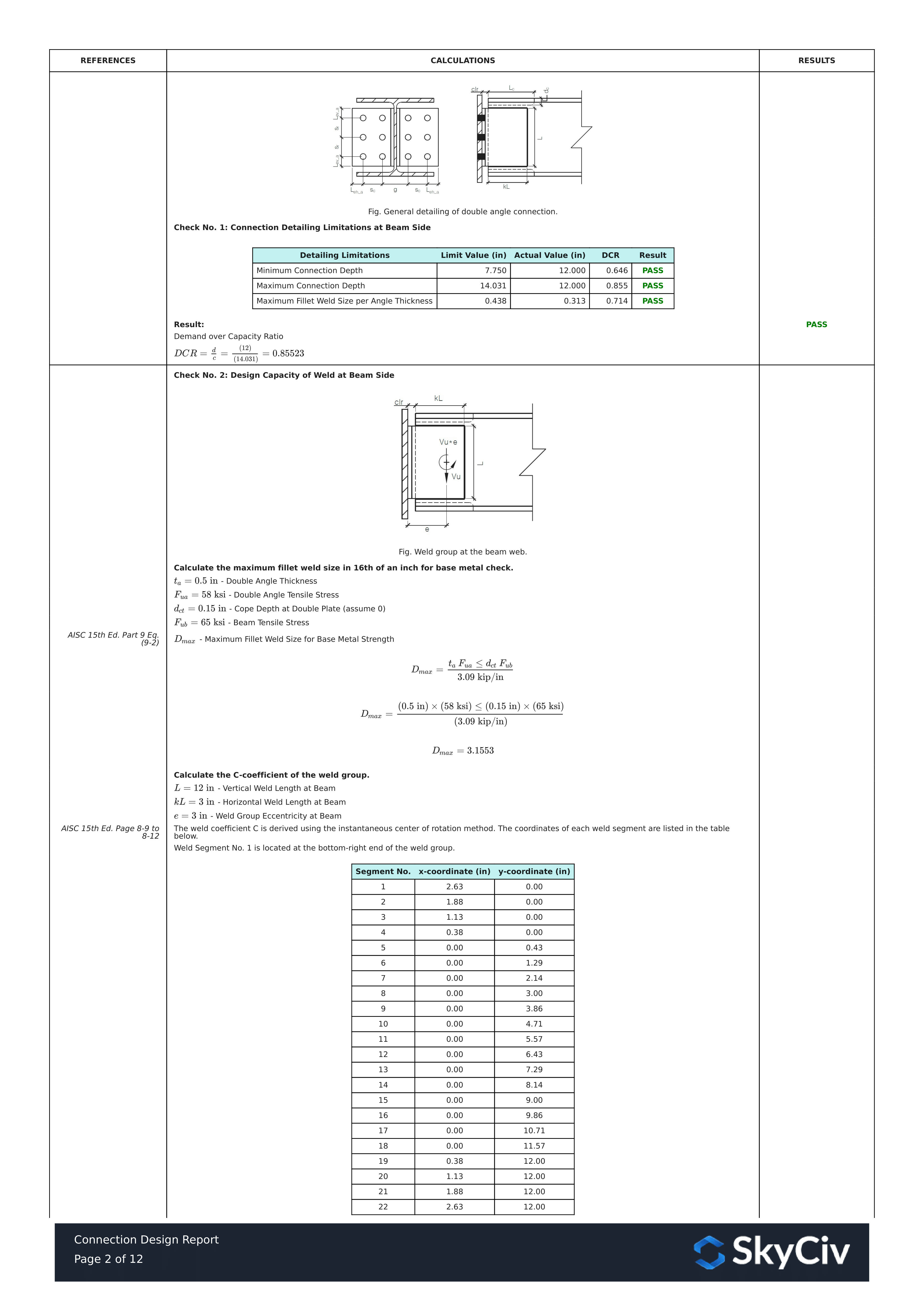
Isso é um extrato do relatório. Cada verificação traz sua referência ao manual ou especificação AISC, and the working follows the same order the specification uses, para que um engenheiro revisor possa lê-lo linha por linha, em vez de fazer engenharia reversa de um número.
Aqui está uma cópia em PDF do relatório de cálculo detalhado completo: Relatório de Projeto de Conexão.
Experimente você mesmo
Pick the double angle, insira suas seções, angle size, bolts and shear, e veja cada verificação com sua referência de código. Ele roda no navegador, sem nada para instalar.
Veja também o double angle connection calculator quanto pelo Etapas para projetar visão geral.
