
A column splice joins one column to the one above it. Columns arrive in mill lengths, and a building taller than that length needs its columns spliced, usually a few feet above floor level where the erector can reach the joint from the deck. Splices also turn up in retrofit work, where a column is extended, replaced or reinforced after a change in loading.
The splice has to carry whatever the column carries across the joint: axiale compressie, axial tension where uplift or overturning governs, schuintrekken, en moment. AISC 360-16 sets out the procedures for each. This page walks through designing one in SkyCiv Connection Design.
De berekeningen achter kolomverbindingsverbindingen
A column splice is a slow connection to calculate by hand. Each plate has to be checked in tension, compression and bearing, each bolt group in shear, and the whole joint for block shear, all of it doubled because the upper and lower columns are separate connections either side of the splice. AISC 360-16 gives the procedure for the axial, shear and moment capacity of each of those pieces.
De column splice calculator runs the same procedure. You supply the column sections, plaat maten, bolt specifications and loads, and it returns every check with its utilization ratio and the clause it came from, so the arithmetic stops being the part of the job that takes the time.
Bouten of lassen: De juiste verbindingsmethode kiezen
Bolting is the usual choice for a column splice. A bolted splice is made in the air by an erector with a wrench, it tolerates the small misalignments that come with erecting a frame, and it can be slackened and adjusted if something does not line up. Welding a splice at height means preheat, position welding and inspection on a joint that is hard to reach.
Voorbereiding van het contactoppervlak van de kolom: De “Geschikt om te dragen” Benadering
Where the column ends are prepared so the two sections sit in full contact, compression transfers through bearing rather than through the bolts. That usually means fewer bolts and thinner plates, because the plates only have to carry tension, schaar en moment.
It is a decision that has to reach the fabricator. Fit to bear is a preparation requirement on the shop drawings, not something the connection design can assume on its own, so if you design on that basis, say so on the drawing.
De behoefte aan kolomverbindingsverbindingen
Splices appear wherever a column cannot be a single piece: buildings taller than the available mill length, sections that would be impossible to ship or lift in one, and retrofits where a column is extended or strengthened. In each case the splice has to reproduce the continuity the column would have had without it.
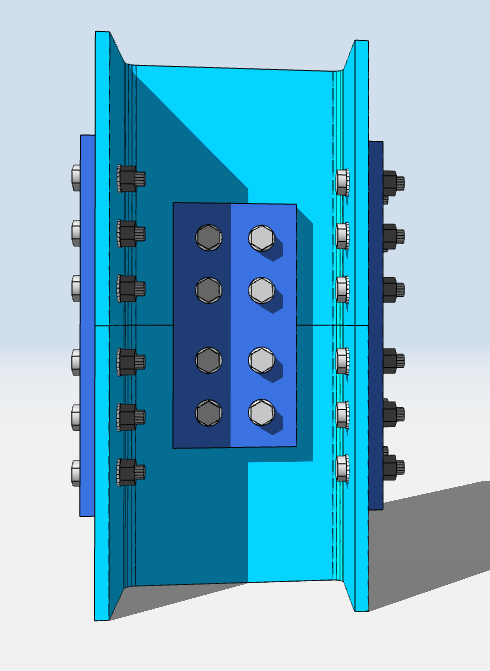
Designing a Column Splice in SkyCiv
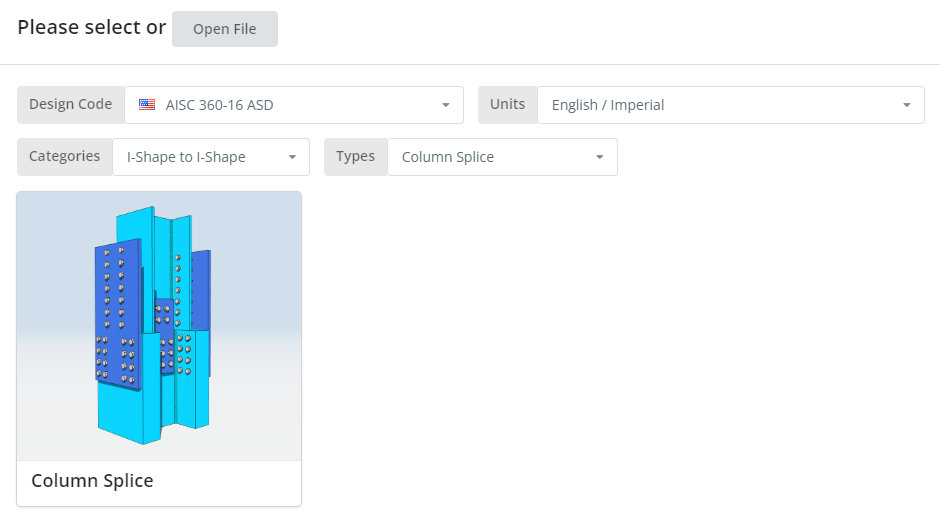
De ontwerpcode kan AISC zijn 360-16 ASS of LRFD, en eenheden Engels/imperiaal of SI/metrisch. Klik op de “Kolomverbinding” tegel.
Details tabblad
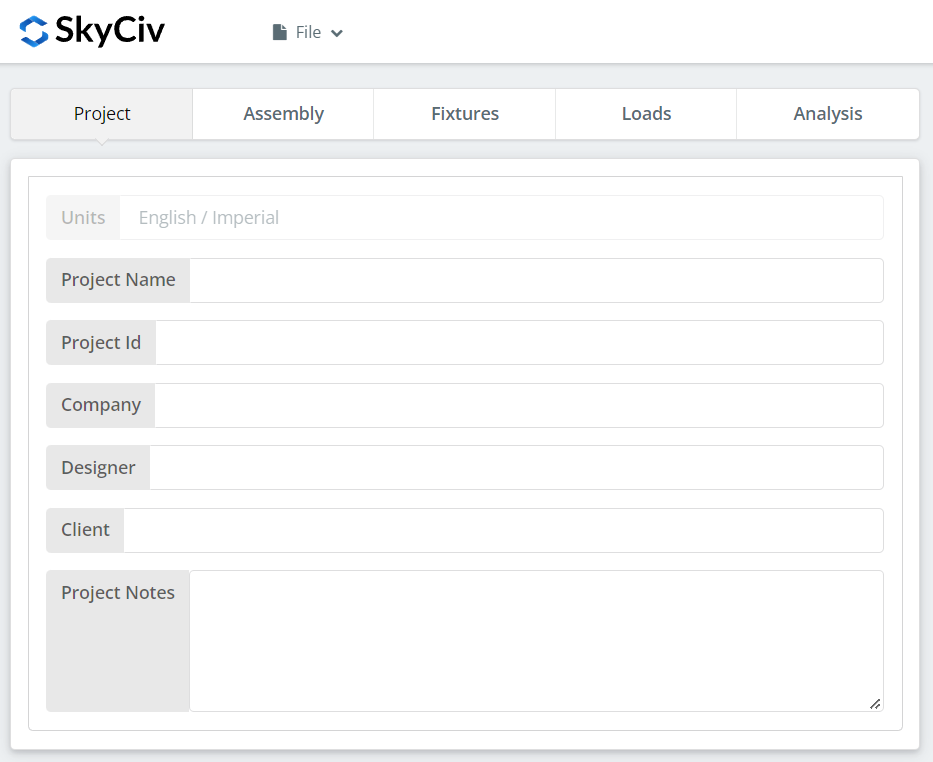
Leg hier de projectgegevens vast. Niets daarvan verandert de berekeningen, maar het komt wel terug in het rapport, which is what makes a set of designs traceable later.
Montage tabblad
Er zitten drie tabbladen onder Assembly: the Lower Column, the Upper Column, en de Verbinding, which holds the flange plate and web plate.
Tabblad onderste kolom
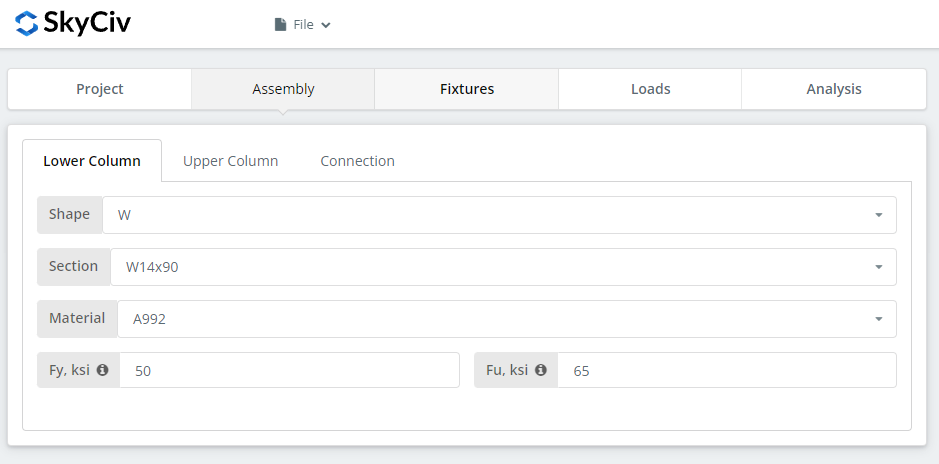
Specify the section and material grade of the lower column. A992 en A36 staan in de lijst; voor al het andere kiest u Aangepast en voert u Fy en Fu in.
Tabblad Bovenste Kolom
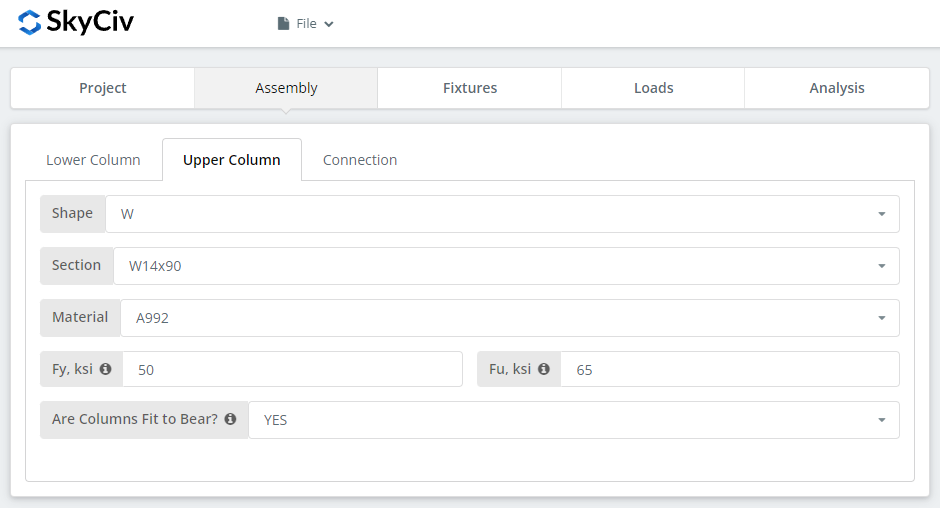
The same inputs, plus the option to declare the columns fit to bear. Selecteer “JA” and the compressive load is designed at the column contact surface instead of through the bolted connection, which gives a more economical connection. Zoals hierboven, that is a requirement you have to pass to the fabricator: the columns must actually be prepared to bear.
Tabblad Verbinding: Flensplaat
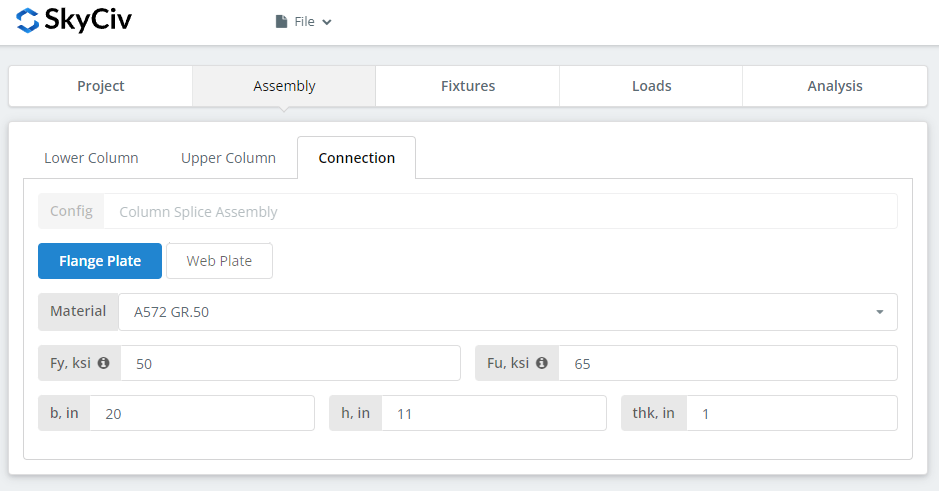
Set the flange plate properties: grade A36, A992 or A572 Gr.50, of op maat met uw eigen Fy en Fu, then b (breedte), h (hoogte) en thk (dikte). Watch the 3D renderer as you type and check the plate geometry makes sense, in particular that there is room for the bolt group you are about to define on the Fixtures tab.
Tabblad Verbinding: Verticale afschuiving van dode belasting
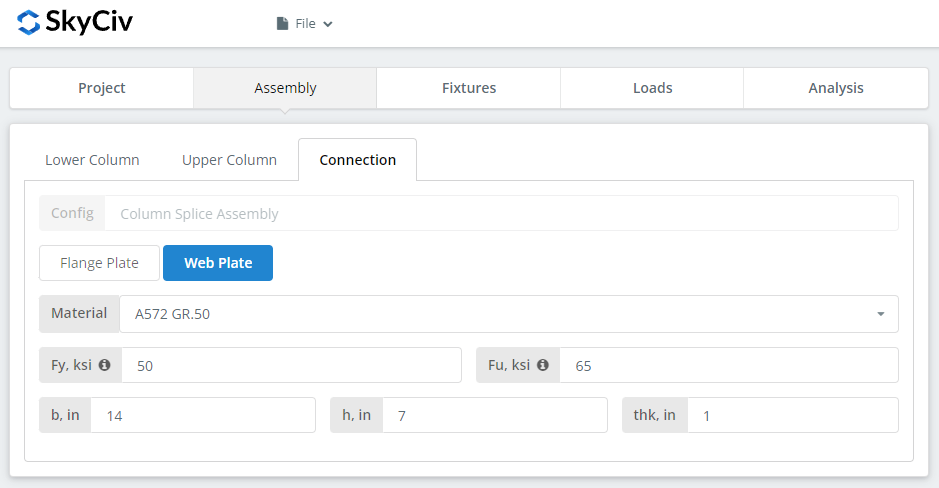
Same inputs as the flange plate. Check the renderer again before moving on.
Armatuur 1-4 👇⨃ Glucovance kopen
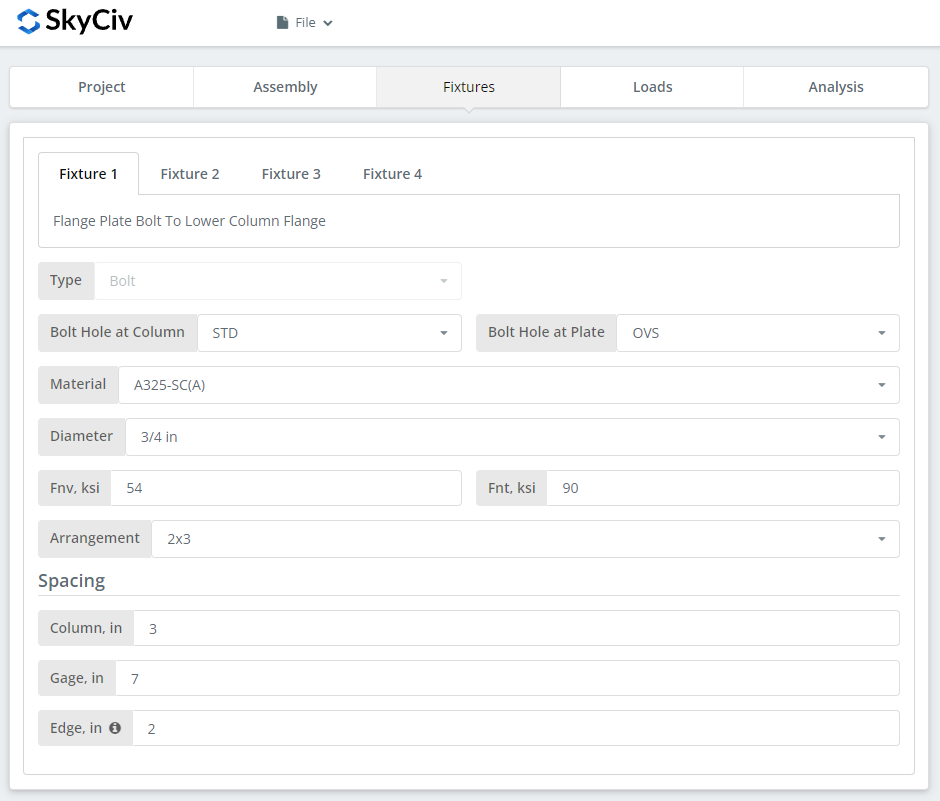
This is where the bolts are defined, one fixture per interface:
Armatuur 1 – Flensplaat naar onderste kolomflens
Armatuur 2 – Flensplaat naar bovenste kolomflens
Armatuur 3 – Webplaat naar onderste kolomweb
Armatuur 4 – Lijfplaat naar bovenkolomweb
Eerste, the bolt-hole types at the column flange or web and at the plates. Fabrikanten vragen meestal om standaardgaten (soa) in the member and oversized holes (OVS) in de plaat, die passende tolerantie in het veld koopt.
De volgende, het boutmateriaal of de kwaliteit: A307, A325, A490 of aangepast. A325 en A490 zijn kwaliteiten binnen ASTM F3125, die de oudere stand-alone specificaties consolideerde, so a drawing calling for A325 is calling for F3125 Grade A325. Kies N of X voor een gelagerde verbinding en SC voor slipkritiek.
Slipkritische verbindingen hebben een lagere ontwerpboutcapaciteit dan lagertypes, dus gebruik ze waar slip er echt toe doet: overmaatse of sleufgaten, omkering van de belasting, of vermoeidheid. In dit voorbeeld, using OVS holes in either the column or the plate means the bolts are automatically checked as slip-critical. Tussen N en X, X geeft de grotere boutafschuifcapaciteit, maar de draden moeten worden uitgesloten van het afschuifvlak, which the erector has to know about. Tussen SC(A) en SC(B), SC(B) geeft de grotere capaciteit en vereist een grondiger voorbereid fadingoppervlak, bijvoorbeeld SSPC-SP6 commerciële straalreiniging.
Dan de boutdiameter, vanaf 5/8″ tot 1-1/2″ of de metrische equivalenten, en de regeling, tot 8 boutrijen en 12 kolommen vastschroeven. Set the bolt row spacing, column spacing and gage. De “rand” input is the distance from the column end to the first bolt column.
For more on the fastener side of this, zie de documentatie op bouten.
Tabblad Ladingen
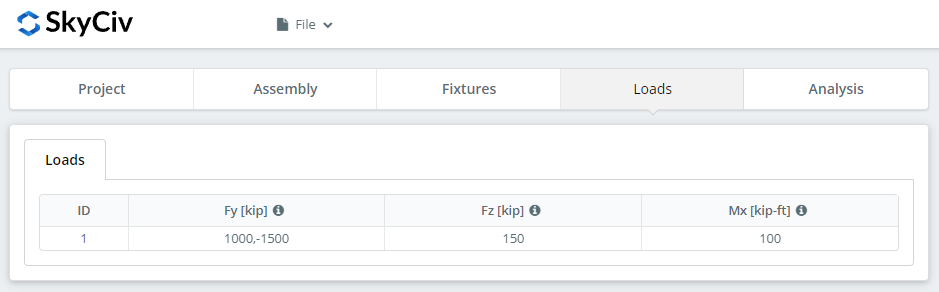
Enter the compressive or tensile load as ‘Fy’, the horizontal shear as ‘Fz’, and the strong axis moment as ‘Mx’. Beweeg de tooltips voor de tekenconventie en richting van elk.
Zorg ervoor dat de belastingen overeenkomen met de ontwerpmethode die u in het begin hebt gekozen. LRFD neemt berekende belastingen op tegen de ontwerpsterkte; ASD neemt bedrijfsbelastingen op tegen de toegestane sterkte. De software kan niet zien wat u hebt getypt, so mixing them produces a utilization ratio that means nothing.
Resultaten tabblad
Klik “Voer ontwerpcontroles uit”. Alles wat op de eerdere tabbladen ontbreekt, wordt hier gemarkeerd in plaats van stilzwijgend standaard ingesteld.
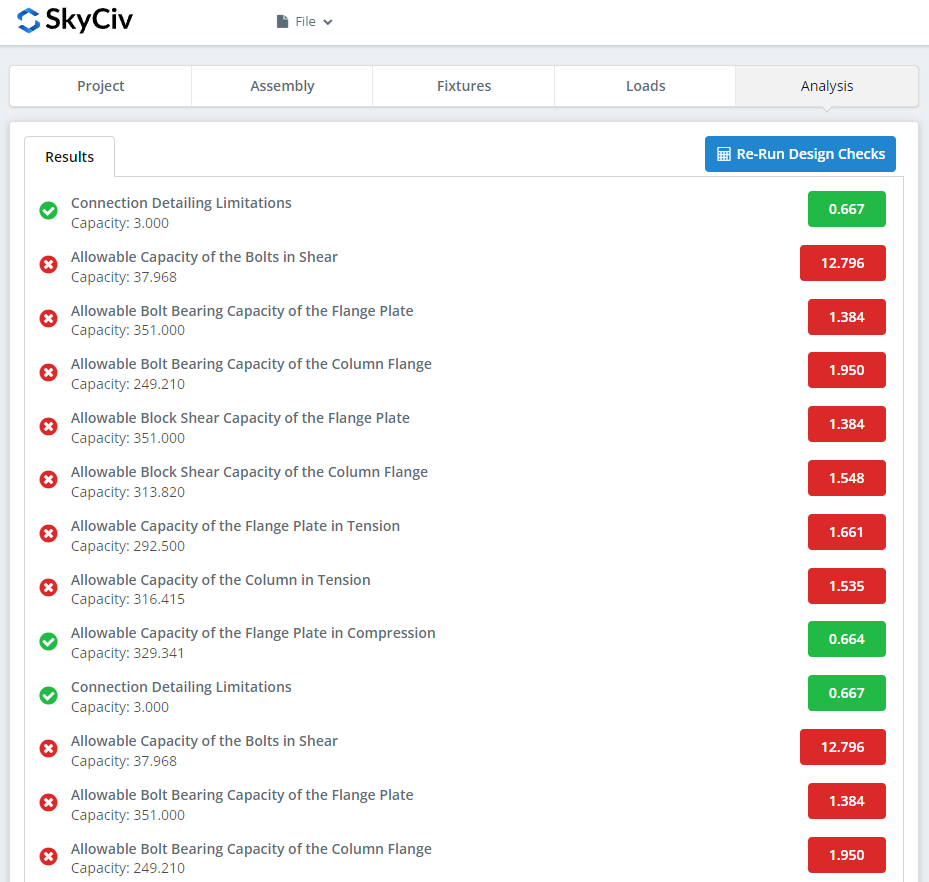
In het overzicht ziet u of de verbinding is geslaagd, with a utilization ratio against each check and the governing one called out. Als het mislukt, verander de invoer op de eerdere tabbladen en klik “Ontwerpcontroles opnieuw uitvoeren”. Wanneer het voorbij is, “Berekeningsrapport bekijken” opent het gedetailleerde rapport.
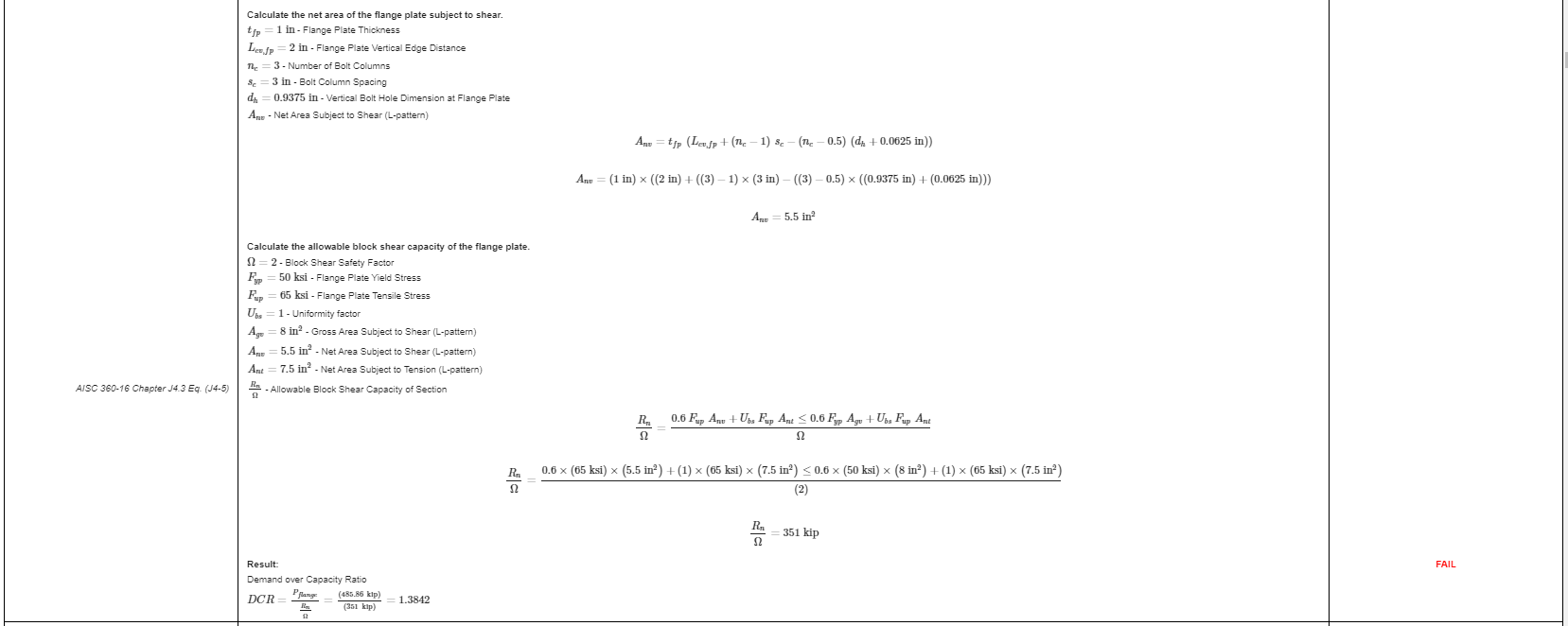
Dat is een uittreksel uit het rapport. Elke controle verwijst naar de AISC-handleiding of -specificatie, and the working is laid out the way the specification lays it out, so a reviewing engineer can follow it line by line instead of reverse-engineering a result.
Hier‘s een PDF-kopie van het volledige gedetailleerde berekeningsrapport.
Designing a beam splice instead? De beam splice calculator works the same way.
Probeer het zelf
The link below opens the module with the column splice already loaded. Enter your sections, borden, bolts and loads, and every check and code reference is shown in full. Het draait in de browser, zonder iets te installeren.
