
A vertical brace carries lateral load down through a braced bay as axial force, rather than by bending the frame. At each end the brace force has to be resolved into the beam and the column, and that is the job of the gusset plate. The connection is therefore three interfaces working together: brace to gusset, gusset to beam, and gusset to column.
SkyCiv Connection Design checks the vertical brace connection to AISC 360-16 en TEA o LRFD. It resolves the gusset interface forces by the Uniform Force Method, then returns every check with its utilization ratio and the clause behind it.
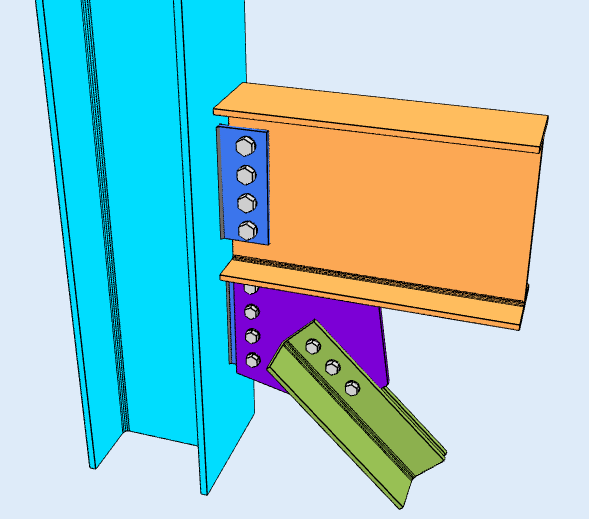
Braced Frames Against Moment Frames
A braced frame resists lateral load axially. The members work in tension and compression, so they stay light, and the connections are mostly bolted shear and bearing work that a fabricator can produce without special procedures. A moment frame resists the same load in flexure, which needs heavier members and connections stiff enough to transfer moment, often with complete joint penetration welds at the flanges. For the same drift limit, the braced frame is usually the cheaper structure.
What the braced frame costs is the bay itself. A diagonal running corner to corner blocks that bay for doors, glazing and services, and the architect has to plan around it. A moment frame leaves the bay clear, which is why it survives in frontages and open floor plates despite costing more. Bracing saves steel; it constrains the layout rather than freeing it.
Where a full diagonal will not fit, the usual answers are a corsé de chevrón, which frees the centre of the bay for an opening, o un rodillera, which sits in the corner.
The module designs these connections to AISC 360-16. Seismic force-resisting detailing, the ductility and capacity-design rules in AISC 341, is not covered. If the brace is part of a seismic force-resisting system, the demands you enter have to come from that assessment.
Designing a Vertical Brace Connection in SkyCiv
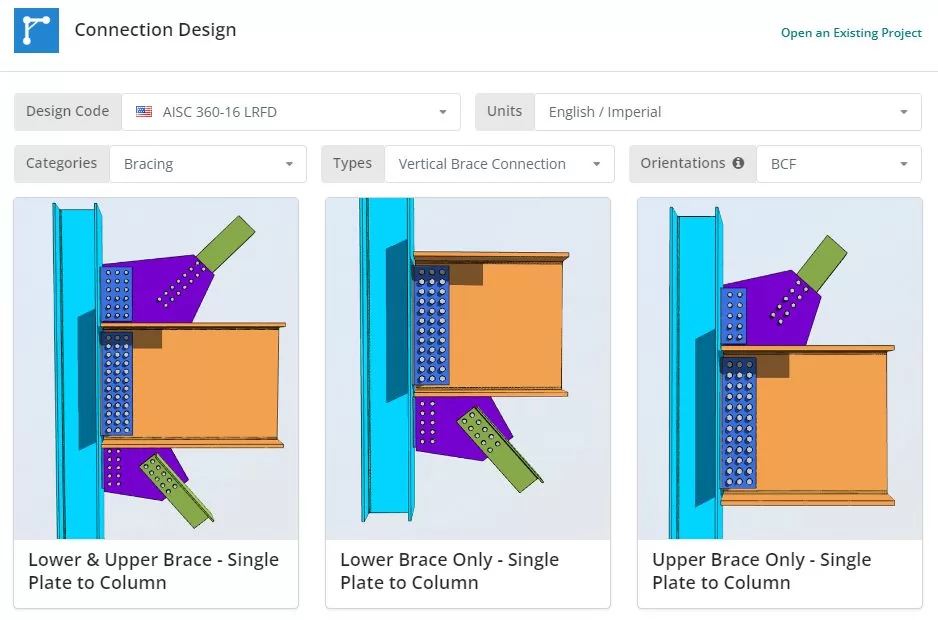
El código de diseño puede ser AISC. 360-16 TEA o LRFD, y unidades inglesas/imperiales o SI/métricas. El refuerzo está disponible solo bajo AISC; it is not offered under AS 4100.
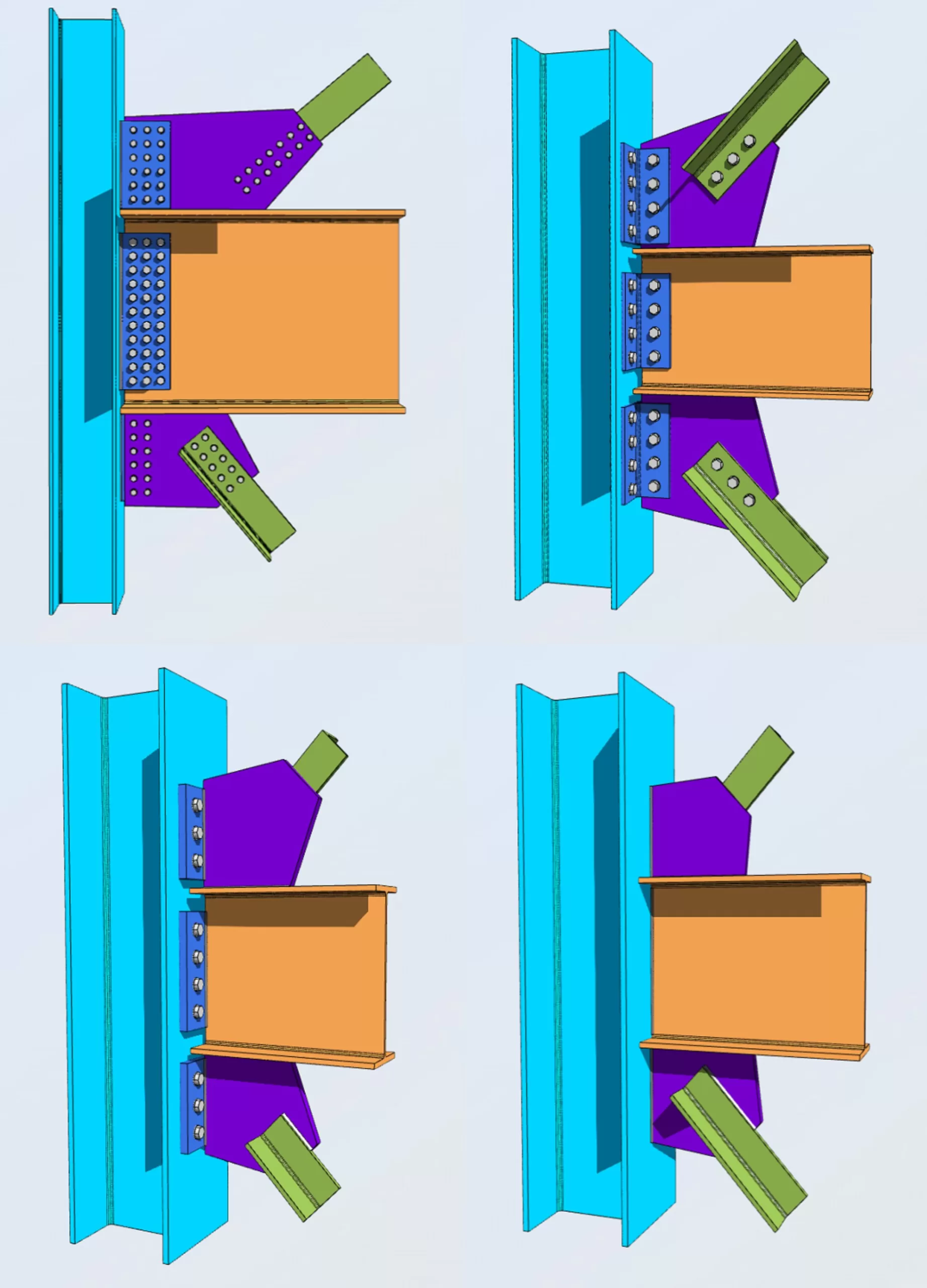
Click any tile to start. There are four connections to the column, plato único, doble angulo, placa final and directly welded, and each comes in a lower brace only, upper brace only, or lower and upper variant. The choice sets both the beam to column connection and the gusset to column connection. Each configuration can frame to the column flange or the column web.
Pestaña Detalles
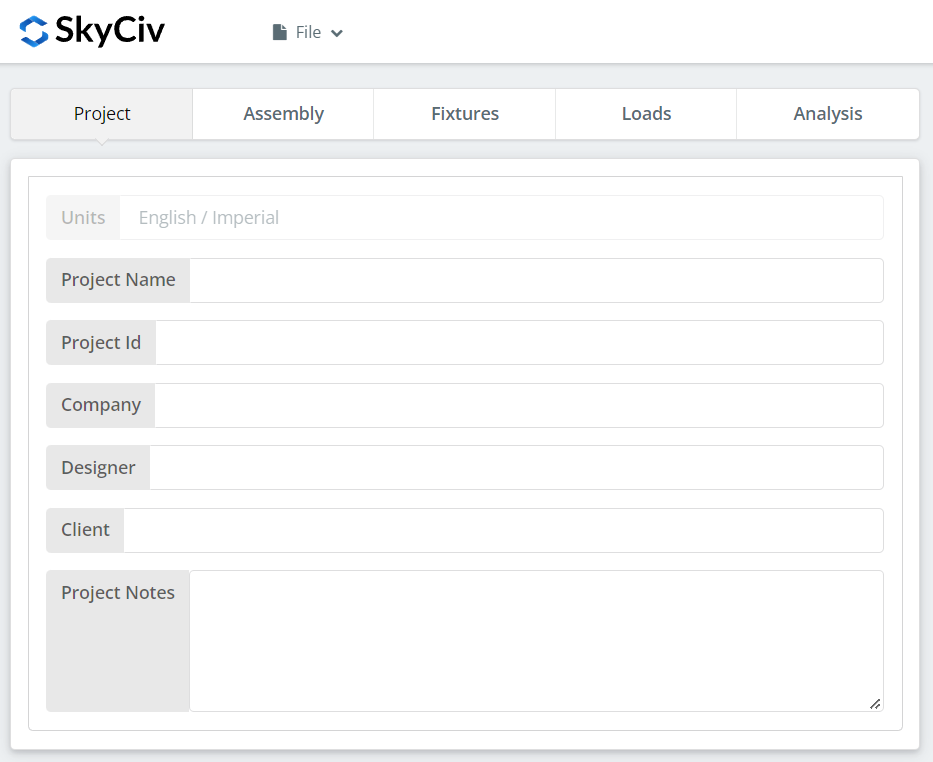
Registre los detalles del proyecto aquí. Nada de eso cambia los cálculos., pero se incluye en el informe.
Pestaña Ensamblaje
The tabs under Assembly are the Column, el rayo, the Brace or Braces, y la conexión, which holds the gusset plate and any angle. A configuration with both an upper and a lower brace has a tab for each, so the count is four or five depending on the tile you picked.
Pestaña de columna
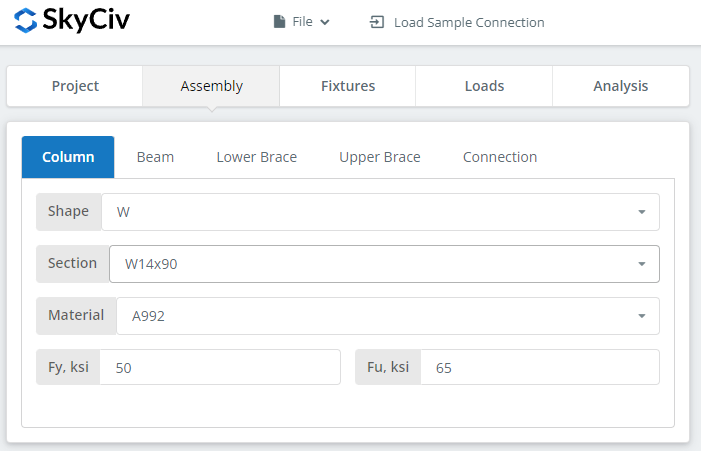
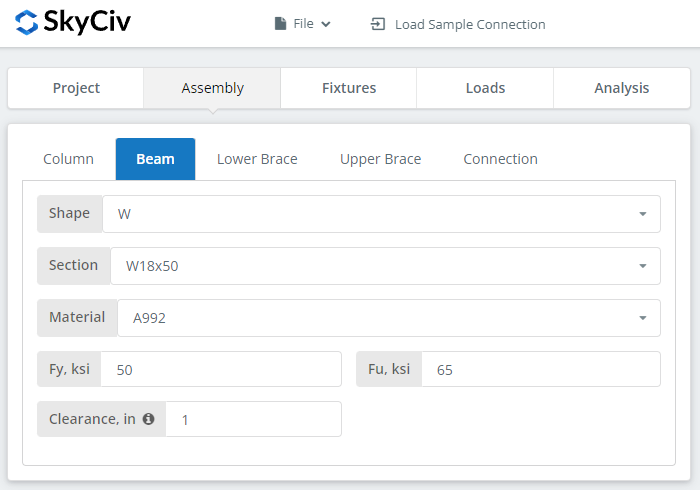
Pestaña Viga
Pestaña de refuerzo inferior o superior
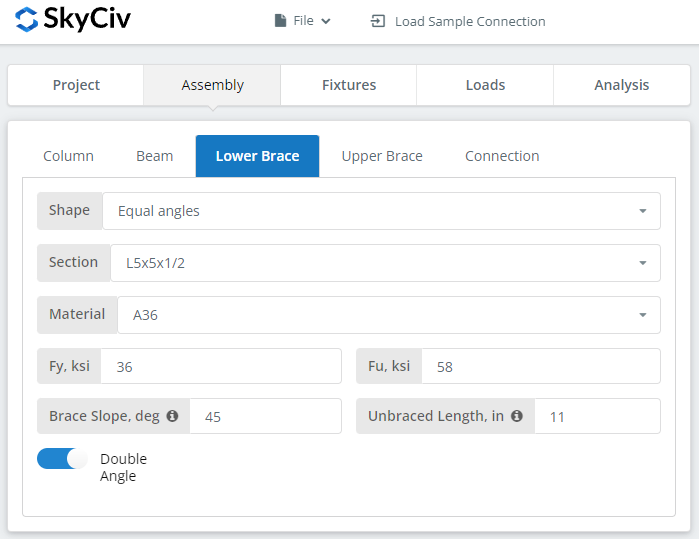
La riostra puede ser de un solo ángulo., un doble ángulo, un HSS cuadrado o rectangular, o una sección WT. The shape drives how the brace meets the gusset. An angle connects through one leg, which puts the load off the brace centreline and brings shear lag into the net section check. An HSS is normally slotted over the plate and welded each side, which keeps the load concentric but needs the slot end checked.
The brace angle matters as much as the section. It sets how the brace force splits into the horizontal and vertical components that the gusset has to deliver, so a shallow brace drives the beam interface and a steep one drives the column interface.
Pestaña Conexión
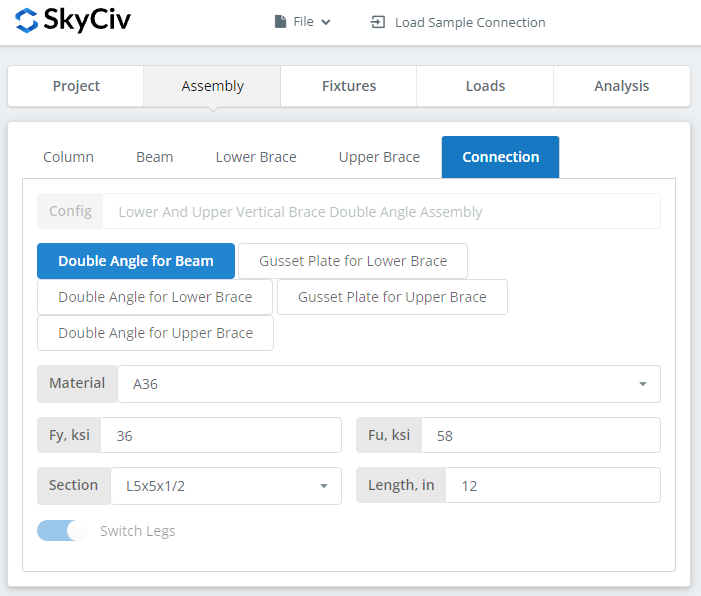
Set the gusset plate and angle properties here. For this example we selected the “Soporte inferior y superior – Doble ángulo a columna” teja.
The gusset has to be deep enough to develop the brace connection and still reach both the beam and the column, Así que observa el renderizador 3D mientras lo dimensionas.. Its proportions are not free: the Uniform Force Method sets the interface forces from the gusset geometry, so changing the plate dimensions changes the load split, not just the capacity.
Pestaña de accesorios
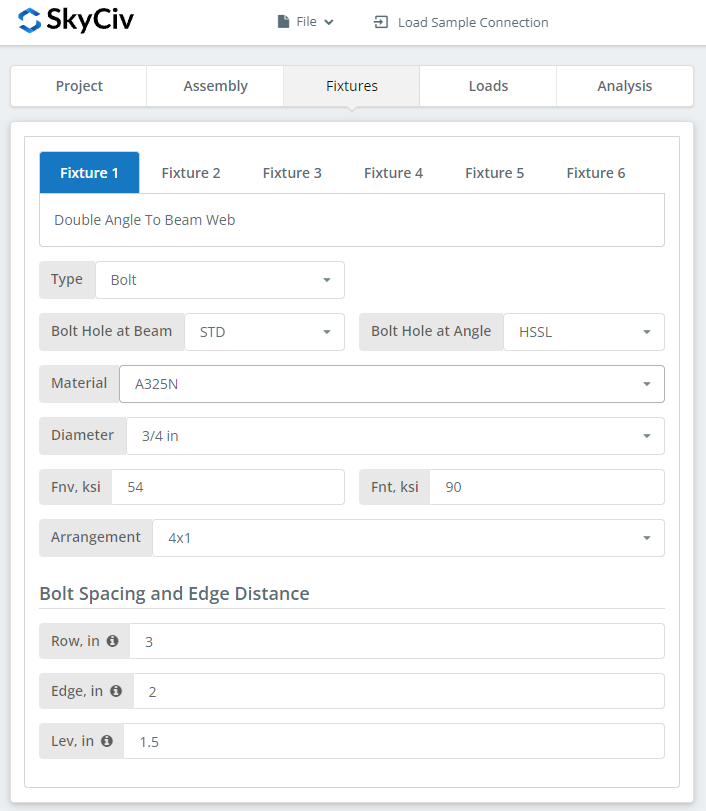
Four interfaces are set here: viga a columna, brace to gusset, gusset to beam, and gusset to column. Cada uno puede ser atornillado o soldado., and each is checked separately.
Where an interface is bolted, los grados de los pernos son A307, A325, A490 o personalizado. A325 y A490 son grados dentro de ASTM F3125, que consolidó las especificaciones independientes más antiguas. donde esta soldado, especificar el material de soldadura, o 'Personalizado’ con tu propio Fnw, y el tamaño de la soldadura.
Para más información sobre el lado del sujetador, ver la documentación en tornillos y soldaduras.
Ficha Cargas
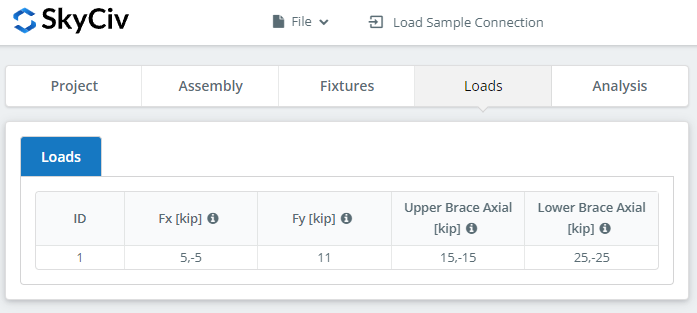
Enter the brace loads and the beam reaction here. Pase el cursor sobre la información sobre herramientas para conocer la convención de signos y la dirección de cada una..
Haga coincidir las cargas con el método de diseño que eligió al principio. LRFD toma cargas factorizadas contra la resistencia de diseño; ASD toma cargas de servicio contra la fuerza permitida. El software no puede decir lo que usted escribió. Check the brace in compression as well as tension, because the compression case governs the gusset buckling check and often the plate thickness with it.
Pestaña Resultados
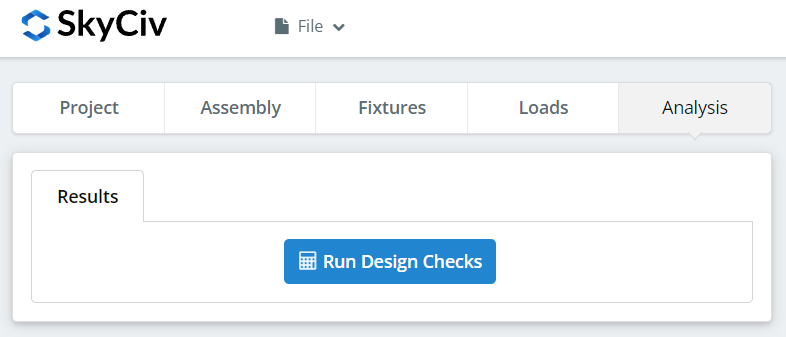
Haz clic “Ejecutar comprobaciones de diseño”. Todo lo que falta en las pestañas anteriores se marca aquí en lugar de estar predeterminado de forma silenciosa..
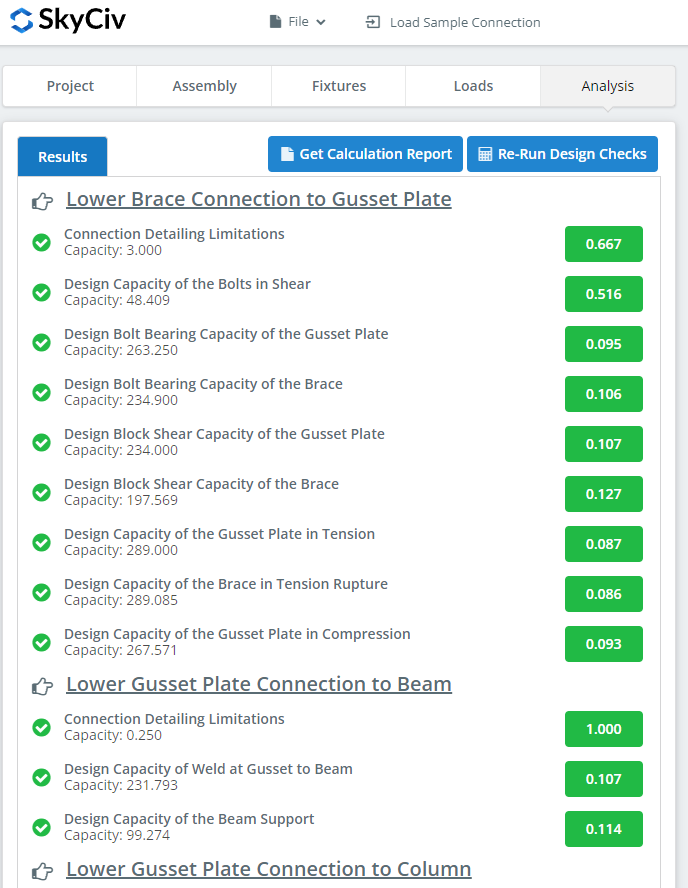
El resumen muestra si la conexión pasó, con un índice de utilización contra cada cheque. Across the four interfaces that covers gusset buckling and tension, corte de bloque, cizalla de perno, bearing and tearout, prying, capacidad de soldadura, shear and moment interaction, and the detailing limits on plate thickness and edge distance.
si falló, cambie las entradas en las pestañas anteriores y haga clic “Vuelva a ejecutar las comprobaciones de diseño”. cuando pasa, pasar el cursor sobre “Reporte” y escoger “Informe resumido” o “Reporte completo”.
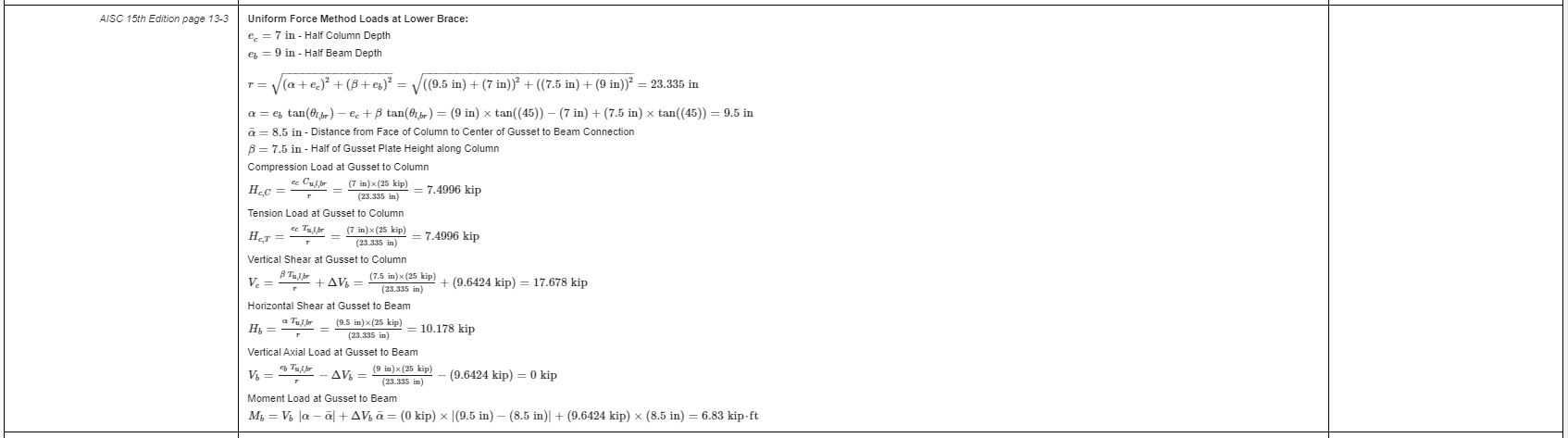
Este es un extracto del informe completo.. Cada verificación lleva su referencia al manual o especificación de AISC., y el trabajo sigue el orden que utiliza la especificación, para que un ingeniero revisor pueda leerlo línea por línea en lugar de realizar ingeniería inversa a un número.
aquíEs una copia en PDF del informe de cálculo detallado completo..
Pruébelo usted mismo
Pick the vertical brace, ingresa tu corsé, refuerzo y cargas, y ver cada cheque con su código de referencia. Se ejecuta en el navegador., sin nada que instalar.
Ver también el vertical bracing connection calculator, y el corsé de chevrón y rodillera calculadoras para las otras configuraciones de arriostramiento.
