
The double angle connection is one of the simple shear connections set out in Part 10 AISC Kılavuzunun, and a fabricator favourite at beam to column web connections.
It consists of two angles, one each side of the beam web, bolted or welded to the beam web and to the support. On a beam to column web connection the angles are usually welded to the beam and bolted to the support. That combination needs a shorter leg on the support side, which matters when the space inside the column web is tight and an all-bolted detail would need clearance for a wrench.
An all-bolted double angle is the usual choice at a beam to girder connection, particularly where a tek açı will not carry the shear: the second angle gives the support bolts two shear planes instead of one.
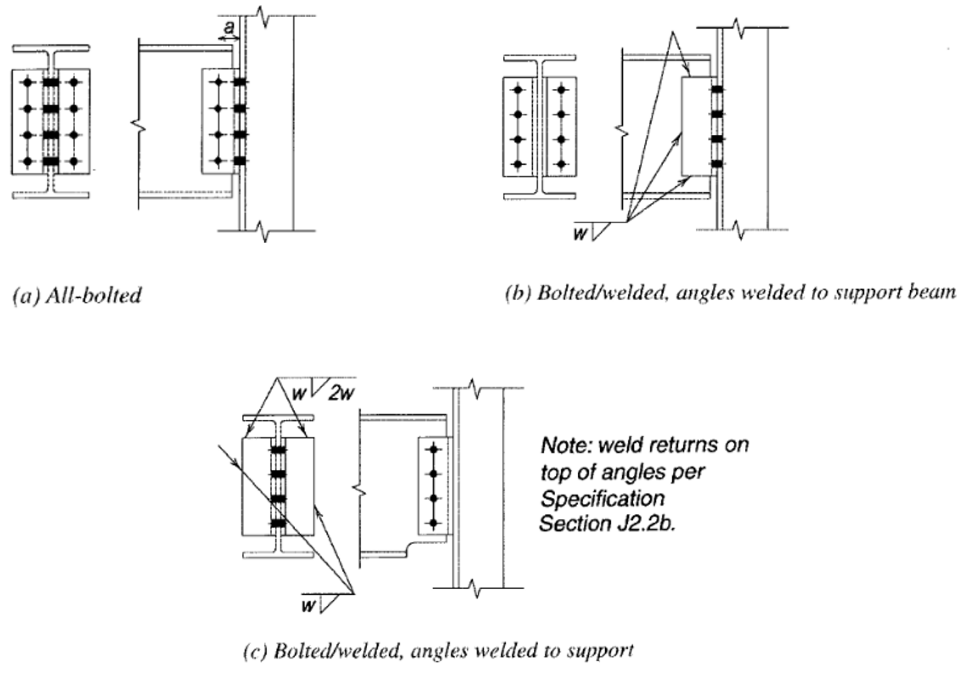
The three arrangements are all-bolted, bolted with the angles welded to the supporting beam, and bolted with the angles welded to the support. Where the angles are welded, weld returns are required across the top of the angles per Specification Section J2.2b.
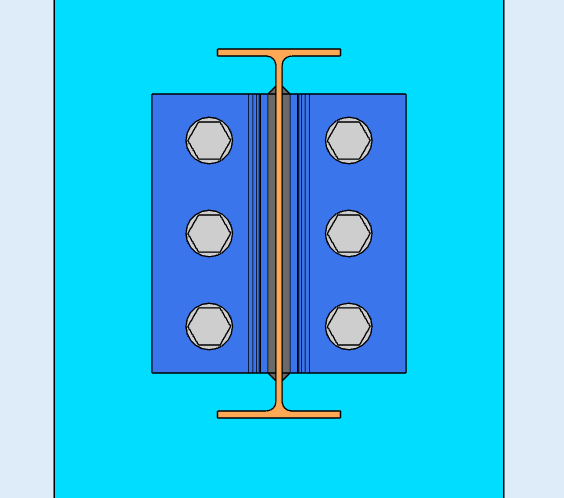
What Governs the Design
The double angle is popular because it goes together in the field with ordinary tools and needs no special fabrication. Designing it still comes down to a handful of things that interact.
Bolt spacing drives the bolt group. Too few bolts and the bolts and angles are overstressed; too many and you are paying for a connection that is harder to install than it needs to be. Edge distances matter for the same reason, both from the angle edge and between adjacent bolts, since a short edge distance fails in tear-out long before the bolt fails in shear.
The angles themselves deform. A simple shear connection has to rotate as the beam end rotates, and the angle legs bend to let it. That flexibility is the point, but taken too far it turns into lost capacity and overstressed bolts, which is why the angle thickness and leg length are as much a part of the design as the bolt group.
The design also depends on how the beam is supported. A simply supported beam and a continuous beam put different demands on the same detail.
Designing a Double Angle Connection in SkyCiv
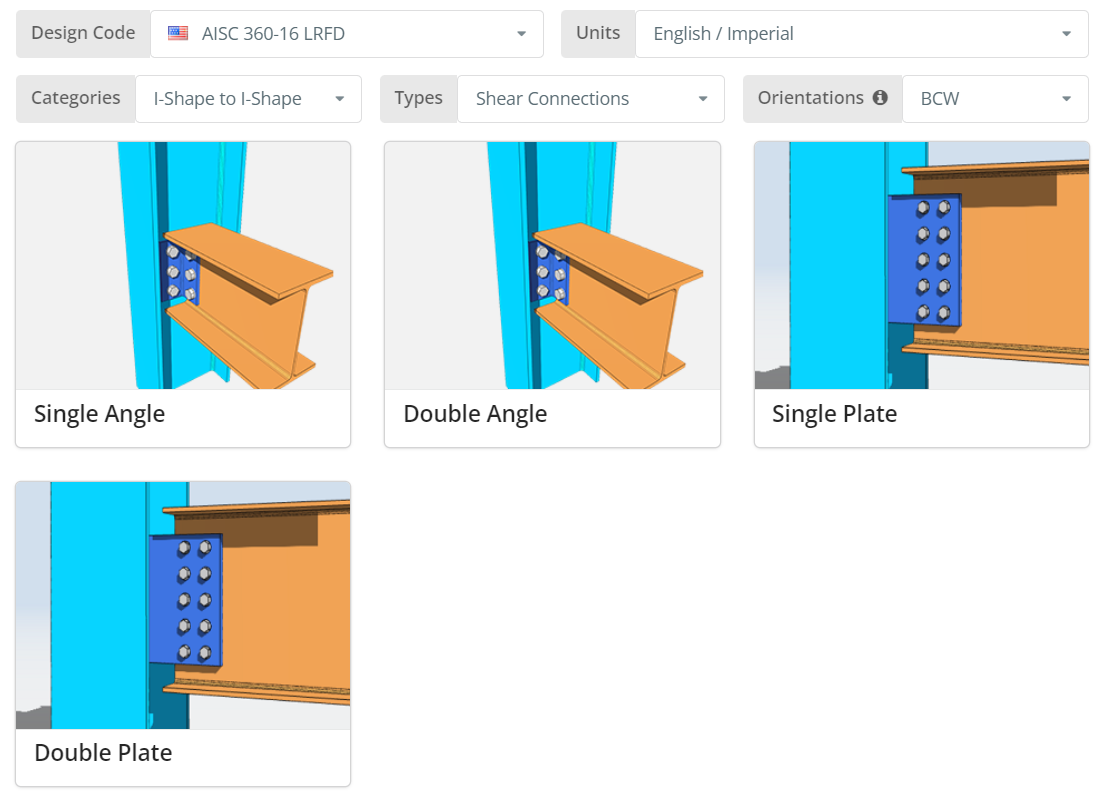
Tasarım kodu AISC olabilir 360-16 ASD veya LRFD, ve birimleri İngilizce/İngiliz veya SI/Metrik. Oryantasyon BCF'dir, BCW veya BBW; Her birinin ne anlama geldiğini öğrenmek için ipucunun üzerine gelin. Tıkla “Çift Açılı” fayans.
Ayrıntılar sekmesi
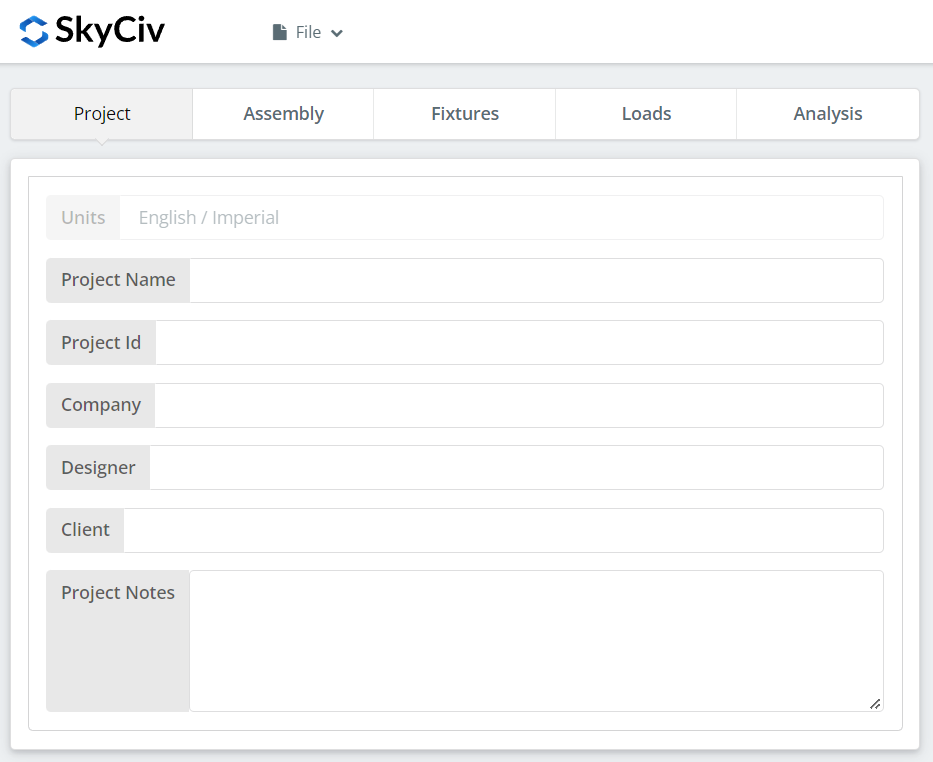
Proje ayrıntılarını buraya kaydedin. Hiçbiri hesaplamaları değiştirmiyor, ama rapora da yansıyor.
Montaj Sekmesi
Montaj'ın altında üç sekme bulunur: the Column, ışın, ve Bağlantı, which holds the double angle.
Sütun Sekmesi
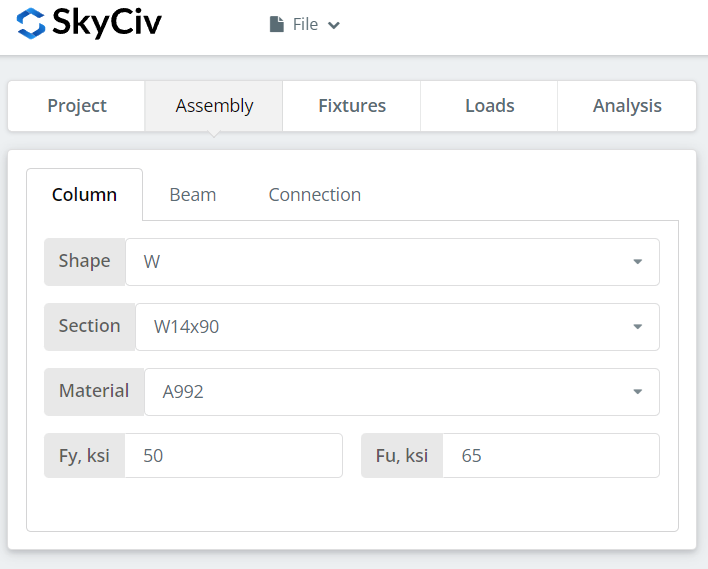
Specify the section and material grade of the column. A992 ve A36 listede; başka bir şey için Özel'i seçin ve Fy ve Fu'ya girin.
Kiriş Sekmesi
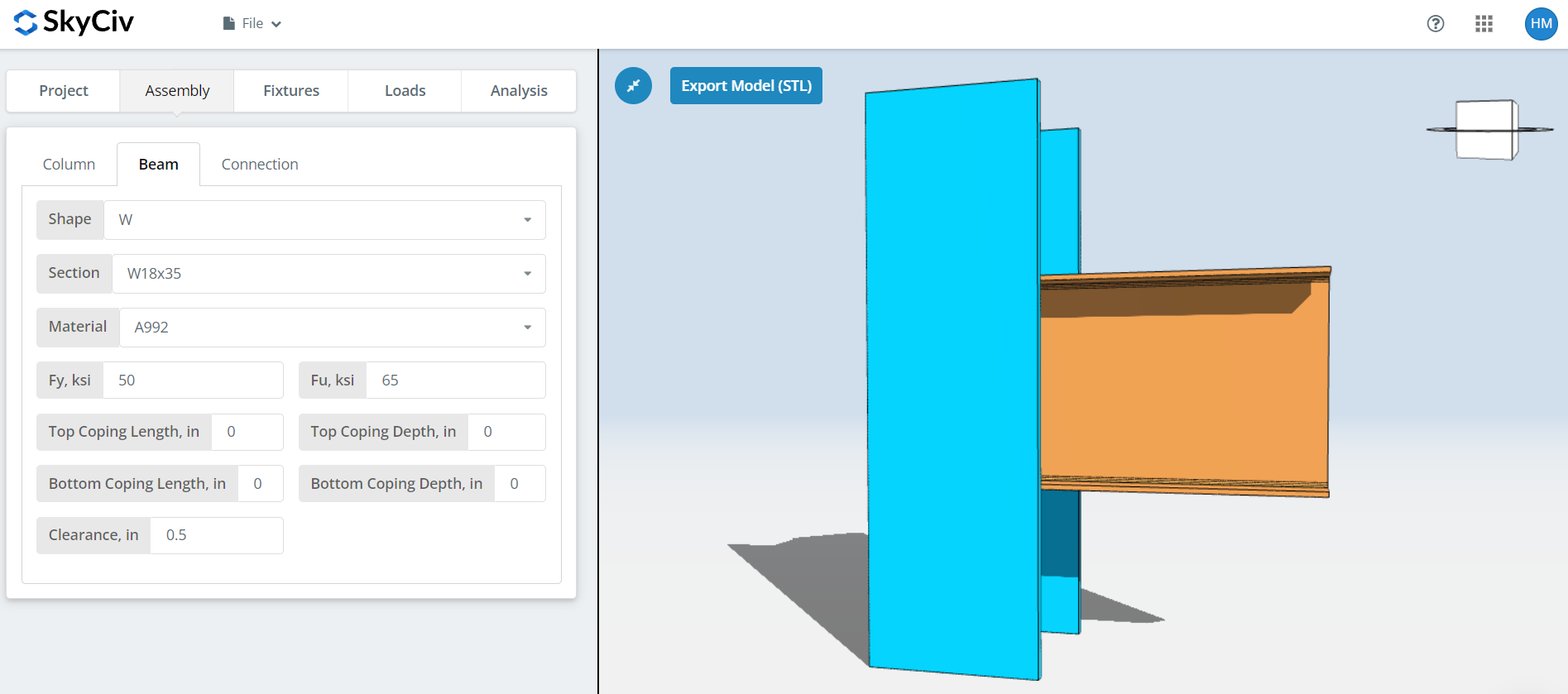
Işın için aynı girişler, plus cope dimensions and beam clearance. Add a cope where the beam frames into a supporting member of similar depth and the flange has to be cut back, since the coped section governs checks the uncoped one does not.
Bağlantı Sekmesi
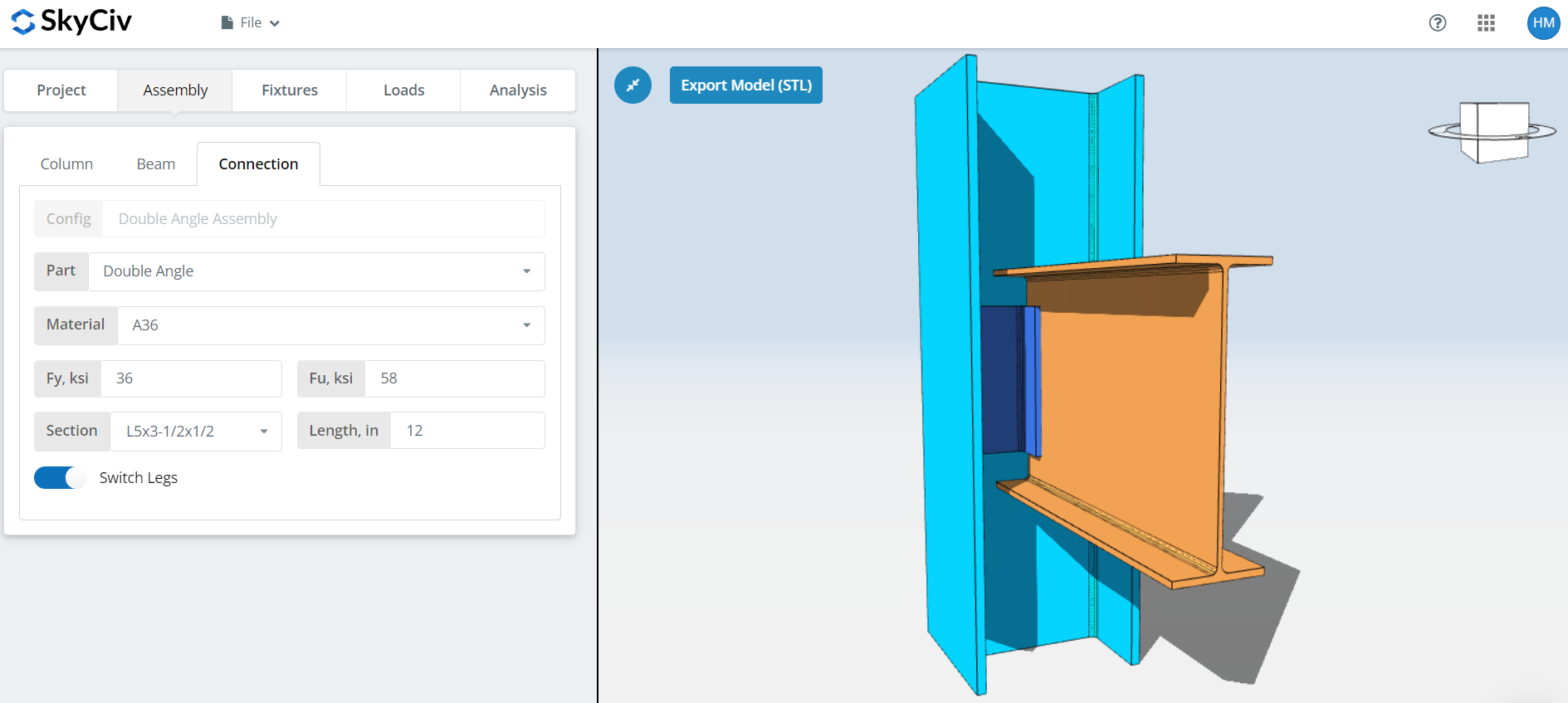
Set the angle properties: A36 veya A992 sınıfı, veya kendi Fy ve Fu'nuzla Özel, then the section size and length. Where the angle has unequal legs you can switch which leg goes where. BCW için, put the shorter leg on the column side, because that is where the space runs out.
Hareket halindeyken 3D oluşturucuyu izleyin. The angle height should sit within the beam depth, and the total angle width should not exceed the column T-dimension or the clear web depth.
Fikstür 1 Sekme
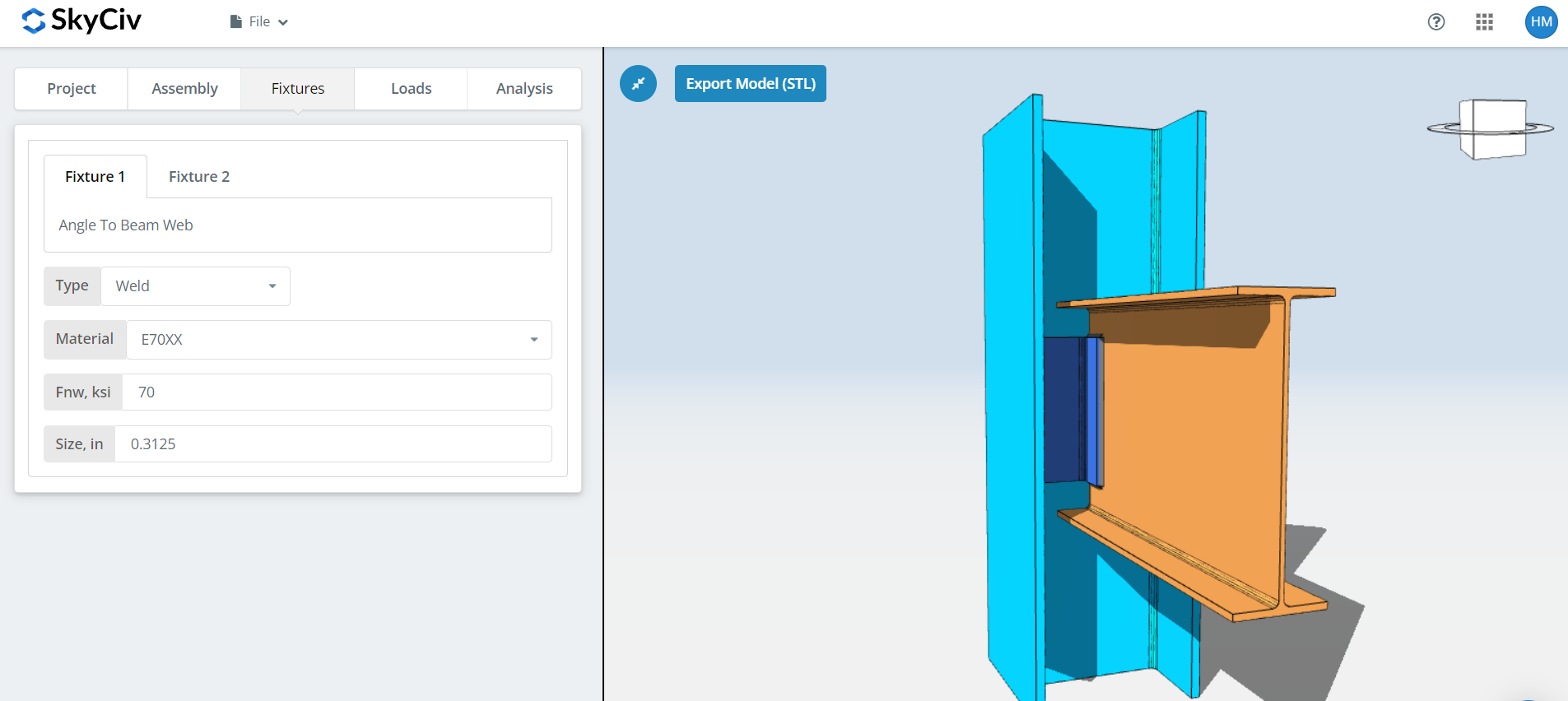
This is the angle to beam web connection. Cıvatalı veya kaynaklı olabilir; this walkthrough uses welded, since for BCW a welded-to-beam, bolted-to-support double angle is the arrangement that fits the column web.
Kaynak malzemesini belirtin, or choose ‘Custom’ and enter Fnw if the electrode you want is not listed. Then the weld size. Keep the weld size no larger than the angle thickness, or there is no room to lay the weld.
Fikstür 2 Sekme
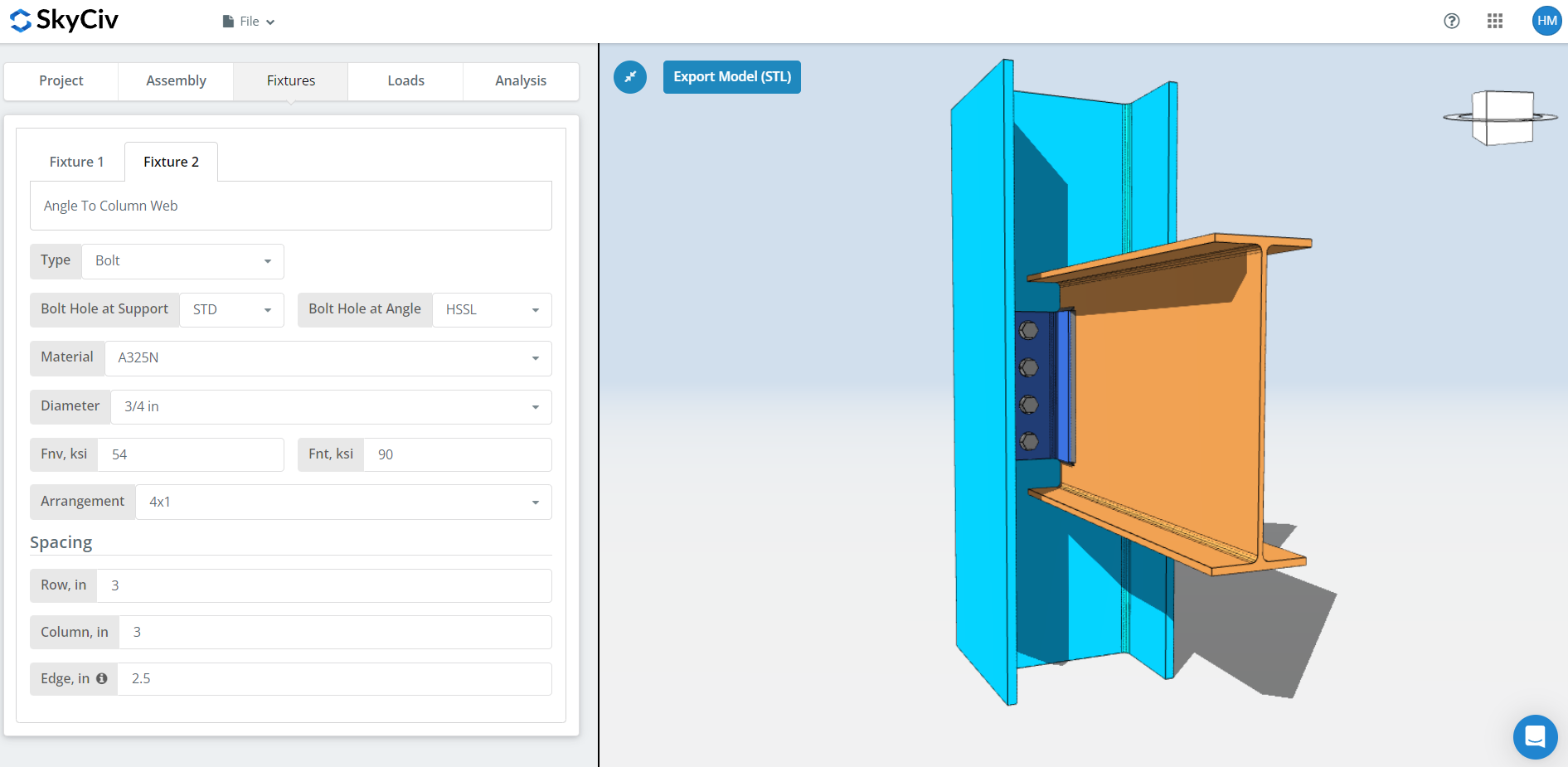
This is the angle to support connection, bu desteğin kiriş ağı olup olmadığı, bir sütun flanşı veya bir sütun ağı. Bolted or welded again; bu izlenecek yol cıvatalı kullanımları kullanıyor.
İlk, the bolt hole types at the beam and at the angle. İmalatçılar genellikle standart delikler ister (STD) in the member and horizontal short-slotted holes (HSSL) in the angle, sahada montaj toleransını satın alan.
Sonraki, cıvata malzemesi veya kalitesi: A307, A325, A490 veya Özel. A325 ve A490, ASTM F3125 kapsamındaki kalitelerdir, eski bağımsız spesifikasyonları birleştiren. N ve X arasında, X, daha büyük cıvata kesme kapasitesini verir, ancak dişlerin kesme düzleminin dışında tutulması gerekir, ve montajcının bunu bilmesi gerekiyor.
Daha sonra cıvata çapı, 5/8'den itibaren″ 1-1/2'ye″ veya metrik eşdeğerleri, ve düzenleme, kadar 12 cıvata satırları ve sütunları, satır ve sütun aralıklarıyla.
Bilmeye değer: daha fazla cıvata grubu kapasitesine ihtiyacınız varsa, Cıvata eklemek yerine boşluğu açmak bunu yapabilir, as long as the angle height still fits within the beam depth. Cıvata grubu gücü şunları kullanır: anlık dönme merkezi yöntemi (ICOR), so a wider spacing is credited with the capacity it actually provides rather than rounded down to a table value. Önce imalatçınıza danışın, Yine de. Çoğu 3'ü tercih ediyor″ spacing typical throughout and will price variable spacing accordingly.
NS “kenar” input here is the horizontal distance from the centre of the beam to the nearest bolt.
For more on the fastener side, ilgili belgelere bakın cıvatalar ve kaynaklar.
Yükler Sekmesi
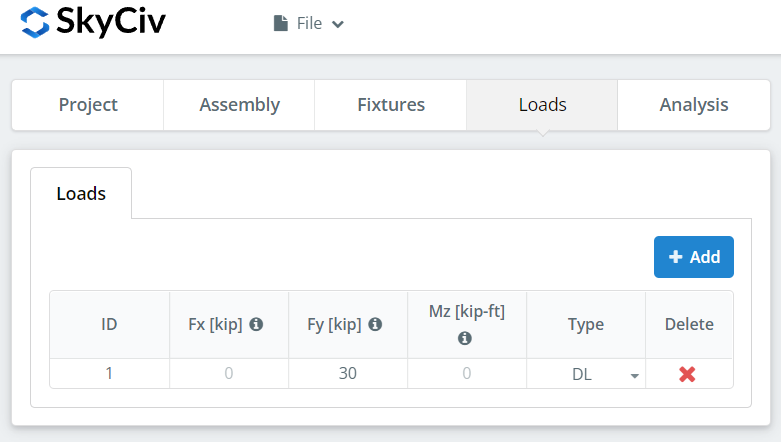
'Fy' altında dikey kesmeyi girin.
Yükü başlangıçta seçtiğiniz tasarım yöntemiyle eşleştirin. LRFD, tasarım gücüne karşı faktörlü yükleri alır; ASD, servis yüklerini izin verilen güce karşı alır. Yazılım hangisini yazdığınızı anlayamıyor.
Sonuçlar Sekmesi
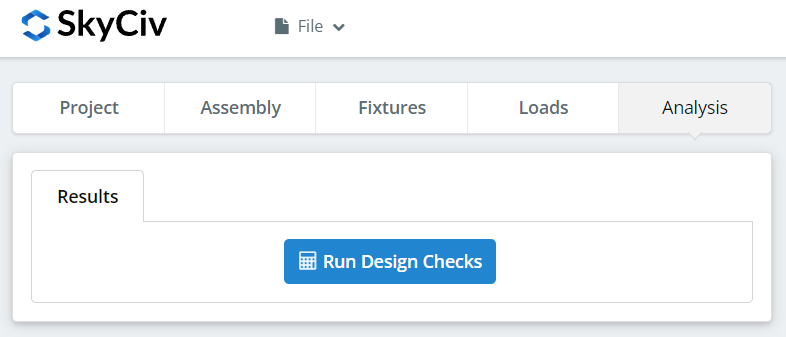
Tıklayın “Tasarım Kontrollerini Çalıştırın”. Önceki sekmelerde eksik olan her şey, sessizce varsayılan olarak ayarlanmak yerine burada işaretlenir.
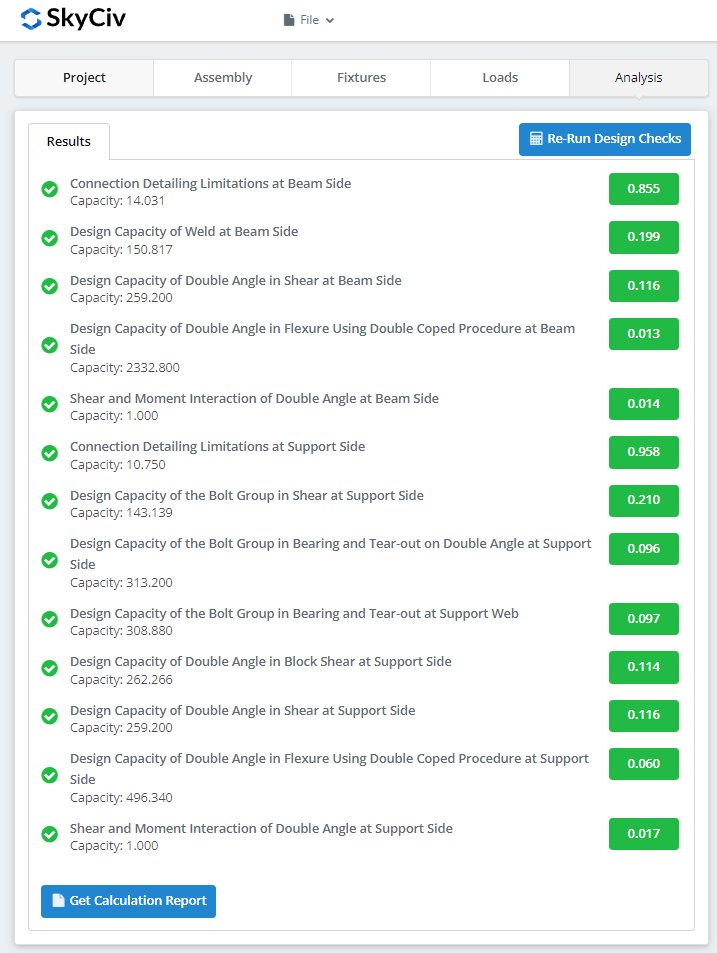
Özet, bağlantının geçip geçmediğini gösterir, her çeke karşı bir kullanım oranıyla. başarısız olursa, önceki sekmelerdeki girişleri değiştirin ve “Tasarım Kontrollerini Yeniden Çalıştırın”. Geçtiğinde, “Hesaplama Raporunu Görüntüle” ayrıntılı raporu açar.
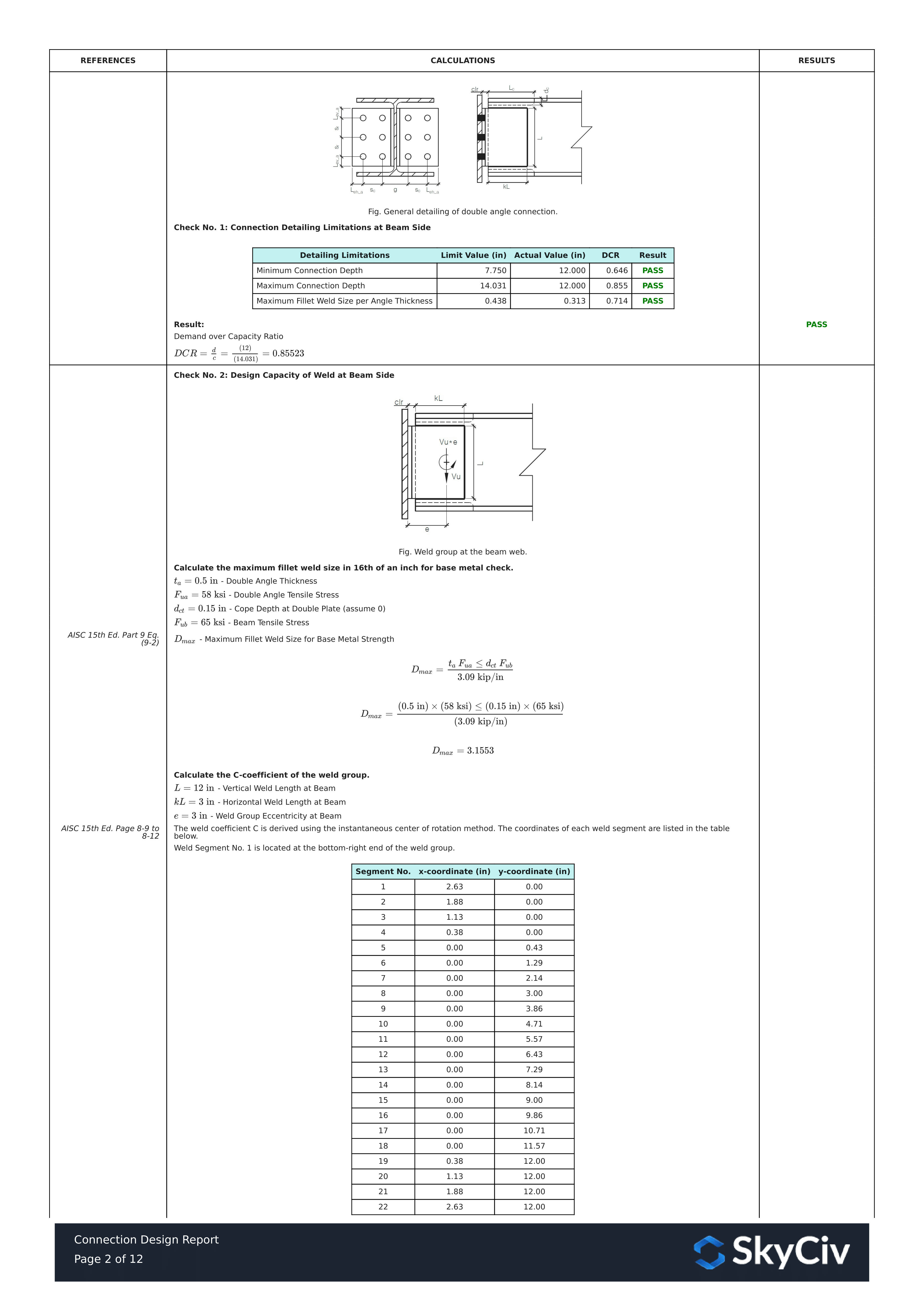
Bu rapordan bir alıntı. Her kontrol AISC kılavuzuna veya spesifikasyonuna referansını taşır, and the working follows the same order the specification uses, böylece inceleme mühendisi bir sayıyı tersine mühendislik yapmak yerine satır satır okuyabilir.
İşte tam ayrıntılı hesaplama raporunun bir PDF kopyası: Bağlantı Tasarım Raporu.
Kendiniz Deneyin
Pick the double angle, bölümlerinize girin, angle size, bolts and shear, ve her kontrolü kod referansıyla birlikte görün. Tarayıcıda çalışır, kurulacak hiçbir şey olmadan.
Ayrıca bkz. double angle connection calculator ve kesme bağlantıları genel bakış.
