Learn how SkyCiv Base Plate Design simplifies base plate connections with step-by-step calculations, 3D visualization, code-compliant checks, and a free tool.
A Smarter Way to Design Steel Base Plates
Designing a steel base plate is more than picking a plate thickness or placing four anchor bolts. It is one of the most important steps in making sure forces from a steel column are transferred safely and efficiently into the concrete foundation below. A base plate must resist axial loads, shear, bending and uplift, and it must meet complex code requirements while remaining buildable and cost efficient.
In real projects base plates are everywhere: buildings, warehouses, equipment platforms, towers and industrial plants. Engineers use them every day, yet the design process often becomes slow, repetitive and error prone. Manual calculations can take hours and reviewing them takes even longer. Small mistakes quickly lead to oversized plates, unnecessary anchors, or costly fabrication changes.
SkyCiv Base Plate Design was built to solve this.
The SkyCiv Difference: Transparent, Affordable, and Built with Modern Solutions
SkyCiv Base Plate Design stands out because it focuses on what matters: calculation accuracy, value for money, and modern solutions. It is built by structural engineers for structural engineers.
Transparent Calculations, No Black Box
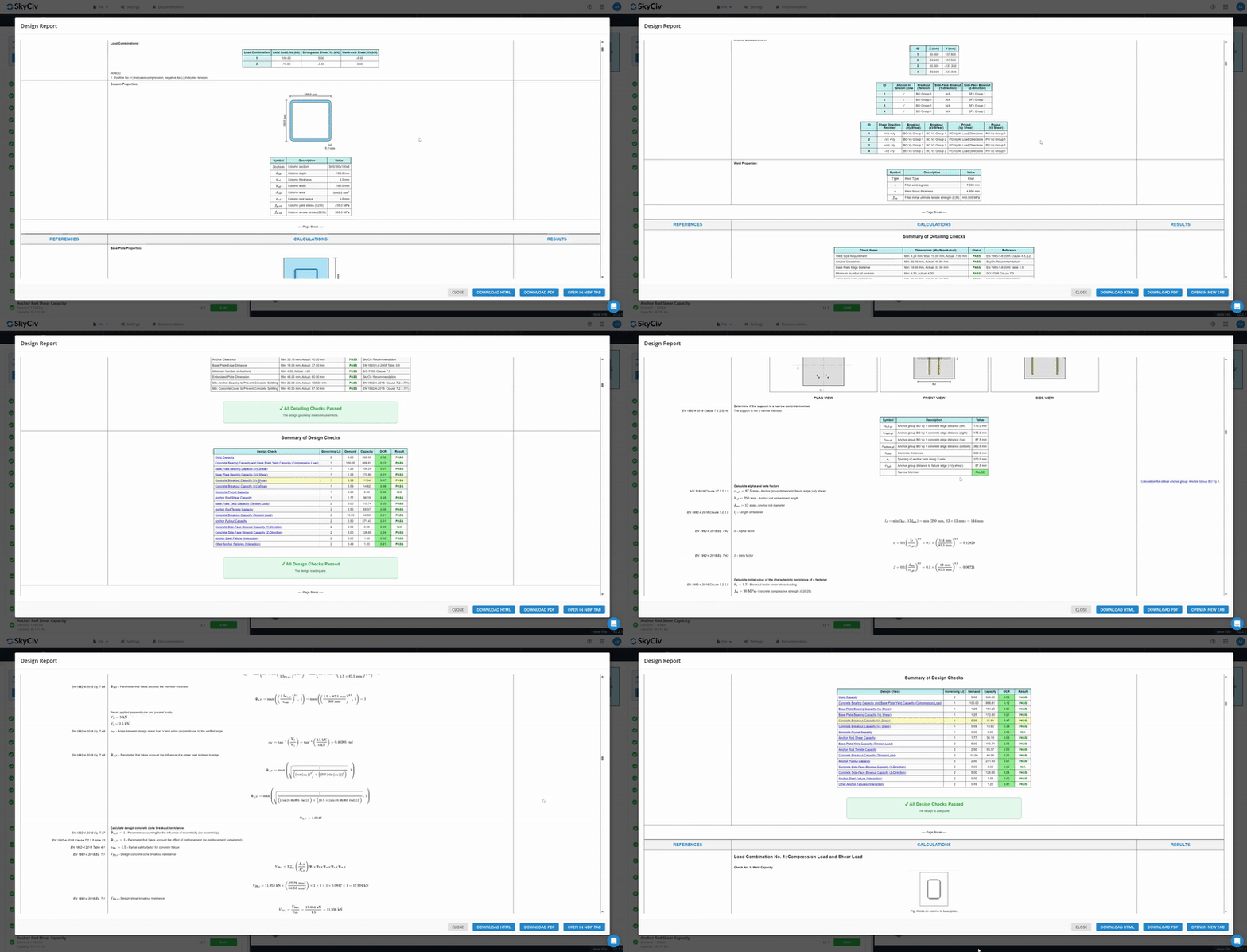
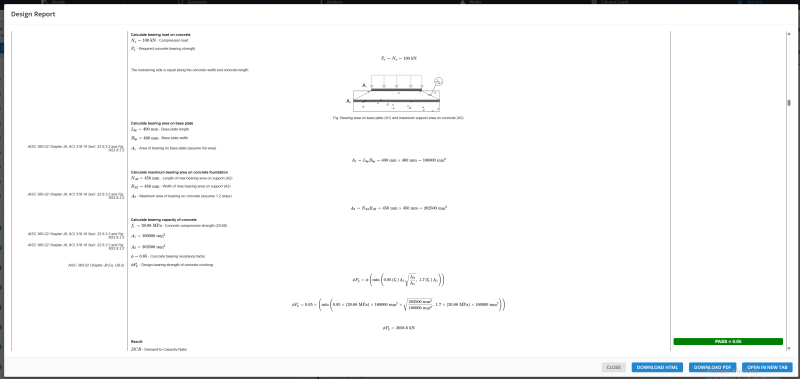
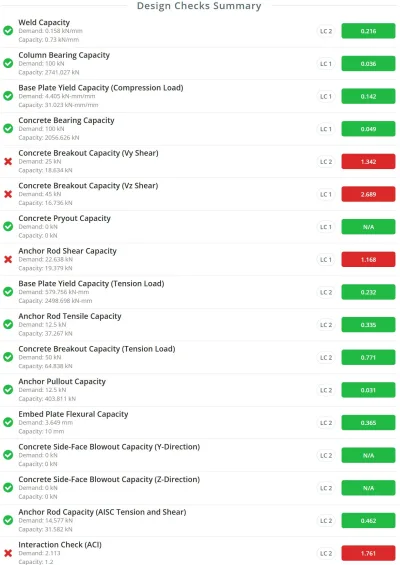
Every check is clearly shown in the report, including code references, equations with step-by-step substitutions, diagrams and illustrations, and final results.
Color-coded pass and fail indicators make the verdict easy to understand at a glance. The summary table is also linked with hyperlinks, allowing checkers to quickly jump to the relevant sections.
Modern Interface, Zero Installation
SkyCiv runs instantly in your browser, so no installation is required. Even the free tools require no sign-up.
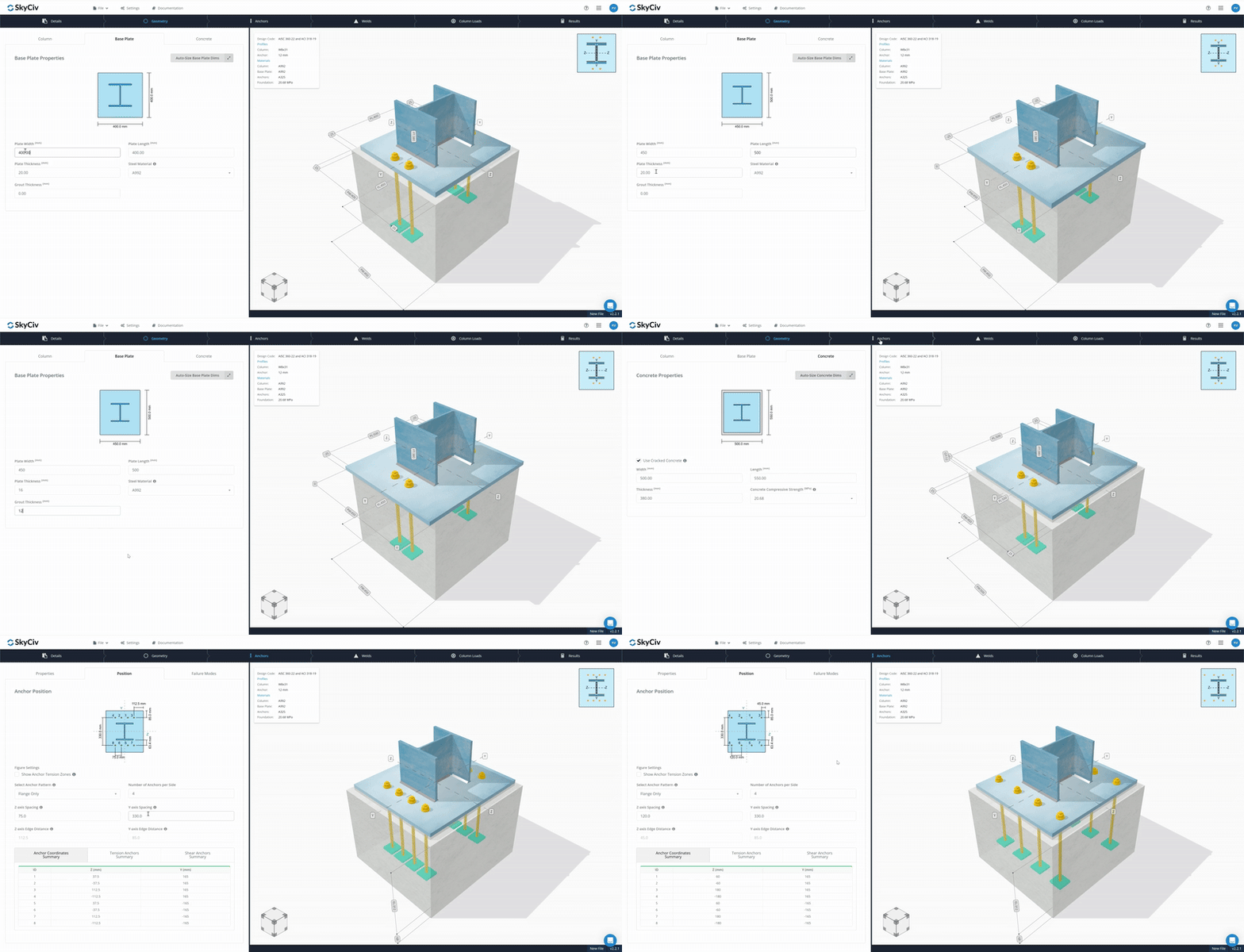
The UI is built for modern engineers who are tired of seeing too many boxes and numbers at once. It is clean, intuitive, and well organized. The left panel is where you enter all project and design information, while the right panel lets you visualize your design. Nothing is cluttered; everything is in its proper place.
Beautifully Simple, Surprisingly Powerful
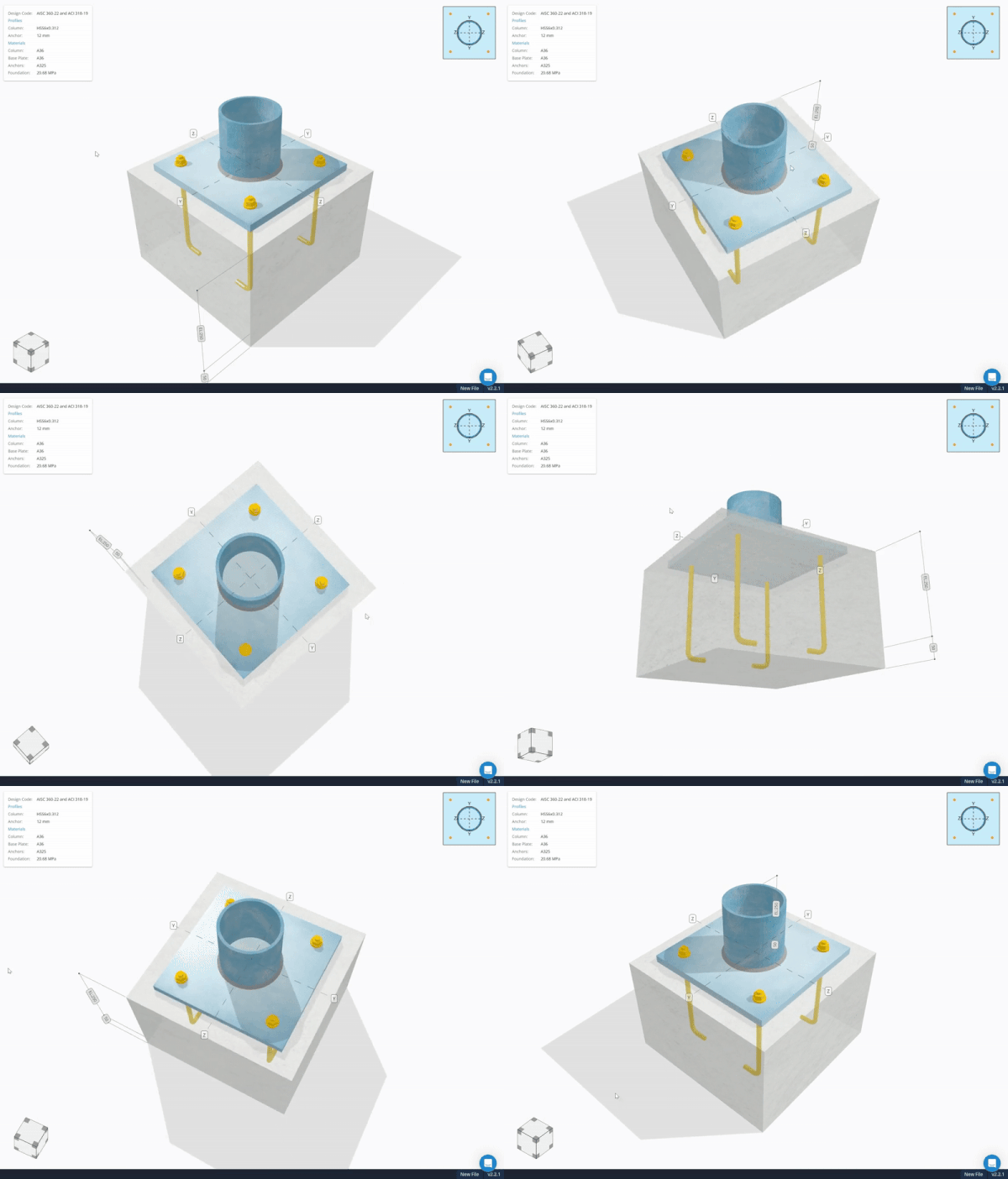
Every design job feels simple and effortless, even for complete beginners. With a clean, intuitive UI and real-time 3D rendering, you can calculate and re-calculate designs in just a few clicks.
Once your design passes, you can download a detailed calculation report and drawing. Everything you need for your submittals is built into the software, so there is no need to switch between different tools or software.
Engineered for Affordability
High-quality structural design software shouldn’t cost a fortune. SkyCiv offers industry-leading value, making professional design tools accessible to everyone, from students to engineers at global firms.
What SkyCiv Base Plate Design Can Do
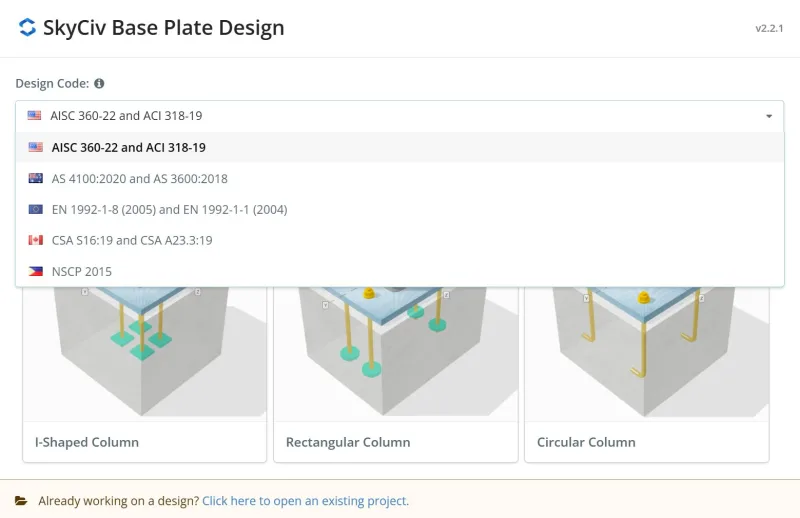
SkyCiv brings engineering-grade accuracy with the convenience of fast, intuitive modeling. The software supports numerous international standards including AISC & ACI, EN, AS, CSA and more. From column to foundation, it covers all steel, concrete, weld, and even anchorage design in one single software. It also automatically generates detail structural drawing to complete your design package. All in one single software.
Design References
- American Institute of Steel Construction (AISC): AISC Steel Construction Manual (15th Ed), AISC 360-22 (LRFD), AISC Design Guide 1 (3rd Edition), ACI 318-19
- Eurocode: EN 1992-1-1:2004 and EN 1992-4:2018 (Eurocode 2), , EN 1993-1-1:2005 and EN 1993-1-8:2005 (Eurocode 3), Simple Joints to Eurocode 3 (SCI P358), Moment Resisting Joints to Eurocode 3 (SCI P398)
- Australian Standards: AS 3600:2018, AS 4100:2020, AS 5216:2021
- National Standard of Canada: CSA A23.1:19, CSA S16:19
Capabilities at a Glance
- Full plate, anchor, concrete, and weld checks
- Real-time 3D visualization
- Automatic dimensioning and design-guide illustrations
- Demand vs. capacity summaries
- Detailing and constructability rules
- Exportable PDF/HTML detailed calculation reports
- Automated detail drawing, exportable to PDF
- Deep database of WF, HSS, anchors, and materials


More on Anchorage Design
The following are the checks performed by SkyCiv Base Plate Design to check the strength of the anchorage:
- Anchor steel tension strength
- Anchor steel shear strength
- Also includes anchor rod bending due to eccentric shear (with lever arm)
- Anchor pull-out strength
- Concrete tension breakout strength
- Concrete side-face blowout strength
- Concrete shear breakout strength
- Concrete shear pryout strength
- Anchor interaction strength for tension and shear
- Concrete interaction strength for tension and shear
Designing Every Component with Confidence
SkyCiv allows engineers to fully model the key elements of a base plate connection with clarity and precision:
Column Design
Choose from wide-flange or HSS shapes using regional shape databases. Quickly switch between column shapes and update steel material properties, or input custom strengths as needed.

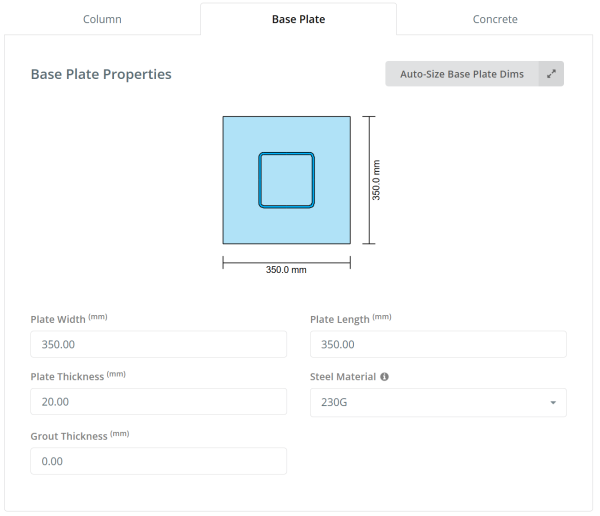
Base Plate Design
Define plate dimensions and thickness with ease. Adjust grout thickness based on project requirements, and specify custom material strengths when necessary.
Concrete Foundation Design
Set concrete strength and footing dimensions to match your design. Select between cracked or uncracked concrete depending on code requirements and project conditions.

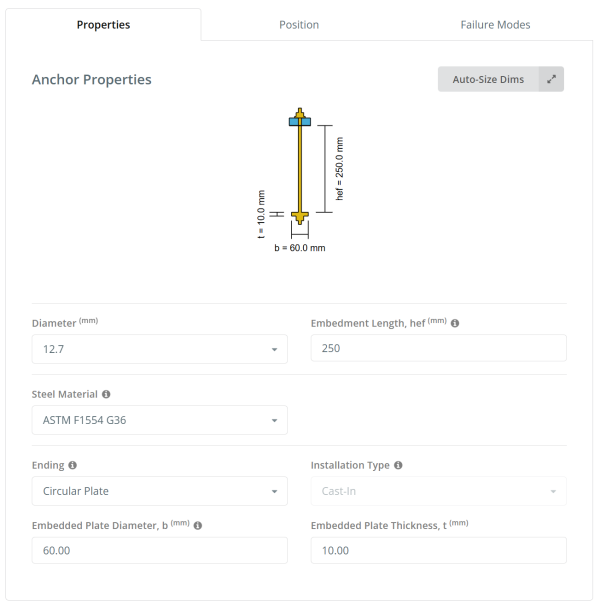
Anchor Rod Design
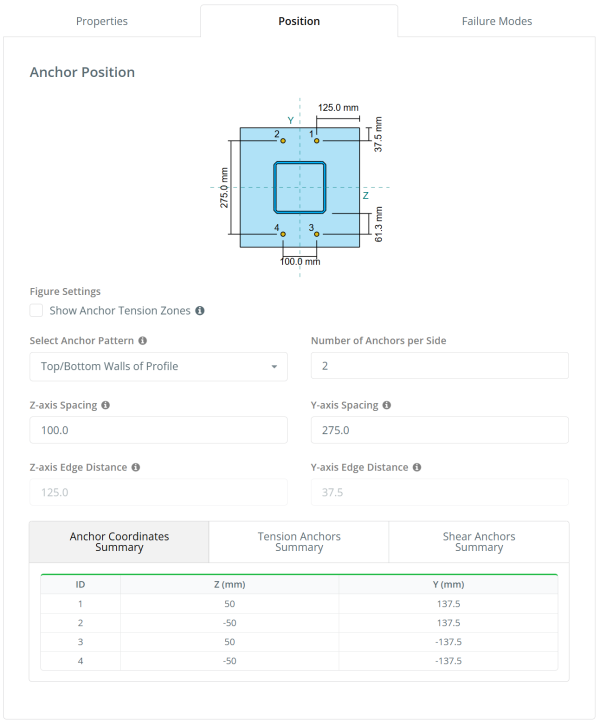
Specify anchor rod diameter, embedment depth, and steel material. Switch between hooked ends and plate ends, and position anchor rods directly on the base plate. Layout and dimensional checks update instantly.
Weld Design
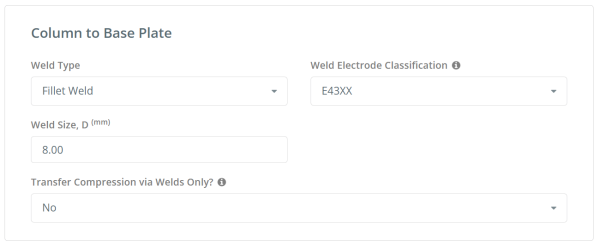
Verify column-to-plate weld sizes for both shear and tension. Switch between fillet welds and complete joint penetration (or full penetration butt welds) with a single click.
Current Limitations and Why They Matter
While SkyCiv Base Plate Design already handles the most common and practical connection scenarios, there are a few current limitations to note. The software presently supports only concentric loading, rectangular plate geometries, tension-zone anchor placement, and a limited range of load types. It also does not yet include stiffener design. While the software handles uniaxial bending about both the strong and weak axes, it does not yet support biaxial bending. These boundaries allow us to ensure accuracy, stability, and code-compliant behavior in every calculation.
We are actively working on expanding these capabilities, and several of these features are already in development. As they are released, they will make the software even more powerful and versatile. We take the time to verify each step carefully by prioritizing engineering quality over rushing features, so that every new addition continues to meet the high standards SkyCiv is known for.
Design Better, Faster, and More Transparently with SkyCiv Base Plate Design
SkyCiv Base Plate Design offers a modern, streamlined way to design steel base plate connections—affordable, accurate, and incredibly easy to use. Engineers save time, checkers gain confidence, and projects benefit from optimized, cost-effective base plate solutions.
Whether you’re designing a single base plate or managing dozens across a project, SkyCiv gives you the clarity, speed, and transparency you need to get it right.