
CALCULADORA DE CONEXIÓN DE PLACA EXTREMA LIBRE
Calculadora de conexión de placa final SkyCiv
Esta calculadora de conexión de placa final verifica la tensión de los pernos, acción de palanca, doblado de placas, Resistencia de la soldadura y desgarro del alma contra AISC. 360, ya sea en ASD o LRFD.
Se suelda una placa al extremo de la viga en el taller., Luego se atornilla a la columna o viga de soporte en el sitio.. Si se detiene en las alas o se extiende más allá de ellas, decide si la junta actúa como una conexión de corte simple o una conexión de momento rígido..
Acerca de la calculadora de conexión de placa final
La calculadora maneja ambos extremos del rango.: Detalles de corte simples y resistentes a momento.. Evalúa la tensión del perno., doblado de placas, Resistencia de la soldadura y desgarro del alma., e informa capacidades de diseño con ratios de utilidad.
Todo es para AISC. 360, en TEA o LRFD, por lo que el método coincide con lo que pide la especificación del proyecto en lugar de forzar una conversión.
¿Qué es una conexión de placa terminal??
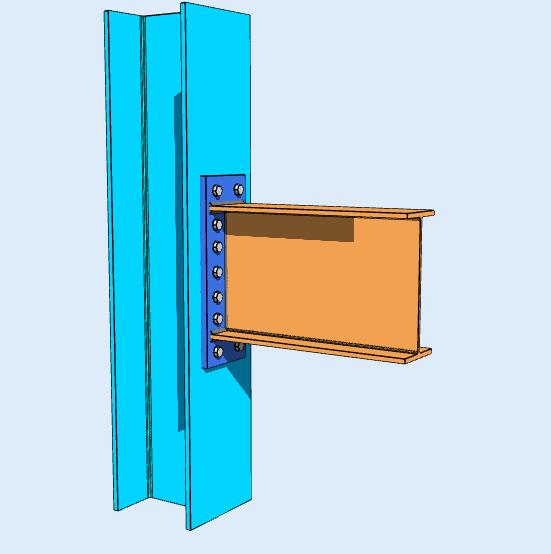
Una placa plana soldada en escuadra al extremo de una viga., a través del alma y también a través de las alas si la unión tiene que ser rígida, luego atornillado en campo a una columna o viga de soporte.
La distancia que recorre la placa es lo que cambia su comportamiento.. Deténgalo dentro de las bridas y la viga podrá girar., entonces la junta es una conexión de corte flexible. Extiéndalo más allá de las bridas., con filas de tornillos fuera de ellos, y resiste el momento.
La soldadura se realiza en el taller bajo condiciones controladas., lo que deja el trabajo de obra como atornillado. Ese es el atractivo práctico: La parte difícil ocurre cuando se puede inspeccionar adecuadamente..
¿Qué componentes forman la articulación??
- Placa final de acero: una placa rectangular soldada al extremo de la viga, dimensionado según el patrón de pernos y la carga.
- soldaduras de taller: Soldaduras de filete o de penetración completa que fijan la placa al alma de la viga y a las alas..
- Pernos de campo: pernos de alta resistencia, típicamente ASTM A325 o A490, atar la placa al miembro de soporte.
- Miembro de apoyo: el ala de la columna, Alma de columna o viga primaria tomando la placa atornillada..
- Placas de refuerzo: Opcional, agregado al alma de la columna o a una placa extendida donde un momento pesado la pandearía localmente.
El camino de carga es corto y directo., lo cual es parte de por qué se confía en los detalles: viga, soldar, lámina, tornillos, apoyo.
¿Dónde se utilizan habitualmente estas conexiones??
- Pórticos resistentes a momentos de viga a columna en edificios de acero de varios pisos.
- Pórticos de tejado en naves industriales y estructuras de luz clara.
- Conexiones primarias de corte entre vigas y vigas en sistemas de pisos comerciales.
- Bastidores de tuberías y estructuras de soporte pesadas en plantas industriales..
Los pórticos son el caso más claro para el tipo extendido.: la articulación del anca conlleva un gran momento, y las filas de pernos fuera de la brida son las que lo hacen posible sin una conexión soldada en el sitio.
¿Qué tipos de conexiones de placa final existen??
La elección depende de si la junta soporta cortante solo o cortante y momento juntos.:
- Flexible (profundidad parcial) placa final: soldado solo al alma de la viga, transferir el corte mientras se permite la rotación. Un soporte sencillo.
- Placa final al ras: la placa coincide con la profundidad de la viga, dando una resistencia de momento moderada junto con el corte.
- Placa final extendida no rígida: pasa por una o ambas bridas para que quepan filas de pernos adicionales, para mayor resistencia al momento.
- Placa final reforzada extendida: Agrega nervaduras de refuerzo verticales por encima o por debajo de las alas., endurecer la placa y reducir la palanca.
Cada uno lleva su propio conjunto de controles AISC., y los cuatro se pueden modelar en la calculadora.
Cómo utilizar la calculadora de conexión de placa final
- Seleccione el tipo de placa: cizalla flexible, momento de descarga, o extendido.
- Definir la geometría: espesor de la placa, ancho y alto, más las secciones de viga y miembro de soporte.
- Especificar sujetadores y soldaduras.: grado de perno, diámetro, distancias de paso y borde, y los tamaños de soldadura.
- Aplicar las acciones de diseño.: corte factorizado, fuerza axial y momento flector.
CALCULAR, y obtienes capacidades de diseño, el modo de falla gobernante y las relaciones de utilidad ASD o LRFD juntas. Saber qué modo gobierna es la parte útil, porque te dice si cambiar la placa, los pernos o las soldaduras.
Por qué elegir la calculadora de conexión de placa final de SkyCiv?
La acción de palanca es el control que la gente hace mal a mano, y es el que decide el espesor de la placa en una junta de momento. Hacerlo en una hoja de cálculo es posible; haciéndolo repetidamente, para cada disposición de hileras de tornillos que vale la pena probar, generalmente no sucede.
El desglose del cálculo se muestra completo en lugar de resumido., y la vista 3D refleja la geometría que realmente ingresó, por lo que aparece un componente sobrecargado mientras el detalle aún es barato de cambiar.
- Calculadora de conexión de empalme de vigas
- Calculadora de pernos
- Diseño de conexión atornillada
- Calculadora de conexión de refuerzo Chevron
- Calculadora de conexión de doble ángulo
- Calculadora de conexión de placa de brida
- Calculadora de conexión de rodillera
- Conexión de momento
- Calculadora de conexión de un solo ángulo
- Calculadora de conexión de placa única
- Diseño de conexión SkyCiv vs.. Idea estática
- Diseño de conexión SkyCiv vs.. Conexión de RAM
- Calculadora de soldadura
- Diseño de conexión soldada
Preguntas comunes sobre el diseño de conexiones de placa terminal atornilladas.
Tus preguntas respondidas

Interfaz intuitiva
Nuestro fácil de aprender, poderoso para usar, La interfaz intuitiva le permite acceder rápidamente a todas las funciones que necesita.. Equipado con funciones inteligentes como la herramienta Pluma, Repetir / Espejo, y edición masiva. Su contenido va aquí

Soporte integral de código de diseño
Nuestro software admite una amplia gama de acero., Madera, y códigos de diseño concretos, incluido AISC, EN, AISI, NDS, AS, y CSA.

Tecnología API
SkyCiv es una solución personalizada que ofrece integraciones perfectas, implementaciones fáciles, informes automatizados y un diseño y arquitectura escalables.

24/7 Atención al cliente
SkyCiv es una solución personalizada que ofrece integraciones perfectas, implementaciones fáciles, informes automatizados y un diseño y arquitectura escalables.
