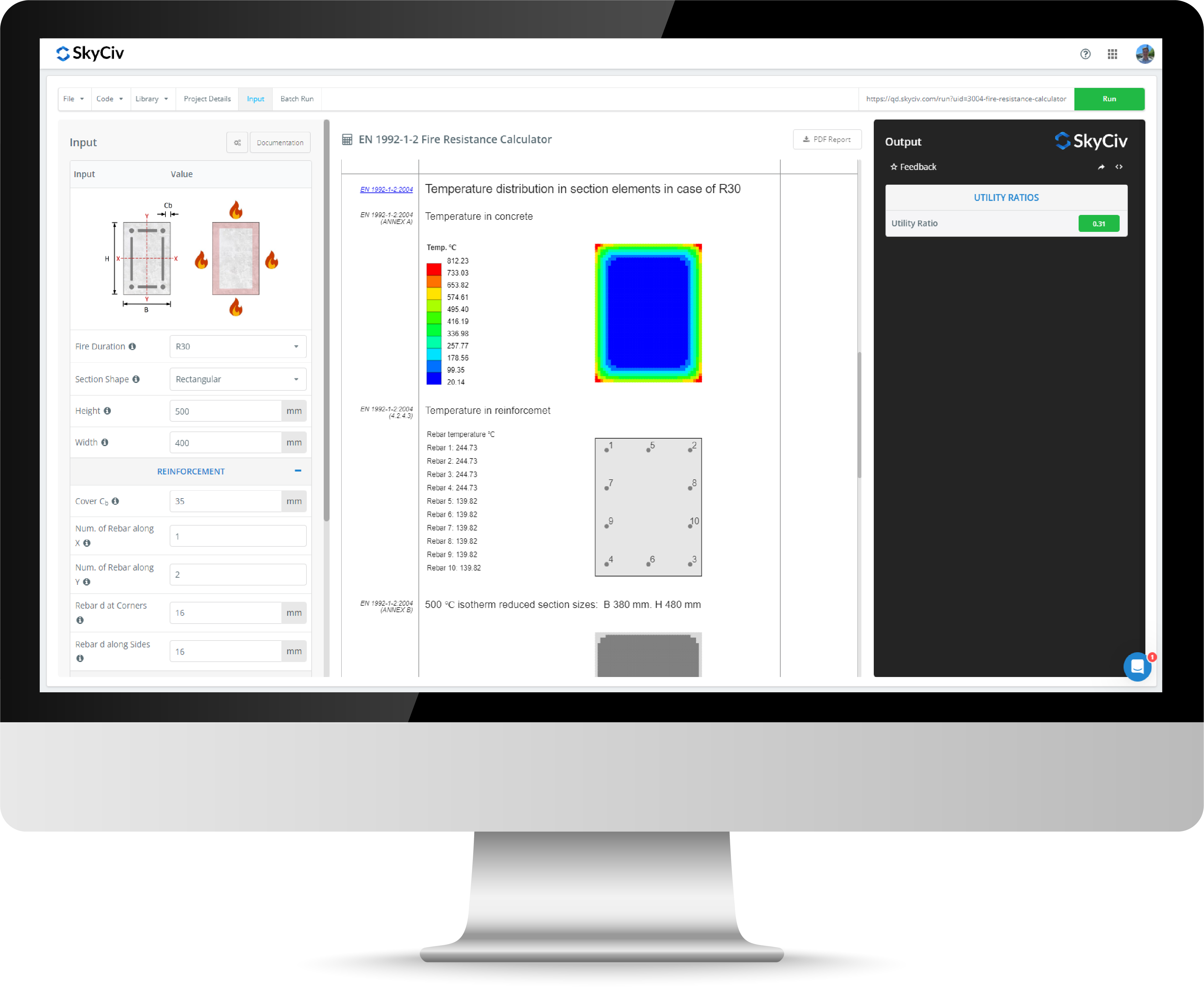
Reinforced Concrete Strip Footing Design Calculator
Strip footings are essential for supporting building loads and distributing them safely to the ground. As a fundamental type of shallow foundation, they are widely used because of their efficiency and simplicity in construction. 構造工学では, selecting and designing footings correctly is crucial to ensure both the safety and economic viability of structures.
SkyCiv ストリップフーチング計算機は、ACI に基づいたストリップフーチングの分析と設計に使用する必要があります。 318-19 設計基準. 計算機で使用されるチェックは、章の要件に従います。 13 ストリップフーチングに関するACIコードの. The strip footing design tool can deal with either reinforced concrete footings and also with mass concrete footings according to the requirements of Chapter 14 ACIの 318 標準. このモジュールは、 SkyCIVクイックデザインライブラリ.
目次
SkyCiv ストリップフーチング設計カリキュレーターについて
Definition of Strip Footing: What is a Strip Footing?
A strip footing is a continuous, elongated concrete foundation that supports linear structural loads, typically beneath load-bearing walls. 壁からの荷重を地表に比較的近い土層に伝達します。. 上部構造からの集中荷重を土壌の広い範囲に分散するフーチングタイプです。, 圧力を軽減し、決済リスクを軽減する. 凍上やその他の環境問題を防ぐために、土壌層は適切な支持力と十分な深さを備えていなければなりません.
ストリップフーチングを使用する必要がある場合?
ストリップフーチングは壁のある構造物に最適です, 住宅の建物など, 学校, および軽商業施設. 土壌が浅い深さで適切な支持力を備えている場合に最適です。, 課される荷重は中程度で均一に分散されます。. 一般的な用途には、石積みまたはコンクリート壁の支持が含まれます。, 連続した列, 壁の形状や荷重分散のために独立したパッドフーチングが現実的でない状況.
ストリップフーチングの種類
通常, 2種類のストリップフーチングを使用:
- プレーンコンクリートストリップフーチング - 安定した支持土を備えた軽量構造物や低層建物に最適です。.
- 鉄筋コンクリート帯フーチング - より重い負荷に使用される場合、または環境条件により耐久性の向上が必要な場合に使用されます。. これらは、地耐力が比較的低い、より重い構造物に適しています。.
ストリップフーチング補強
曲げ補強材は通常フーチングの底部に配置されます。, 壁の面に対して垂直に. 横方向, 収縮と温度による補強は壁の長さに平行に行う必要があります。.
ストリップフーチングのロード
通常、ストリップフーチングは耐力壁の下で線形荷重をサポートします. しかしながら, ある場合には, 狭い間隔で並んだ柱の列もストリップフーチングで支えられる場合があります。.
ストリップフーチングの故障モード
ストリップフーチングの故障モードは、一般に 3 つのカテゴリに分類できます。: 地盤支持障害, 安定性の失敗, そして構造的欠陥. これらを次の図に示します。.
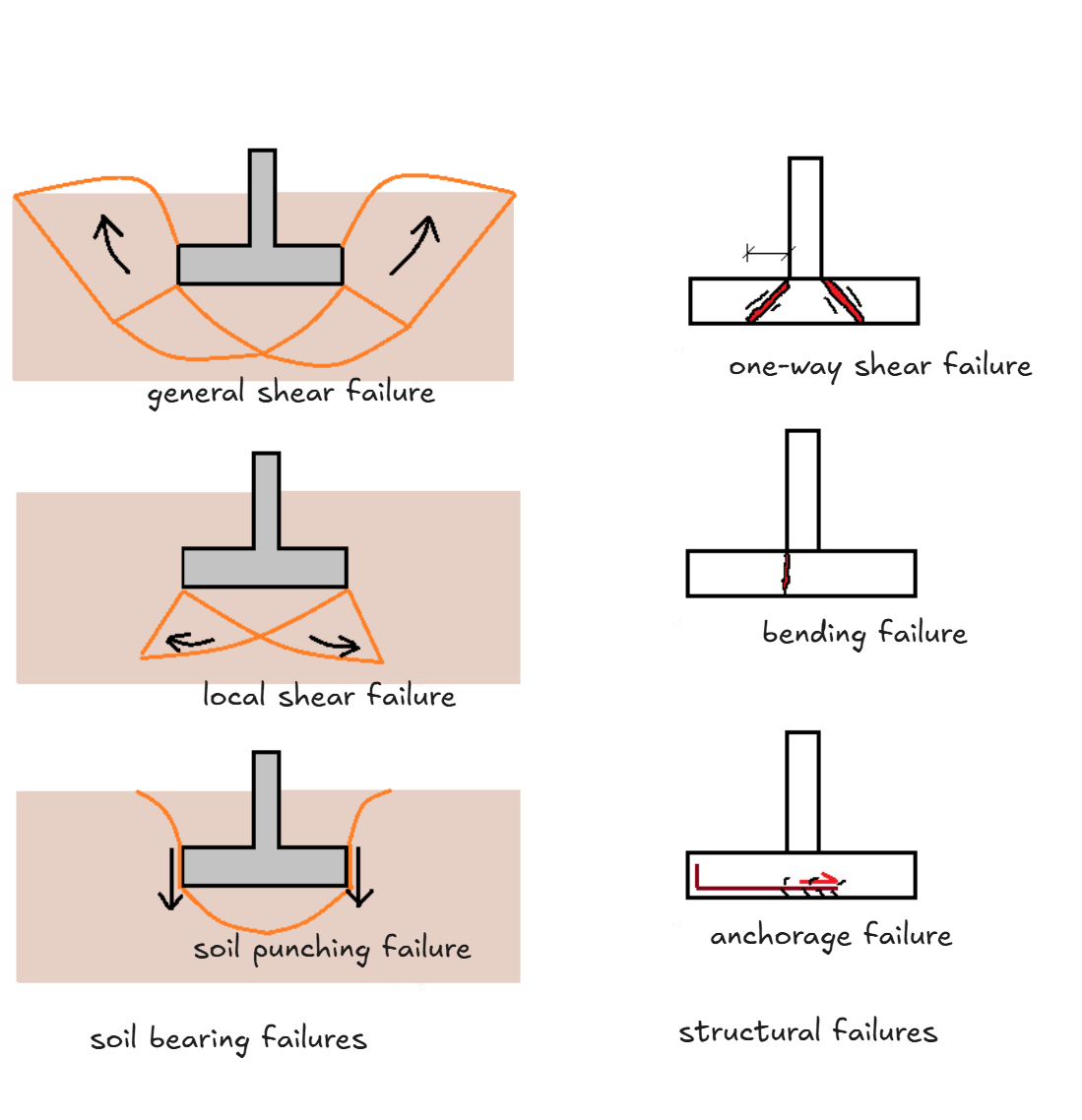
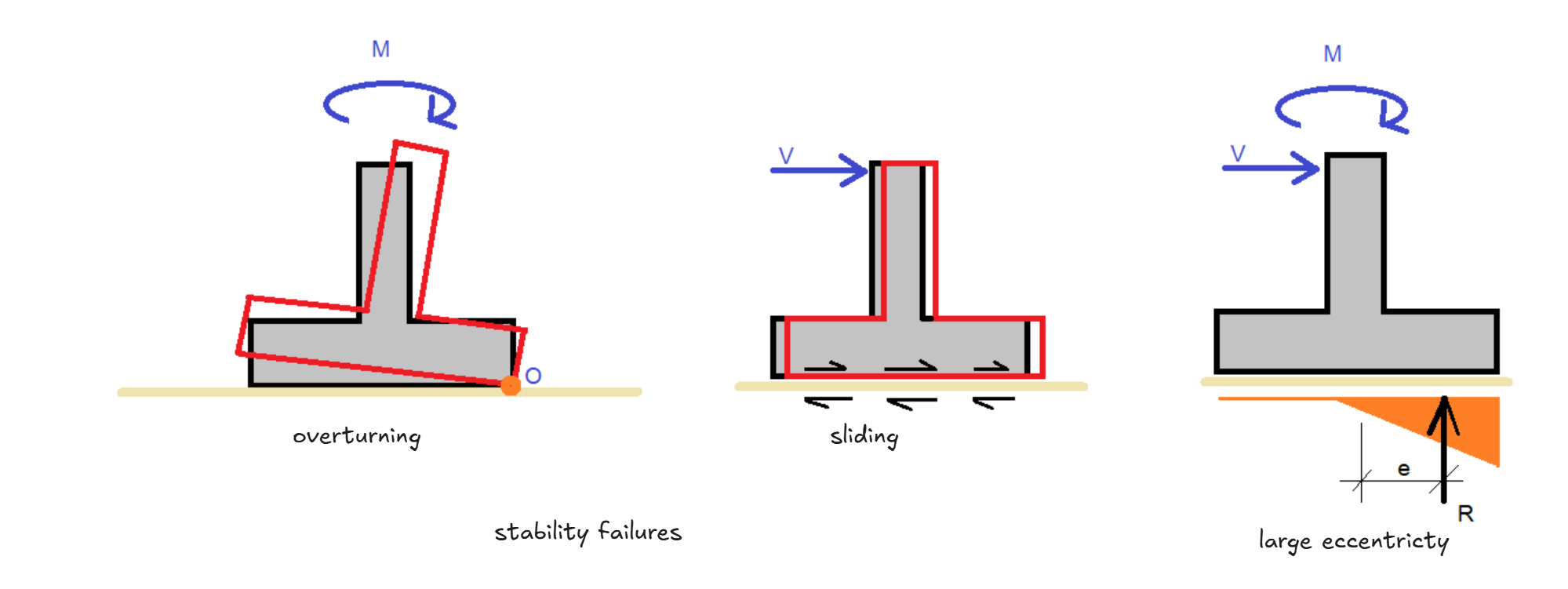
図 1: ストリップフーチングの故障モード
ストリップフーチングの設計手順 (ACI 318-19)
ストリップフーチングの設計には、最終的な寸法と特性に影響を与えるさまざまなパラメータと変数があるため、いくつかの手順が必要です。.
ステップ 1: 地質工学的調査と考慮事項
基礎の設計では通常、基礎の下の土壌の挙動と応力に関連した変形性を決定する必要があります。. これを達成するには, 土壌の地質工学的特性を決定する必要があります. これらの特性には、粒度分布が含まれます。, 土壌分類, 可塑性, 圧縮率, とせん断強度. この調査は、さまざまな種類の基礎の適合性と土壌の支持力を判断することを目的としています。. このプロセスには通常、極限支持力の計算と沈下解析の実行が含まれます。. これらの手順により、許容ベアリング圧力が決定されます。 (qa) 土壌支持障害を避けるために. ストリップファンデーションが適している場合, エンジニアは次のステップに進むことができます.
ステップ 2: 安定性チェック
基礎システムが転倒に対して安全であることを確認する, スライディング, 偏心による過度の隆起を回避します.
ステップ 3: ベースエリアを定義する
米国では, これは、許容応力と使用荷重の組み合わせを使用して決定されます。. 推定耐荷重値 (IBCテーブル 1806.2) 許可されていれば使用することもできます. 許容応力は通常、地盤工学レポートに含まれます。, 支持力と沈下の可能性を考慮して. 帯状基礎で, 軸方向荷重がかかったフーチングの地盤応力 (P) と瞬間 (M) 図に示すように計算できます 2.
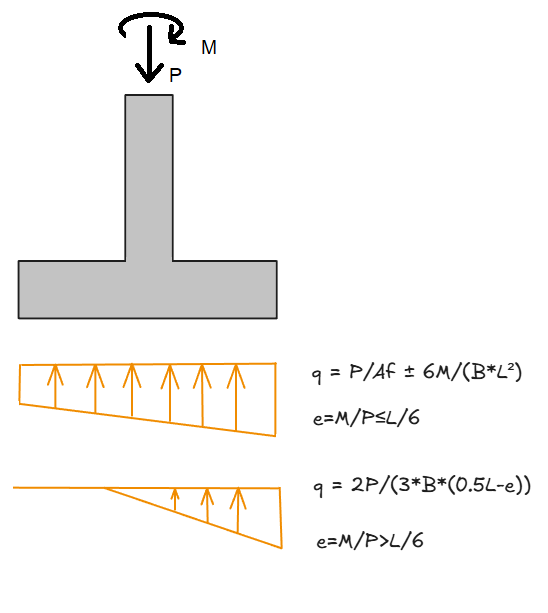
図 2: ストリップフーチングの土壌応力計算
ステップ 4: ベースの厚さを定義し、曲げ鉄筋を計算する
これは通常、構造上の欠陥を避けるために試行錯誤の手順によって行われます。. この場合, フート厚さを採用, 曲げ強度とせん断強度を検査します。. このステップでは, フーチングは曲げモーメントを考慮して設計する必要があります, 一方向せん断 (二方向せん断はストリップフーチングには適用できません) 因数分解荷重による土圧によって引き起こされる. 最小の深さは、 6 を考慮する必要があります (ACI 318-19 c13.3.1.2) と等しい最小コンクリートかぶり 3 地面に対して打設され、永久的に地面と接触するコンクリートに使用されます。 (ACI 318-19 c20.5.1.3.2). コンクリート壁の場合は、フーチングから壁までの鉄筋の展開に基づいて、フーチングの最小厚さを考慮することも重要です。.
曲げモーメント線図を解析すると (図を参照 2), ストリップフーチングの最大モーメントは壁の中央の下で発生するようです, しかし、テストの結果、壁の剛性によりこれは正しくないことが判明しました。. ACI コードが示唆するもの (ACI 318-19, c13.2.7.1) 鉄筋コンクリート壁の場合は壁の表面で、石積み壁の場合は壁の表面から中心までの途中の部分で計算します。. 計算上, フーチングにかかる外部荷重によって生じる上向きの圧力を考慮するだけで済みます。. 自重と表土の重量は無視する必要があります。. 構造設計には基礎上の正味圧力のみを使用する必要があります。.
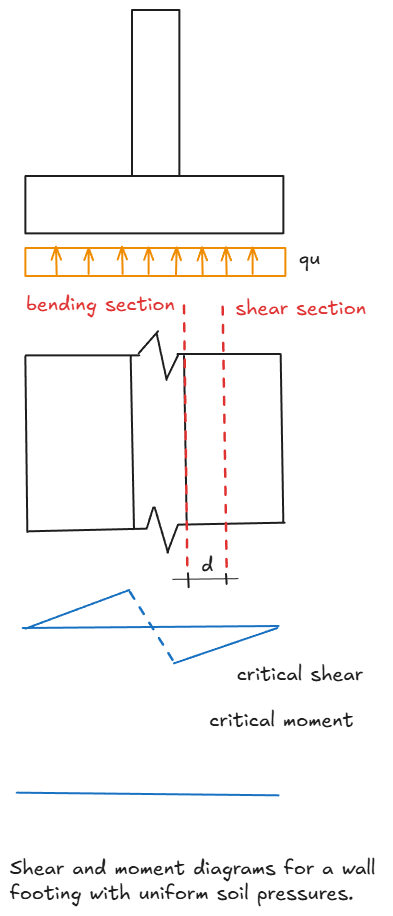
図 3: 均一な土圧を持つ壁基礎のせん断およびモーメントの図
壁基礎がせん断で破壊されるまで荷重がかかった場合, 破損は壁面の垂直面では発生せず、壁面に対して約 45°の角度で発生します。, したがって、せん断の臨界断面は面からの距離「d」で計算されます。 (ACI 318-19c13.2.7.2), 「d」は有効深さです, 図を参照 3. 有効深さは次のように計算されます。:
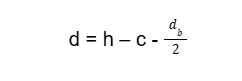
ここで、h は基礎スラブの厚さです, cは表紙です, そしてdb バーの直径です.
最大曲げモーメントに到達すると (Mあなた) クリティカルセクションで決定されました, 補強が必要な領域 (あs) 他の曲げ部材と同じ方法で決定されます. 基礎は梁ではありませんが、, 曲げに対して延性があることが望ましい, これは、引張補強材の正味引張ひずみを制限することによって実現できます。 (et) εより大きい値にタイ + 0.003 (ACI 318-19 c21.2.2, eタイ fに等しいそして/Es).
前者の仮定では, 必要な補強面積は次の式で計算できます。
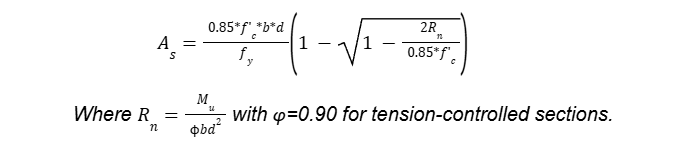
b はセクションの幅です, f'c コンクリートの指定された圧縮強度です, fそして は鉄筋の指定された降伏強さです。, およびEs 鉄筋の弾性率です.
せん断強度は通常、コンクリートの寄与のみを考慮して計算されます。. コストが増加するため、せん断補強を使用することはお勧めできません. したがって, 臨界せん断断面で計算されるせん断は、コンクリートが抵抗する強度よりも大きくなければなりません. 表に示す式を使用して計算されます。 22.5.5.1(c) (ACI 318-19 c22.5.51)
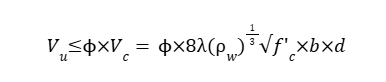
ここでρw 強化率はAに等しいs/(b×d), λ は、軽量コンクリートの機械的特性の低下を反映する修正係数です。, ϕ はせん断低減係数です.
フーチングの厚さが曲げや一方向のせん断に耐えられることを確認したら, 採用された補強材は必要な補強材よりも大きい, 次のステップに進むことができます.
ステップ 5: 伝達力の計算
コンクリートの支持力、または支持力と界面補強材の組み合わせによってフーチングに伝達される垂直力と水平力をチェックする必要があります。. この要件については、セクションで詳しく説明します。 22.8 ACIの 318-19:

どこでA1 ロードされた領域です, あ2 ピラミッドの最大の錐台の下底の面積です, 円錐. ピラミッドの側面, 円錐, またはテーパーウェッジは傾斜している必要があります 1 垂直に 2 水平. ϕ は低減係数です.
ステップ 5: チェックの詳細
最後のステップでは、最小および最大間隔などの補強の詳細に専念します。, クリティカルセクションまでの開発の長さ. 詳細は章に記載されています 25 ACIの 318-19.
ストリップ vs. 壁基礎
壁フーチングは基本的にストリップフーチングのサブセットであり、多くの場合同じ意味で使用されます。, as both describe a continuous, narrow footing that supports linear loads. しかしながら, strip footings have a broader definition and may also support a line of closely spaced columns, accepting point loads arranged in a row. In terms of reinforcement, both types are similar.
ストリップフーチング vs スプレッドフーチングまたはパッドフーチング
Strip footings are closely related to spread footings, as both are types of shallow foundations commonly used in small to medium structures due to their low cost. Strip footings are typically long and rectangular, while pad footings may be square, 長方形の, または円形. Strip footings generally support linear loads, 一方 pad footings support concentrated loads. In design, all checks performed for strip footings should also be applied to spread or pad footings, with additional checks such as the コンクリートパッド用のオンライン基礎計算機 (punching) 小切手.
壁基礎計算機の使用方法?
壁基礎ツールは試行錯誤の哲学に基づいて機能します. ユーザーは、すべてのチェックに合格するまで入力データを変更できます。. 通常、障害が発生した場合, 解決策には基礎を拡大するか、補強材を増やすことが含まれます. いかなる場合でも, このツールは、過剰な補強を避けるのに役立つ最小条件と最大条件もチェックします。. せん断破壊に備えて高さを大きくすることをお勧めします, 安定性の障害の幅を拡大する, フーチングの高さとせん断チェックに問題がなければ、曲げ破壊に備えて補強面積を増やします。.
キーポイント - Strip Footings
- Strip footings are economical and widely used for shallow foundations.
- 適切な地質調査が不可欠です.
- 設計は耐土性を考慮する必要がある, 決済, 構造強度, そして安定性.
- ACIをフォローする 318-19 すべてのチェックと詳細のために.
参考文献
- ACI 318-19: 構造コンクリートの建築基準要件
- IBCテーブル 1806.2: 推定耐荷重値
- CRSI, ACI の設計ガイド 318 構造コンクリートの建築基準要件, CRSI (2020).
- 強化コンクリート: 力学と設計 第 6 版 (James K 著). ワイト, ジェームスG. マグレガー.
よくある質問
基礎と土壌の摩擦角はどれくらいを使用する必要がありますか?
この角度は通常、土壌摩擦角の 2 分の 1 から 3 分の 2 の間です。. ("基礎工学の原則" ブラジャMより. それか)
強度検証に使用される低減係数?
ACI ストリップフーチング計算ツールは φ = を使用します。 0.75 せん断用, φ = 0.90 曲げ用 (鉄筋コンクリートの場合、この条件の上限を下回る鉄筋領域を含む張力制御条件を想定しています。), φ = 0.60 普通コンクリート曲げ用, と φ = 0.65 ベアリング用.
コンクリートの単位重量にはどのような値が使用されますか ?
使用されるデフォルト値は次のとおりです。 150 普通重量コンクリートの規格によって提案されている lb/ft3.
使用できる土の単位重量の値はどれくらいですか?
共通の値は次のとおりです。 90 に 130 ポンド/フィート3. プロジェクトの地質工学レポートで提案されている湿度値を使用することをお勧めします。.
壁の補強は計算に使用されますか??
使用されていません, 描画目的のみ. 壁ダボ, しかしながら, 荷重力伝達チェックに使用されます.
基礎の最大間隔が狭いのはなぜですか?
ACI 318-19 セクション 24.3.2 コンクリートかぶりに使用される値を考慮して、かなり低い値を指定します (普段は周りに 3 インチ). 参考文献 (地上での問題のあるスラブの使用を回避する, 1月, 2021 ストラクチャーマガジン アレクサンダー・ニューマン著, 西暦, F.) ACIは地上の基礎とスラブに関するこれらの規定を免除することを検討すべきであると言及, だが, 今のところ, 彼らはまだ適用されます, したがって、それらはプログラムに含まれています.
SkyCivについて
SkyCivは、エンジニアに幅広いCloud Structural Analysis and Design Softwareを提供しています. 常に進化するテクノロジー企業として, 私たちは、既存のワークフローの革新と挑戦に取り組み、エンジニアの作業プロセスと設計の時間を節約します.