
什么是瞬间连接?
结构工程中的矩连接是指允许弯矩力在柱和梁之间传递的节点 (或任何其他两个成员). 如果是儿童会员 (一束) 有一些内在的时刻, 由于该时刻,连接应该能够传输负载.
力矩连接的目的是尽可能模拟固定的关节, 用 固定码 FFFFFF - 意味着在所有平移和旋转方向上的连接都是刚性的. 这也是力矩连接称为刚性连接的原因.
尽管 剪力连接 主要取决于部分的网络, 通过加强法兰的连通性,力矩连接增加了这一点. 这可以通过使用板加强筋来实现, 加强和增加构件之间连接刚度的焊缝或其他固定装置.
力矩连接通常更刚性,因此能够承受比剪切连接高得多的力矩载荷. 然而, 因为更多的材料被用来建立连接, 与剪切连接相比,使用力矩连接的成本要高得多. 通常,一个结构只有一个或两个唯一的弯矩连接以最小化成本.
法兰盘
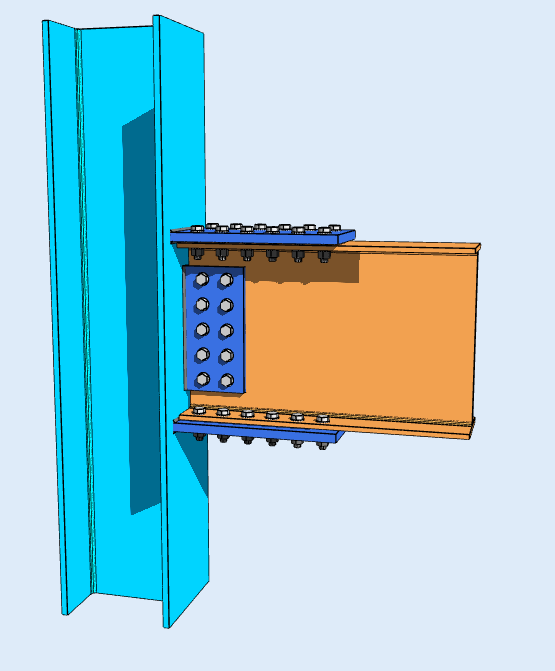
法兰板连接将立柱的法兰连接到梁构件的腹板上. 板通过螺栓连接和/或焊接来连接构件以形成刚性固定装置. 从旁边的图像中可以看到法兰板连接的示例. 该连接显示两个 螺栓固定在梁构件法兰上的板 将其连接到列. 随着光束弯曲, 它将传递给连接的成员.
加长端板
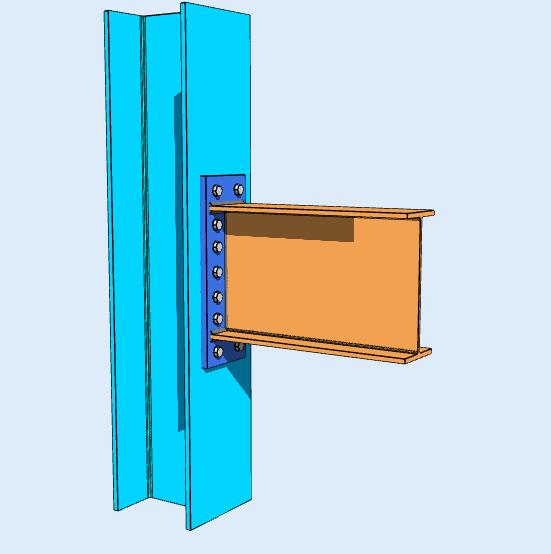
延伸端板使用焊接到梁端部的刚性钢板在构件之间传递力矩,该钢板延伸超出梁的一个或两个翼缘. 此扩展创造了额外的杠杆作用, 允许在梁型材外部放置额外的高强度螺栓排.
如果梁承受很大的弯曲力, 加长板提供了更大的力臂. 通过有效抵抗拉力和压力,显着提高连接的刚度和负载能力, 使其成为高应力抗震或重型结构框架的理想选择.
齐平端板
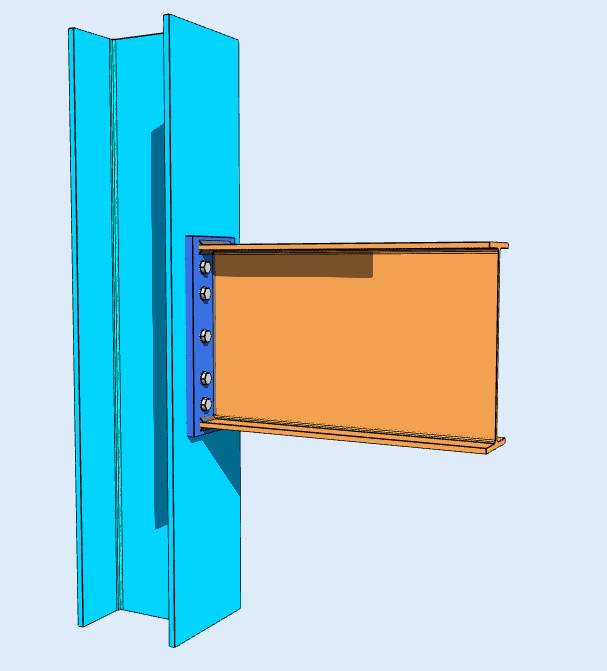
齐平端板使用焊接到梁端部的刚性钢板在构件之间传递力矩, 然后用螺栓固定在柱子的表面. 与加长端板不同, 平齐板未延伸超过梁的顶部或底部翼缘.
如果梁受到弯曲力, 拉力和压力主要通过紧密位于梁翼缘之间的高强度螺栓传递到柱上, 保持清洁, 紧凑的轮廓与梁的外边缘完美对齐.
为什么选择 SkyCiv 的时刻连接计算器?
SkyCiv 的力矩连接计算器以精确的方式简化了工程流程, 可靠的结果和直观的界面. 遵守 AISC 360-16 ASD 和 LRFD 标准, 该工具可确保设计符合规范,同时节省时间. 无论是复杂的高层结构还是工业应用, 力矩连接计算器是工程师寻求准确、高效解决方案不可或缺的工具.